Anderson AE et al. (FEB 2009)
Journal of leukocyte biology 85 2 243--50
LPS activation is required for migratory activity and antigen presentation by tolerogenic dendritic cells.
Autoimmune pathologies are caused by a breakdown in self-tolerance. Tolerogenic dendritic cells (tolDC) are a promising immunotherapeutic tool for restoring self-tolerance in an antigen-specific manner. Studies about tolDC have focused largely on generating stable maturation-resistant DC,but few have fully addressed questions about the antigen-presenting and migratory capacities of these cells,prerequisites for successful immunotherapy. Here,we investigated whether human tolDC,generated with dexamethasone and the active form of vitamin D3,maintained their tolerogenic function upon activation with LPS (LPS-tolDC),while acquiring the ability to present exogenous autoantigen and to migrate in response to the CCR7 ligand CCL19. LPS activation led to important changes in the tolDC phenotype and function. LPS-tolDC,but not tolDC,expressed the chemokine receptor CCR7 and migrated in response to CCL19. Furthermore,LPS-tolDC were superior to tolDC in their ability to present type II collagen,a candidate autoantigen in rheumatoid arthritis. tolDC and LPS-tolDC had low stimulatory capacity for allogeneic,naïve T cells and skewed T cell polarization toward an anti-inflammatory phenotype,although LPS-tolDC induced significantly higher levels of IL-10 production by T cells. Our finding that LPS activation is essential for inducing migratory and antigen-presenting activity in tolDC is important for optimizing their therapeutic potential.
View Publication
Costantini C et al. (JAN 2009)
Immunobiology 214 9-10 828--34
On the co-purification of 6-sulfo LacNAc(+) dendritic cells (slanDC) with NK cells enriched from human blood.
The ability of NK cells to directly recognize pathogens and be activated via Toll-like receptors (TLR) is increasingly recognized. Nevertheless,controversial results on the NK cell ability to be directly activated by lipopolysaccharide (LPS),the ligand of TLR4,have been recently reported. To start elucidating the reasons explaining the contrasting observations of the literature,we focused on the potential role of currently used NK cell purification procedures to condition putative NK cell responsiveness to LPS. To do so,human NK cells were isolated by negative selection,using three different commercial kits,to be comparatively evaluated for the production of IFNgamma in response to ultra-pure LPS and/or IL-2. Despite the lack of surface TLR4,we found that two out of the three NK cell-enriched populations released IFNgamma (and one of the two,IL-12p70 as well) in response to the LPS plus IL-2 combination,whereas the last one did not. However,the two LPS plus IL-2-responsive NK cell populations were found variably contaminated with 6-sulfo LacNAc(+) dendritic cells (slanDC),demonstrated responsible for triggering,via the production of IL-12p70 in response to LPS,the release of IFNgamma by IL-2-stimulated NK cells. Accordingly,slanDC depletion completely abrogated the capacity to produce both IL-12p70 and IFNgamma in response to LPS plus IL-2 by slanDC-containing NK cells. Taken together,our data uncover that two commercially available kits,specifically designed to isolate NK cells by negative selection,also co-purify variable amounts of slanDC. The latter cells may dramatically affect the outcome of experiments carried on to evaluate NK cell responsiveness to TLR agonists such as LPS.
View Publication
产品类型:
产品号#:
19055
19055RF
产品名:
EasySep™人NK细胞富集试剂盒
RoboSep™ 人NK细胞富集试剂盒含滤芯吸头
Fulcher JA et al. (JUL 2006)
Journal of immunology (Baltimore,Md. : 1950) 177 1 216--26
Galectin-1-matured human monocyte-derived dendritic cells have enhanced migration through extracellular matrix.
Dendritic cells (DCs) are potent mediators of the immune response,and can be activated by exogenous pathogen components. Galectin-1 is a member of the conserved beta-galactoside-binding lectin family that binds galactoside residues on cell surface glycoconjugates. Galectin-1 is known to play a role in immune regulation via action on multiple immune cells. However,its effects on human DCs are unknown. In this study,we show that galectin-1 induces a phenotypic and functional maturation in human monocyte-derived DCs (MDDCs) similar to but distinct from the activity of the exogenous pathogen stimuli,LPS. Immature human MDDCs exposed to galectin-1 up-regulated cell surface markers characteristic of DC maturation (CD40,CD83,CD86,and HLA-DR),secreted high levels of IL-6 and TNF-alpha,stimulated T cell proliferation,and showed reduced endocytic capacity,similar to LPS-matured MDDCs. However,unlike LPS-matured DCs,galectin-1-treated MDDCs did not produce the Th1-polarizing cytokine IL-12. Microarray analysis revealed that in addition to modulating many of the same DC maturation genes as LPS,galectin-1 also uniquely up-regulated a significant subset of genes related to cell migration through the extracellular matrix (ECM). Indeed,compared with LPS,galectin-1-treated human MDDCs exhibited significantly better chemotactic migration through Matrigel,an in vitro ECM model. Our findings show that galectin-1 is a novel endogenous activator of human MDDCs that up-regulates a significant subset of genes distinct from those regulated by a model exogenous stimulus (LPS). One unique effect of galectin-1 is to increase DC migration through the ECM,suggesting that galectin-1 may be an important component in initiating an immune response.
View Publication
产品类型:
产品号#:
15022
15062
15028
15068
产品名:
RosetteSep™人CD4+ T细胞富集抗体混合物
RosetteSep™人CD4+ T细胞富集抗体混合物
RosetteSep™ 人单核细胞富集抗体混合物
RosetteSep™人单核细胞富集抗体混合物
Su X et al. (FEB 2010)
Journal of immunology (Baltimore,Md. : 1950) 184 3 1630--41
Tumor microenvironments direct the recruitment and expansion of human Th17 cells.
Although Th17 cells play critical roles in the pathogenesis of many inflammatory and autoimmune diseases,their prevalence among tumor-infiltrating lymphocytes (TILs) and function in human tumor immunity remains largely unknown. We have recently demonstrated high percentages of Th17 cells in TILs from ovarian cancer patients,but the mechanisms of accumulation of these Th17 cells in the tumor microenvironment are still unclear. In this study,we further showed elevated Th17 cell populations in the TILs obtained from melanoma and breast and colon cancers,suggesting that development of tumor-infiltrating CD4(+) Th17 cells may be a general feature in cancer patients. We then demonstrated that tumor microenvironmental RANTES and MCP-1 secreted by tumor cells and tumor-derived fibroblasts mediate the recruitment of Th17 cells. In addition to their recruitment,we found that tumor cells and tumor-derived fibroblasts produce a proinflammatory cytokine milieu as well as provide cell-cell contact engagement that facilitates the generation and expansion of Th17 cells. We also showed that inflammatory TLR and nucleotide oligomerization binding domain 2 signaling promote the attraction and generation of Th17 cells induced by tumor cells and tumor-derived fibroblasts. These results identify Th17 cells as an important component of human TILs,demonstrate mechanisms involved in the recruitment and regulation of Th17 cells in tumor microenvironments,and provide new insights relevant for the development of novel cancer immunotherapeutic approaches.
View Publication
Kishimoto RK et al. (APR 2016)
Revista brasileira de hematologia e hemoterapia 38 2 113--20
Validation of interphase fluorescence in situ hybridization (iFISH) for multiple myeloma using CD138 positive cells.
BACKGROUND Multiple myeloma is a plasma cell neoplasm with acquired genetic abnormalities of clinical and prognostic importance. Multiple myeloma differs from other hematologic malignancies due to a high fraction of low proliferating malignant plasma cells and the paucity of plasma cells in bone marrow aspiration samples,making cytogenetic analysis a challenge. An abnormal karyotype is found in only one-third of patients with multiple myeloma and interphase fluorescence in situ hybridization is the most useful test for studying the chromosomal abnormalities present in almost 90% of cases. However,it is necessary to study the genetic abnormalities in plasma cells after their identification or selection by morphology,immunophenotyping or sorting. Other challenges are the selection of the most informative FISH panel and determining cut-off levels for FISH probes. This study reports the validation of interphase fluorescence in situ hybridization using CD138 positive cells,according to proposed guidelines published by the European Myeloma Network (EMN) in 2012. METHOD Bone marrow samples from patients with multiple myeloma were used to standardize a panel of five probes [1q amplification,13q14 deletion,17p deletion,t(4;14),and t(14;16)] in CD138(+) cells purified by magnetic cell sorting. RESULTS This test was validated with a low turnaround time and good reproducibility. Five of six samples showed genetic abnormalities. Monosomy/deletion 13 plus t(4;14) were found in two cases. CONCLUSION This technique together with magnetic cell sorting is effective and can be used in the routine laboratory practice. In addition,magnetic cell sorting provides a pure plasma cell population that allows other molecular and genomic studies.
View Publication
Ayasoufi K et al. (APR 2016)
Journal of Immunology 196 7 3180--90
CD4 T Cell Help via B Cells Is Required for Lymphopenia-Induced CD8 T Cell Proliferation.
Ab-mediated lymphoablation is commonly used in solid organ and hematopoietic cell transplantation. However,these strategies fail to control pathogenic memory T cells efficiently and to improve long-term transplant outcomes significantly. Understanding the mechanisms of T cell reconstitution is critical for enhancing the efficacy of Ab-mediated depletion in sensitized recipients. Using a murine analog of anti-thymocyte globulin (mATG) in a mouse model of cardiac transplantation,we previously showed that peritransplant lymphocyte depletion induces rapid memory T cell proliferation and only modestly prolongs allograft survival. We now report that T cell repertoire following depletion is dominated by memory CD4 T cells. Additional depletion of these residual CD4 T cells severely impairs the recovery of memory CD8 T cells after mATG treatment. The CD4 T cell help during CD8 T cell recovery depends on the presence of B cells expressing CD40 and intact CD40/CD154 interactions. The requirement for CD4 T cell help is not limited to the use of mATG in heart allograft recipients,and it is observed in nontransplanted mice and after CD8 T cell depletion with mAb instead of mATG. Most importantly,limiting helper signals increases the efficacy of mATG in controlling memory T cell expansion and significantly extends heart allograft survival in sensitized recipients. Our findings uncover the novel role for helper memory CD4 T cells during homeostatic CD8 T cell proliferation and open new avenues for optimizing lymphoablative therapies in allosensitized patients.
View Publication
产品类型:
产品号#:
19851
19851RF
产品名:
EasySep™小鼠T细胞分选试剂盒
RoboSep™ 小鼠T细胞分选试剂盒
Nguyen KD et al. (NOV 2009)
American journal of respiratory and critical care medicine 180 9 823--33
Impaired IL-10-dependent induction of tolerogenic dendritic cells by CD4+CD25hiCD127lo/- natural regulatory T cells in human allergic asthma.
RATIONALE: Tolerogenic dendritic cells and natural regulatory T cells have been implicated in the process of infectious tolerance in human allergic asthma. However,the significance of the influence of natural regulatory T cells on tolerogenic dendritic cells in the disease has not been investigated. OBJECTIVES: We aimed to characterize the mechanism of induction of the tolerogenic phenotype in circulating blood dendritic cells by allergic asthmatic natural regulatory T cells. METHODS: The study was performed in a cohort of 21 subjects with allergic asthma,21 healthy control subjects,and 21 subjects with nonallergic asthma. We cultured blood dendritic cells with natural regulatory T cells to study the induction of tolerogenic dendritic cells. Flow cytometry and proliferation assays were employed to analyze phenotype and function of dendritic cells as well as IL-10 production from natural regulatory T cells. MEASUREMENTS AND MAIN RESULTS: Dendritic cells cultured with natural regulatory T cells up-regulated IL-10,down-regulated costimulatory molecules,and stimulated the proliferation of CD4(+)CD25(-) effector T cells less potently. Allergic asthmatic natural regulatory T cells were significantly less efficient in inducing this tolerogenic phenotype of dendritic cells compared with healthy control and nonallergic asthmatic counterparts. Furthermore,this defective function of natural regulatory T cells was associated with their decreased IL-10 expression,disease severity,and could be reversed by oral corticosteroid therapy. CONCLUSIONS: These results provided the first evidences of impaired induction of tolerogenic dendritic cells mediated by natural regulatory T cells in human allergic asthma.
View Publication
产品类型:
产品号#:
15022
15062
产品名:
RosetteSep™人CD4+ T细胞富集抗体混合物
RosetteSep™人CD4+ T细胞富集抗体混合物
Kennah E et al. (MAY 2009)
Blood 113 19 4646--55
Identification of tyrosine kinase, HCK, and tumor suppressor, BIN1, as potential mediators of AHI-1 oncogene in primary and transformed CTCL cells.
AHI-1 is an oncogene often targeted by provirus insertional mutagenesis in murine leukemias and lymphomas. Aberrant expression of human AHI-1 occurs in cutaneous T-cell lymphoma (CTCL) cells and in CD4(+)CD7(-) Sezary cells from patients with Sezary syndrome. Stable knockdown of AHI-1 using retroviral-mediated RNA interference in CTCL cells inhibits their transforming activity in vitro and in vivo. To identify genes involved in AHI-1-mediated transformation,microarray analysis was performed to identify differentially expressed genes in AHI-1-suppressed CTCL cells. Fifteen up-regulated and 6 down-regulated genes were identified and confirmed by quantitative reverse transcription-polymerase chain reaction. Seven were further confirmed in a microarray analysis of CD4(+)CD7(-) Sezary cells from Sezary syndrome patients. HCK and BIN1 emerged as new candidate cooperative genes,with differential protein expression,which correlates with observed transcript changes. Interestingly,changes in HCK phosphorylation and biologic response to its inhibitor,dasatinib,were observed in AHI-1-suppressed or -overexpressed cells. The tumor suppressor BIN1 physically interacts with MYC in CTCL cells,which also exhibit differential MYC protein expression. In addition,aberrant expression of alternative splicing forms of BIN1 was observed in primary and transformed CTCL cells. These findings indicate that HCK and BIN1 may play critical roles in AHI-1-mediated leukemic transformation of human CTCL cells.
View Publication
产品类型:
产品号#:
15021
15061
产品名:
RosetteSep™人T细胞富集抗体混合物
RosetteSep™人T细胞富集抗体混合物
Chan H-W et al. (JAN 2003)
The Journal of experimental medicine 197 2 245--55
DNA methylation maintains allele-specific KIR gene expression in human natural killer cells.
Killer immunoglobulin-like receptors (KIR) bind self-major histocompatibility complex class I molecules,allowing natural killer (NK) cells to recognize aberrant cells that have down-regulated class I. NK cells express variable numbers and combinations of highly homologous clonally restricted KIR genes,but uniformly express KIR2DL4. We show that NK clones express both 2DL4 alleles and either one or both alleles of the clonally restricted KIR 3DL1 and 3DL2 genes. Despite allele-independent expression,3DL1 alleles differed in the core promoter by only one or two nucleotides. Allele-specific 3DL1 gene expression correlated with promoter and 5' gene DNA hypomethylation in NK cells in vitro and in vivo. The DNA methylase inhibitor,5-aza-2'-deoxycytidine,induced KIR DNA hypomethylation and heterogeneous expression of multiple KIR genes. Thus,NK cells use DNA methylation to maintain clonally restricted expression of highly homologous KIR genes and alleles.
View Publication


 EasySep™小鼠TIL(CD45)正选试剂盒





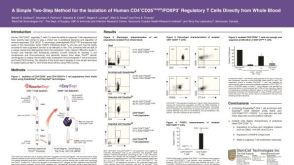 科学海报Isolation of Human CD4+CD25+Bright/Foxp3+ Regulatory T Cells Directly from Whole Blood
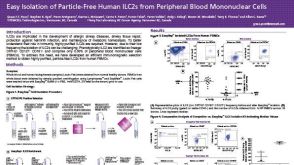 科学海报Easy Isolation of Particle-Free Human ILC2s from Peripheral Blood Mononuclear Cells
 科学海报Easy Isolation of Particle-Free Human ILC2s from Peripheral Blood Mononuclear Cells
 沪公网安备31010102008431号