Root cause analysis of limitations of virtual crossmatch for kidney allocation to highly-sensitized patients.
Efficient allocation of deceased donor organs depends upon effective prediction of immunologic compatibility based on donor HLA genotype and recipient alloantibody profile,referred to as virtual crossmatching (VCXM). VCXM has demonstrated utility in predicting compatibility,though there is reduced efficacy for patients highly sensitized against allogeneic HLA antigens. The recently revised deceased donor kidney allocation system (KAS) has increased transplantation for this group,but with an increased burden for histocompatibility testing and organ sharing. Given the limitations of VCXM,we hypothesized that increased organ offers for highly-sensitized patients could result in a concomitant increase in offers rejected due to unexpectedly positive crossmatch. Review of 645 crossmatches performed for deceased donor kidney transplantation at our center did not reveal a significant increase in positive crossmatches following KAS implementation. Positive crossmatches not predicted by VCXM were concentrated among highly-sensitized patients. Root cause analysis of VCXM failures identified technical limitations of anti-HLA antibody testing as the most significant contributor to VCXM error. Contributions of technical limitations including additive/synergistic antibody effects,prozone phenomenon,and antigens not represented in standard testing panels,were evaluated by retrospective testing. These data provide insight into the limitations of VCXM,particularly those affecting allocation of kidneys to highly-sensitized patients.
View Publication
Specht A et al. (JUL 2010)
Journal of virology 84 14 7300--11
Counteraction of HLA-C-mediated immune control of HIV-1 by Nef.
A host genetic variant (-35C/T) correlates with increased human leukocyte antigen C (HLA-C) expression and improved control of HIV-1. HLA-C-mediated immunity may be particularly protective because HIV-1 is unable to remove HLA-C from the cell surface,whereas it can avoid HLA-A- and HLA-B-mediated immunity by Nef-mediated down-modulation. However,some individuals with the protective -35CC genotype exhibit high viral loads. Here,we investigated whether the ability of HIV-1 to replicate efficiently in the protective" high-HLA-C-expression host environment correlates with specific functional properties of Nef. We found that high set point viral loads (sVLs) were not associated with the emergence of Nef variants that had acquired the ability to down-modulate HLA-C or were more effective in removing HLA-A and HLA-B from the cell surface. However�
View Publication


 EasySep™小鼠TIL(CD45)正选试剂盒





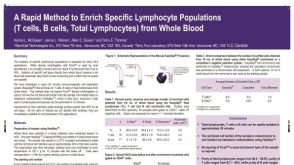 科学海报Cell Enrichment of Specific Lymphocyte Populations (T Cells, B Cells, Total Lymphocytes) from Whole Blood







 沪公网安备31010102008431号