Busskamp V et al. (NOV 2014)
Molecular systems biology 10 11 760
Rapid neurogenesis through transcriptional activation in human stem cells.
Advances in cellular reprogramming and stem cell differentiation now enable ex vivo studies of human neuronal differentiation. However,it remains challenging to elucidate the underlying regulatory programs because differentiation protocols are laborious and often result in low neuron yields. Here,we overexpressed two Neurogenin transcription factors in human-induced pluripotent stem cells and obtained neurons with bipolar morphology in 4 days,at greater than 90% purity. The high purity enabled mRNA and microRNA expression profiling during neurogenesis,thus revealing the genetic programs involved in the rapid transition from stem cell to neuron. The resulting cells exhibited transcriptional,morphological and functional signatures of differentiated neurons,with greatest transcriptional similarity to prenatal human brain samples. Our analysis revealed a network of key transcription factors and microRNAs that promoted loss of pluripotency and rapid neurogenesis via progenitor states. Perturbations of key transcription factors affected homogeneity and phenotypic properties of the resulting neurons,suggesting that a systems-level view of the molecular biology of differentiation may guide subsequent manipulation of human stem cells to rapidly obtain diverse neuronal types.
View Publication
Induction of human neuronal cells by defined transcription factors.
Somatic cell nuclear transfer,cell fusion,or expression of lineage-specific factors have been shown to induce cell-fate changes in diverse somatic cell types. We recently observed that forced expression of a combination of three transcription factors,Brn2 (also known as Pou3f2),Ascl1 and Myt1l,can efficiently convert mouse fibroblasts into functional induced neuronal (iN) cells. Here we show that the same three factors can generate functional neurons from human pluripotent stem cells as early as 6 days after transgene activation. When combined with the basic helix-loop-helix transcription factor NeuroD1,these factors could also convert fetal and postnatal human fibroblasts into iN cells showing typical neuronal morphologies and expressing multiple neuronal markers,even after downregulation of the exogenous transcription factors. Importantly,the vast majority of human iN cells were able to generate action potentials and many matured to receive synaptic contacts when co-cultured with primary mouse cortical neurons. Our data demonstrate that non-neural human somatic cells,as well as pluripotent stem cells,can be converted directly into neurons by lineage-determining transcription factors. These methods may facilitate robust generation of patient-specific human neurons for in vitro disease modelling or future applications in regenerative medicine.
View Publication
产品类型:
产品号#:
05850
05857
05870
05875
85850
85857
85870
85875
产品名:
mTeSR™1
mTeSR™1
Gallo M et al. (JAN 2013)
Cancer Research 73 1 417--427
A Tumorigenic MLL-Homeobox Network in Human Glioblastoma Stem Cells
Glioblastoma growth is driven by cancer cells that have stem cell properties,but molecular determinants of their tumorigenic behavior are poorly defined. In cancer,altered activity of the epigenetic modifiers Polycomb and Trithorax complexes may contribute to the neoplastic phenotype. Here,we provide the first mechanistic insights into the role of the Trithorax protein mixed lineage leukemia (MLL) in maintaining cancer stem cell characteristics in human glioblastoma. We found that MLL directly activates the Homeobox gene HOXA10. In turn,HOXA10 activates a downstream Homeobox network and other genes previously characterized for their role in tumorigenesis. The MLL-Homeobox axis we identified significantly contributes to the tumorigenic potential of glioblastoma stem cells. Our studies suggest a role for MLL in contributing to the epigenetic heterogeneity between tumor-initiating and non-tumor-initiating cells in glioblastoma.
View Publication
产品类型:
产品号#:
05750
产品名:
NeuroCult™ NS-A 基础培养基(人)
Lin H et al. (JAN 2017)
Neuro-oncology 19 1 43--54
Fatty acid oxidation is required for the respiration and proliferation of malignant glioma cells.
BACKGROUND Glioma is the most common form of primary malignant brain tumor in adults,with approximately 4 cases per 100 000 people each year. Gliomas,like many tumors,are thought to primarily metabolize glucose for energy production; however,the reliance upon glycolysis has recently been called into question. In this study,we aimed to identify the metabolic fuel requirements of human glioma cells. METHODS We used database searches and tissue culture resources to evaluate genotype and protein expression,tracked oxygen consumption rates to study metabolic responses to various substrates,performed histochemical techniques and fluorescence-activated cell sorting-based mitotic profiling to study cellular proliferation rates,and employed an animal model of malignant glioma to evaluate a new therapeutic intervention. RESULTS We observed the presence of enzymes required for fatty acid oxidation within human glioma tissues. In addition,we demonstrated that this metabolic pathway is a major contributor to aerobic respiration in primary-cultured cells isolated from human glioma and grown under serum-free conditions. Moreover,inhibiting fatty acid oxidation reduces proliferative activity in these primary-cultured cells and prolongs survival in a syngeneic mouse model of malignant glioma. CONCLUSIONS Fatty acid oxidation enzymes are present and active within glioma tissues. Targeting this metabolic pathway reduces energy production and cellular proliferation in glioma cells. The drug etomoxir may provide therapeutic benefit to patients with malignant glioma. In addition,the expression of fatty acid oxidation enzymes may provide prognostic indicators for clinical practice.
View Publication
产品类型:
产品号#:
05750
05751
产品名:
NeuroCult™ NS-A 基础培养基(人)
NeuroCult™ NS-A 扩增试剂盒(人)
Lavasani M et al. (APR 2014)
The Journal of clinical investigation 124 4 1745--56
Human muscle-derived stem/progenitor cells promote functional murine peripheral nerve regeneration.
Peripheral nerve injuries and neuropathies lead to profound functional deficits. Here,we have demonstrated that muscle-derived stem/progenitor cells (MDSPCs) isolated from adult human skeletal muscle (hMDSPCs) can adopt neuronal and glial phenotypes in vitro and ameliorate a critical-sized sciatic nerve injury and its associated defects in a murine model. Transplanted hMDSPCs surrounded the axonal growth cone,while hMDSPCs infiltrating the regenerating nerve differentiated into myelinating Schwann cells. Engraftment of hMDSPCs into the area of the damaged nerve promoted axonal regeneration,which led to functional recovery as measured by sustained gait improvement. Furthermore,no adverse effects were observed in these animals up to 18 months after transplantation. Following hMDSPC therapy,gastrocnemius muscles from mice exhibited substantially less muscle atrophy,an increase in muscle mass after denervation,and reorganization of motor endplates at the postsynaptic sites compared with those from PBS-treated mice. Evaluation of nerve defects in animals transplanted with vehicle-only or myoblast-like cells did not reveal histological or functional recovery. These data demonstrate the efficacy of hMDSPC-based therapy for peripheral nerve injury and suggest that hMDSPC transplantation has potential to be translated for use in human neuropathies.
View Publication
产品类型:
产品号#:
05750
05751
产品名:
NeuroCult™ NS-A 基础培养基(人)
NeuroCult™ NS-A 扩增试剂盒(人)
Zhou F-W et al. ( 2015)
PloS one 10 3 e0120281
Functional integration of human neural precursor cells in mouse cortex.
This study investigates the electrophysiological properties and functional integration of different phenotypes of transplanted human neural precursor cells (hNPCs) in immunodeficient NSG mice. Postnatal day 2 mice received unilateral injections of 100,000 GFP+ hNPCs into the right parietal cortex. Eight weeks after transplantation,1.21% of transplanted hNPCs survived. In these hNPCs,parvalbumin (PV)-,calretinin (CR)-,somatostatin (SS)-positive inhibitory interneurons and excitatory pyramidal neurons were confirmed electrophysiologically and histologically. All GFP+ hNPCs were immunoreactive with anti-human specific nuclear protein. The proportions of PV-,CR-,and SS-positive cells among GFP+ cells were 35.5%,15.7%,and 17.1%,respectively; around 15% of GFP+ cells were identified as pyramidal neurons. Those electrophysiologically and histological identified GFP+ hNPCs were shown to fire action potentials with the appropriate firing patterns for different classes of neurons and to display spontaneous excitatory and inhibitory postsynaptic currents (sEPSCs and sIPSCs). The amplitude,frequency and kinetic properties of sEPSCs and sIPSCs in different types of hNPCs were comparable to host cells of the same type. In conclusion,GFP+ hNPCs produce neurons that are competent to integrate functionally into host neocortical neuronal networks. This provides promising data on the potential for hNPCs to serve as therapeutic agents in neurological diseases with abnormal neuronal circuitry such as epilepsy.
View Publication
产品类型:
产品号#:
05750
05751
产品名:
NeuroCult™ NS-A 基础培养基(人)
NeuroCult™ NS-A 扩增试剂盒(人)
Vukovic J et al. (AUG 2013)
Stem Cells and Development 22 16 2341--2345
A Novel Fluorescent Reporter CDy1 Enriches for Neural Stem Cells Derived from the Murine Brain
Neurogenesis occurs continuously in two brain regions of adult mammals,underpinned by a pool of resident neural stem cells (NSCs) that can differentiate into all neural cell types. To advance our understanding of NSC function and to develop therapeutic and diagnostic approaches,it is important to accurately identify and enrich for NSCs. There are no definitive markers for the identification and enrichment of NSCs present in the mouse brain. Recently,a fluorescent rosamine dye,CDy1,has been identified as a label for pluripotency in cultured human embryonic and induced pluripotent stem cells. As similar cellular characteristics may enable the uptake and retention of CDy1 by other stem cell populations,we hypothesized that this dye may also enrich for primary NSCs from the mouse brain. Because the subventricular zone (SVZ) and the hippocampus represent brain regions that are highly enriched for NSCs in adult mammals,we sampled cells from these areas to test this hypothesis. These experiments revealed that CDy1 staining indeed allows for enrichment and selection of all neurosphere-forming cells from both the SVZ and the hippocampus. We next examined the effectiveness of CDy1 to select for NSCs derived from the SVZ of aged animals,where the total pool of NSCs present is significantly lower than in young animals. We found that CDy1 effectively labels the NSCs in adult and aged animals as assessed by the neurosphere assay and reflects the numbers of NSCs present in aged animals. CDy1,therefore,appears to be a novel marker for enrichment of NSCs in primary brain tissue preparations.
View Publication
Qu X et al. (OCT 2013)
Biochemical and Biophysical Research Communications 439 4 552--558
Differentiation of reprogrammed human adipose mesenchymal stem cells toward neural cells with defined transcription factors
Somatic cell reprogramming may become a powerful approach to generate specific human cell types for cell-fate determination studies and potential transplantation therapies of neurological diseases. Here we report a reprogramming methodology with which human adipose stem cells (hADSCs) can be differentiated into neural cells. After being reprogrammed with polycistronic plasmid carrying defined factor OCT3/4,SOX2,KLF4 and c-MYC,and further treated with neural induce medium,the hADSCs switched to differentiate toward neural cell lineages. The generated cells had normal karyotypes and exogenous vector sequences were not inserted in the genomes. Therefore,this cell lineage conversion methodology bypasses the risk of mutation and gene instability,and provides a novel strategy to obtain patient-specific neural cells for basic research and therapeutic application.
View Publication


 EasySep™小鼠TIL(CD45)正选试剂盒





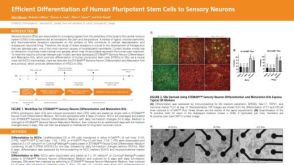 科学海报Efficient Differentiation of Human Pluripotent Stem Cells to Sensory Neurons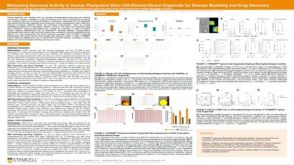

 沪公网安备31010102008431号