Transcriptomic analysis of induced pluripotent stem cells derived from patients with bipolar disorder from an old order amish pedigree
Fibroblasts from patients with Type I bipolar disorder (BPD) and their unaffected siblings were obtained from an Old Order Amish pedigree with a high incidence of BPD and reprogrammed to induced pluripotent stem cells (iPSCs). Established iPSCs were subsequently differentiated into neuroprogenitors (NPs) and then to neurons. Transcriptomic microarray analysis was conducted on RNA samples from iPSCs,NPs and neurons matured in culture for either 2 weeks (termed early neurons,E) or 4 weeks (termed late neurons,L). Global RNA profiling indicated that BPD and control iPSCs differentiated into NPs and neurons at a similar rate,enabling studies of differentially expressed genes in neurons from controls and BPD cases. Significant disease-associated differences in gene expression were observed only in L neurons. Specifically,328 genes were differentially expressed between BPD and control L neurons including GAD1,glutamate decarboxylase 1 (2.5 fold) and SCN4B,the voltage gated type IV sodium channel beta subunit (-14.6 fold). Quantitative RT-PCR confirmed the up-regulation of GAD1 in BPD compared to control L neurons. Gene Ontology,GeneGo and Ingenuity Pathway Analysis of differentially regulated genes in L neurons suggest that alterations in RNA biosynthesis and metabolism,protein trafficking as well as receptor signaling pathways may play an important role in the pathophysiology of BPD.
View Publication
产品类型:
产品号#:
05850
05857
05870
05875
85850
85857
85870
85875
27845
27945
27840
27865
27940
27965
产品名:
mTeSR™1
mTeSR™1
Hackett C et al. ( 2014)
American journal of translational research 6 2 119--28
Transplantation of Fas-deficient or wild-type neural stem/progenitor cells (NPCs) is equally efficient in treating experimental autoimmune encephalomyelitis (EAE).
Studies have shown that neural stem/progenitor cell (NPC) transplantation is beneficial in experimental autoimmune encephalomyelitis (EAE),an established animal model of multiple sclerosis (MS). It is unclear whether NPCs have the ability to integrate into the host CNS to replace lost cells or if their main mechanism of action is via bystander immunomodulation. Understanding the mechanisms by which NPCs exert their beneficial effects as well as exploring methods to increase post-transplantation survival and differentiation is critical to advancing this treatment strategy. Using the EAE model and Fas-deficient (lpr) NPCs,we investigated the effects of altering the Fas system in NPC transplantation therapy. We show that transplantation of NPCs into EAE mice ameliorates clinical symptoms with greater efficacy than sham treatments regardless of cell type (wt or lpr). NPC transplantation via retro-orbital injections significantly decreased inflammatory infiltrates at the acute time point,with a similar trend at the chronic time point. Both wt and lpr NPCs injected into mice with EAE were able to home to sites of CNS inflammation in the periventricular brain and lumbar spinal cord. Both wt and lpr NPCs have the same capacity for inducing apoptosis of Th1 and Th17 cells,and minimal numbers of NPCs entered the CNS. These cells did not express terminal differentiation markers,suggesting that NPCs exert their effects mainly via bystander peripheral immunomodulation.
View Publication
产品类型:
产品号#:
05715
产品名:
NeuroCult™成年中枢神经系统(CNS)组织酶解试剂盒(小鼠和大鼠)
Tropepe V et al. (APR 2001)
Neuron 30 1 65--78
Direct neural fate specification from embryonic stem cells: a primitive mammalian neural stem cell stage acquired through a default mechanism.
Little is known about how neural stem cells are formed initially during development. We investigated whether a default mechanism of neural specification could regulate acquisition of neural stem cell identity directly from embryonic stem (ES) cells. ES cells cultured in defined,low-density conditions readily acquire a neural identity. We characterize a novel primitive neural stem cell as a component of neural lineage specification that is negatively regulated by TGFbeta-related signaling. Primitive neural stem cells have distinct growth factor requirements,express neural precursor markers,generate neurons and glia in vitro,and have neural and non-neural lineage potential in vivo. These results are consistent with a default mechanism for neural fate specification and support a model whereby definitive neural stem cell formation is preceded by a primitive neural stem cell stage during neural lineage commitment.
View Publication
Daynac M et al. (FEB 2016)
Scientific reports 6 21505
Age-related neurogenesis decline in the subventricular zone is associated with specific cell cycle regulation changes in activated neural stem cells.
Although neural stem cells (NSCs) sustain continuous neurogenesis throughout the adult lifespan of mammals,they progressively exhibit proliferation defects that contribute to a sharp reduction in subventricular neurogenesis during aging. However,little is known regarding the early age-related events in neurogenic niches. Using a fluorescence-activated cell sorting technique that allows for the prospective purification of the main neurogenic populations from the subventricular zone (SVZ),we demonstrated an early decline in adult neurogenesis with a dramatic loss of progenitor cells in 4 month-old young adult mice. Whereas the activated and quiescent NSC pools remained stable up to 12 months,the proliferative status of activated NSCs was already altered by 6 months,with an overall extension of the cell cycle resulting from a specific lengthening of G1. Whole genome analysis of activated NSCs from 2- and 6-month-old mice further revealed distinct transcriptomic and molecular signatures,as well as a modulation of the TGFβ signalling pathway. Our microarray study constitutes a cogent identification of new molecular players and signalling pathways regulating adult neurogenesis and its early modifications.
View Publication
产品类型:
产品号#:
05700
05701
05702
产品名:
NeuroCult™ 基础培养基(小鼠和大鼠)
NeuroCult™ 扩增添加物(小鼠和大鼠)
NeuroCult™扩增试剂盒(小鼠和大鼠)
Vazin T et al. (FEB 2014)
Neurobiology of Disease 62 62--72
Efficient derivation of cortical glutamatergic neurons from human pluripotent stem cells: a model system to study neurotoxicity in Alzheimer's disease.
Alzheimer's disease (AD) is among the most prevalent forms of dementia affecting the aging population,and pharmacological therapies to date have not been successful in preventing disease progression. Future therapeutic efforts may benefit from the development of models that enable basic investigation of early disease pathology. In particular,disease-relevant models based on human pluripotent stem cells (hPSCs) may be promising approaches to assess the impact of neurotoxic agents in AD on specific neuronal populations and thereby facilitate the development of novel interventions to avert early disease mechanisms. We implemented an efficient paradigm to convert hPSCs into enriched populations of cortical glutamatergic neurons emerging from dorsal forebrain neural progenitors,aided by modulating Sonic hedgehog (Shh) signaling. Since AD is generally known to be toxic to glutamatergic circuits,we exposed glutamatergic neurons derived from hESCs to an oligomeric pre-fibrillar forms of Aβ known as globulomers"�
View Publication
产品类型:
产品号#:
05850
05857
05870
05875
85850
85857
85870
85875
产品名:
mTeSR™1
mTeSR™1
Xia G et al. (JUN 2015)
Stem cells (Dayton,Ohio) 33 6 1829--38
Genome modification leads to phenotype reversal in human myotonic dystrophy type 1 induced pluripotent stem cell-derived neural stem cells.
Myotonic dystrophy type 1 (DM1) is caused by expanded CTG repeats in the 3'-untranslated region (3' UTR) of the DMPK gene. Correcting the mutation in DM1 stem cells would be an important step toward autologous stem cell therapy. The objective of this study is to demonstrate in vitro genome editing to prevent production of toxic mutant transcripts and reverse phenotypes in DM1 stem cells. Genome editing was performed in DM1 neural stem cells (NSCs) derived from human DM1 induced pluripotent stem (iPS) cells. An editing cassette containing SV40/bGH polyA signals was integrated upstream of the CTG repeats by TALEN-mediated homologous recombination (HR). The expression of mutant CUG repeats transcript was monitored by nuclear RNA foci,the molecular hallmarks of DM1,using RNA fluorescence in situ hybridization. Alternative splicing of microtubule-associated protein tau (MAPT) and muscleblind-like (MBNL) proteins were analyzed to further monitor the phenotype reversal after genome modification. The cassette was successfully inserted into DMPK intron 9 and this genomic modification led to complete disappearance of nuclear RNA foci. MAPT and MBNL 1,2 aberrant splicing in DM1 NSCs were reversed to normal pattern in genome-modified NSCs. Genome modification by integration of exogenous polyA signals upstream of the DMPK CTG repeat expansion prevents the production of toxic RNA and leads to phenotype reversal in human DM1 iPS-cells derived stem cells. Our data provide proof-of-principle evidence that genome modification may be used to generate genetically modified progenitor cells as a first step toward autologous cell transfer therapy for DM1.
View Publication
产品类型:
产品号#:
05833
05835
05839
产品名:
STEMdiff™神经前体细胞培养基
STEMdiff™ 神经诱导培养基
STEMdiff™ 神经诱导培养基
Young KM et al. (AUG 2007)
The Journal of neuroscience : the official journal of the Society for Neuroscience 27 31 8286--96
Subventricular zone stem cells are heterogeneous with respect to their embryonic origins and neurogenic fates in the adult olfactory bulb.
We determined the embryonic origins of adult forebrain subventricular zone (SVZ) stem cells by Cre-lox fate mapping in transgenic mice. We found that all parts of the telencephalic neuroepithelium,including the medial ganglionic eminence and lateral ganglionic eminence (LGE) and the cerebral cortex,contribute multipotent,self-renewing stem cells to the adult SVZ. Descendants of the embryonic LGE and cortex settle in ventral and dorsal aspects of the dorsolateral SVZ,respectively. Both populations contribute new (5-bromo-2'-deoxyuridine-labeled) tyrosine hydroxylase- and calretinin-positive interneurons to the adult olfactory bulb. However,calbindin-positive interneurons in the olfactory glomeruli were generated exclusively by LGE-derived stem cells. Thus,different SVZ stem cells have different embryonic origins,colonize different parts of the SVZ,and generate different neuronal progeny,suggesting that some aspects of embryonic patterning are preserved in the adult SVZ. This could have important implications for the design of endogenous stem cell-based therapies in the future.
View Publication
产品类型:
产品号#:
05700
05701
05702
05740
产品名:
NeuroCult™ 基础培养基(小鼠和大鼠)
NeuroCult™ 扩增添加物(小鼠和大鼠)
NeuroCult™扩增试剂盒(小鼠和大鼠)
Namba T et al. (MAY 2010)
Neuroscience 167 2 372--83
Pigment epithelium-derived factor up-regulation induced by memantine, an N-methyl-D-aspartate receptor antagonist, is involved in increased proliferation of hippocampal progenitor cells.
Memantine is classified as an NMDA receptor antagonist. We recently reported that memantine promoted the proliferation of neural progenitor cells and the production of mature granule neurons in the adult hippocampus. However,the molecular mechanism responsible for the memantine-induced promotion of cellular proliferation remains unknown. In this study we searched for a factor that mediates memantine-induced cellular proliferation,and found that pigment epithelium-derived factor (PEDF),a broad-acting neurotrophic factor,is up-regulated in the dentate gyrus of adult mice after the injection of memantine. PEDF mRNA expression increased significantly by 3.5-fold at 1 day after the injection of memantine. In addition,the expression level of PEDF protein also increased by 1.8-fold at 2 days after the injection of memantine. Immunohistochemical study using anti-PEDF antibody showed that the majority of the PEDF-expressing cells were protoplasmic and perivascular astrocytes. Using a neurosphere assay,we confirmed that PEDF enhanced cellular proliferation under the presence of fibroblast growth factor-2 (FGF-2) and epidermal growth factor (EGF) but was not involved in the multilineage potency of hippocampal progenitor cells. Over expression of PEDF by adeno-associated virus,however,did not stimulate cellular proliferation,suggesting PEDF per se does not promote cellular proliferation in vivo. These findings suggest that the memantine induced PEDF up-regulation is involved in increased proliferation of hippocampal progenitor cells.
View Publication
产品类型:
产品号#:
05700
05701
05702
产品名:
NeuroCult™ 基础培养基(小鼠和大鼠)
NeuroCult™ 扩增添加物(小鼠和大鼠)
NeuroCult™扩增试剂盒(小鼠和大鼠)
Biasini E et al. (JAN 2012)
PloS one 7 3 e33472
The toxicity of a mutant prion protein is cell-autonomous, and can be suppressed by wild-type prion protein on adjacent cells.
Insight into the normal function of PrP(C),and how it can be subverted to produce neurotoxic effects,is provided by PrP molecules carrying deletions encompassing the conserved central region. The most neurotoxic of these mutants,Δ105-125 (called ΔCR),produces a spontaneous neurodegenerative illness when expressed in transgenic mice,and this phenotype can be dose-dependently suppressed by co-expression of wild-type PrP. Whether the toxic activity of ΔCR PrP and the protective activity or wild-type PrP are cell-autonomous,or can be exerted on neighboring cells,is unknown. To investigate this question,we have utilized co-cultures of differentiated neural stem cells derived from mice expressing ΔCR or wild-type PrP. Cells from the two kinds of mice,which are marked by the presence or absence of GFP,are differentiated together to yield neurons,astrocytes,and oligodendrocytes. As a surrogate read-out of ΔCR PrP toxicity,we assayed sensitivity of the cells to the cationic antibiotic,Zeocin. In a previous study,we reported that cells expressing ΔCR PrP are hypersensitive to the toxic effects of several cationic antibiotics,an effect that is suppressed by co-expression of wild type PrP,similar to the rescue of the neurodegenerative phenotype observed in transgenic mice. Using this system,we find that while ΔCR-dependent toxicity is cell-autonomous,the rescuing activity of wild-type PrP can be exerted in trans from nearby cells. These results provide important insights into how ΔCR PrP subverts a normal physiological function of PrP(C),and the cellular mechanisms underlying the rescuing process.
View Publication
产品类型:
产品号#:
05700
05701
05702
05703
05704
产品名:
NeuroCult™ 基础培养基(小鼠和大鼠)
NeuroCult™ 扩增添加物(小鼠和大鼠)
NeuroCult™扩增试剂盒(小鼠和大鼠)
NeuroCult™ 分化添加物(小鼠和大鼠)
NeuroCult™ 分化试剂盒(小鼠和大鼠)
Drury-Stewart D et al. (AUG 2013)
Stem cell research & therapy 4 4 93
Highly efficient differentiation of neural precursors from human embryonic stem cells and benefits of transplantation after ischemic stroke in mice.
INTRODUCTION: Ischemic stroke is a leading cause of death and disability,but treatment options are severely limited. Cell therapy offers an attractive strategy for regenerating lost tissues and enhancing the endogenous healing process. In this study,we investigated the use of human embryonic stem cell-derived neural precursors as a cell therapy in a murine stroke model.backslashnbackslashnMETHODS: Neural precursors were derived from human embryonic stem cells by using a fully adherent SMAD inhibition protocol employing small molecules. The efficiency of neural induction and the ability of these cells to further differentiate into neurons were assessed by using immunocytochemistry. Whole-cell patch-clamp recording was used to demonstrate the electrophysiological activity of human embryonic stem cell-derived neurons. Neural precursors were transplanted into the core and penumbra regions of a focal ischemic stroke in the barrel cortex of mice. Animals received injections of bromodeoxyuridine to track regeneration. Neural differentiation of the transplanted cells and regenerative markers were measured by using immunohistochemistry. The adhesive removal test was used to determine functional improvement after stroke and intervention.backslashnbackslashnRESULTS: After 11 days of neural induction by using the small-molecule protocol,over 95% of human embryonic stem-derived cells expressed at least one neural marker. Further in vitro differentiation yielded cells that stained for mature neuronal markers and exhibited high-amplitude,repetitive action potentials in response to depolarization. Neuronal differentiation also occurred after transplantation into the ischemic cortex. A greater level of bromodeoxyuridine co-localization with neurons was observed in the penumbra region of animals receiving cell transplantation. Transplantation also improved sensory recovery in transplant animals over that in control animals.backslashnbackslashnCONCLUSIONS: Human embryonic stem cell-derived neural precursors derived by using a highly efficient small-molecule SMAD inhibition protocol can differentiate into electrophysiologically functional neurons in vitro. These cells also differentiate into neurons in vivo,enhance regenerative activities,and improve sensory recovery after ischemic stroke.
View Publication
产品类型:
产品号#:
05850
05857
05870
05875
85850
85857
85870
85875
产品名:
mTeSR™1
mTeSR™1
Sun Y et al. (MAR )
PLOS ONE 3 e0118771
Properties of Neurons Derived from Induced Pluripotent Stem Cells of Gaucher Disease Type 2 Patient Fibroblasts: Potential Role in Neuropathology
Gaucher disease (GD) is caused by insufficient activity of acid $\$-glucosidase (GCase) resulting from mutations in GBA1. To understand the pathogenesis of the neuronopathic GD,induced pluripotent stem cells (iPSCs) were generated from fibroblasts isolated from three GD type 2 (GD2) and 2 unaffected (normal and GD carrier) individuals. The iPSCs were converted to neural precursor cells (NPCs) which were further differentiated into neurons. Parental GD2 fibroblasts as well as iPSCs,NPCs,and neurons had similar degrees of GCase deficiency. Lipid analyses showed increases of glucosylsphingosine and glucosylceramide in the GD2 cells. In addition,GD2 neurons showed increased $\$-synuclein protein compared to control neurons. Whole cell patch-clamping of the GD2 and control iPSCs-derived neurons demonstrated excitation characteristics of neurons,but intriguingly,those from GD2 exhibited consistently less negative resting membrane potentials with various degree of reduction in action potential amplitudes,sodium and potassium currents. Culture of control neurons in the presence of the GCase inhibitor (conduritol B epoxide) recapitulated these findings,providing a functional link between decreased GCase activity in GD and abnormal neuronal electrophysiological properties. To our knowledge,this study is first to report abnormal electrophysiological properties in GD2 iPSC-derived neurons that may underlie the neuropathic phenotype in Gaucher disease.
View Publication


 EasySep™小鼠TIL(CD45)正选试剂盒





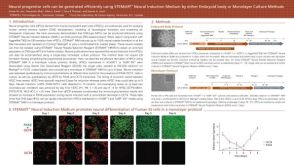 科学海报Neural Progenitor Cells can be Generated Efficiently Using STEMdiff™ Neural Induction Medium By Either Embryoid Body or Monolayer Culture Methods
 沪公网安备31010102008431号