HIV-1 envelope protein binds to and signals through integrin alpha4beta7, the gut mucosal homing receptor for peripheral T cells.
Infection with human immunodeficiency virus 1 (HIV-1) results in the dissemination of virus to gut-associated lymphoid tissue. Subsequently,HIV-1 mediates massive depletion of gut CD4+ T cells,which contributes to HIV-1-induced immune dysfunction. The migration of lymphocytes to gut-associated lymphoid tissue is mediated by integrin alpha4beta7. We demonstrate here that the HIV-1 envelope protein gp120 bound to an activated form of alpha4beta7. This interaction was mediated by a tripeptide in the V2 loop of gp120,a peptide motif that mimics structures presented by the natural ligands of alpha4beta7. On CD4+ T cells,engagement of alpha4beta7 by gp120 resulted in rapid activation of LFA-1,the central integrin involved in the establishment of virological synapses,which facilitate efficient cell-to-cell spreading of HIV-1.
View Publication
产品类型:
产品号#:
19052
19052RF
19055
19055RF
产品名:
EasySep™人CD4+ T细胞富集试剂盒
RoboSep™ 人CD4+ T细胞富集试剂盒含滤芯吸头
EasySep™人NK细胞富集试剂盒
RoboSep™ 人NK细胞富集试剂盒含滤芯吸头
Trotta R et al. (APR 2005)
Blood 105 8 3011--8
Differential expression of SHIP1 in CD56bright and CD56dim NK cells provides a molecular basis for distinct functional responses to monokine costimulation.
Monocyte cytokines (ie,monokines) induce natural killer (NK) cells to produce interferon-gamma (IFN-gamma),which is critical for monocyte clearance of infectious pathogens and tumor surveillance. Human CD56bright NK cells produce far more IFN-gamma in response to monokines than do CD56dim NK cells. The kinases and phosphatases involved in regulating IFN-gamma production by monokine-activated NK cells are not clearly identified. SHIP1 is a 5' inositol phosphatase that dephosphorylates the phosphatidylinositol-3 kinase (PI-3K) product PI3,4,5P3. Here,we show that constitutive expression of SHIP1 is distinctly lower in CD56bright NK cells compared with CD56dim NK cells,suggesting it could be an important negative regulator of IFN-gamma production in monokine-activated NK cells. Indeed,overexpression of SHIP1 in CD56bright NK cells followed by monokine activation substantially lowered IFN-gamma production. This effect was not seen when NK cells were infected with a SHIP1 mutant containing an inactive catalytic domain. Finally,NK cells in SHIP1-/- mice produced more IFN-gamma in response to monokines in vivo than did NK cells from wild-type mice. Collectively,these results demonstrate that SHIP1 negatively regulates monokine-induced NK cell IFN-gamma production in vitro and in vivo and provide the first molecular explanation for an important functional distinction observed between CD56bright and CD56dim human NK subsets.
View Publication
产品类型:
产品号#:
15025
15065
产品名:
RosetteSep™人NK细胞富集抗体混合物
RosetteSep™人NK细胞富集抗体混合物
Jeyanathan M et al. ( 2017)
Journal of immunology (Baltimore,Md. : 1950) 199 7 2555--2569
CXCR3 Signaling Is Required for Restricted Homing of Parenteral Tuberculosis Vaccine-Induced T Cells to Both the Lung Parenchyma and Airway.
Although most novel tuberculosis (TB) vaccines are designed for delivery via the muscle or skin for enhanced protection in the lung,it has remained poorly understood whether systemic vaccine-induced memory T cells can readily home to the lung mucosa prior to and shortly after pathogen exposure. We have investigated this issue by using a model of parenteral TB immunization and intravascular immunostaining. We find that systemically induced memory T cells are restricted to the blood vessels in the lung,unable to populate either the lung parenchymal tissue or the airway under homeostatic conditions. We further find that after pulmonary TB infection,it still takes many days before such T cells can enter the lung parenchymal tissue and airway. We have identified the acquisition of CXCR3 expression by circulating T cells to be critical for their entry to these lung mucosal compartments. Our findings offer new insights into mucosal T cell biology and have important implications in vaccine strategies against pulmonary TB and other intracellular infections in the lung.
View Publication
产品类型:
产品号#:
19853
19853RF
产品名:
EasySep™小鼠CD8+ T细胞分选试剂盒
RoboSep™ 小鼠CD8+ T细胞分选试剂盒
Grievink HW et al. (OCT 2016)
Biopreservation and biobanking 14 5 410--415
Comparison of Three Isolation Techniques for Human Peripheral Blood Mononuclear Cells: Cell Recovery and Viability, Population Composition, and Cell Functionality.
Routine techniques for the isolation of human peripheral blood mononuclear cells (PBMCs) include density centrifugation with Ficoll-Paque and isolation by cell preparation tubes (CPTs) and SepMate tubes with Lymphoprep. In a series of experiments,these three PBMC isolation techniques were compared for cell recovery and viability,PBMC population composition,and cell functionality,aiming to provide a starting basis for the selection of the most appropriate method of PBMC isolation for a specific downstream application. PBMCs were freshly isolated from venous blood of healthy male donors,applying the different techniques in parallel. Cell recovery and viability were assessed using a hemacytometer and trypan blue. Immunophenotyping was performed by flow cytometry. Cell functionality was assessed in stimulated (100 ng/mL staphylococcal enterotoxin B [SEB]) and unstimulated 24 hours PBMC cultures,with cytokine production and lactate dehydrogenase (LDH) release as readout measures. PBMC isolation by SepMate and CPT resulted in a 70% higher recovery than Ficoll isolation. CPT-isolated populations contained more erythrocyte contamination. Cell viability,assessed by trypan blue exclusion,was 100% for all three isolation techniques. SepMate and CPT isolation gave higher SEB-induced cytokine responses in cell cultures,for IFNγ and for secondary cytokines. IL-6 and IL-8 release in unstimulated cultures was higher for CPT-isolated PBMCs compared to Ficoll- and SepMate-isolated PBMCs. LDH release did not differ between cell isolation techniques. In addition to criteria such as cost and application practicalities,these data may support selection of a specific PBMC isolation technique for downstream analysis.
View Publication
产品类型:
产品号#:
07801
07811
07851
07861
85450
85460
86450
86460
18060
18061
产品名:
Lymphoprep™
Lymphoprep™
SepMate™-50 (IVD)
SepMate™-50 (IVD)
SepMate™-50 (RUO)
SepMate™-50 (RUO)
Lymphoprep™
Lymphoprep™
Wu X et al. (DEC 2008)
Blood 112 12 4675--82
Alternative splicing regulates activation-induced cytidine deaminase (AID): implications for suppression of AID mutagenic activity in normal and malignant B cells.
The mutagenic enzyme activation-induced cytidine deaminase (AID) is required for immunoglobulin class switch recombination (CSR) and somatic hypermutation (SHM) in germinal center (GC) B cells. Deregulated expression of AID is associated with various B-cell malignancies and,currently,it remains unclear how AID activity is extinguished to avoid illegitimate mutations. AID has also been shown to be alternatively spliced in malignant B cells,and there is limited evidence that this also occurs in normal blood B cells. The functional significance of these splice variants remains unknown. Here we show that normal GC human B cells and blood memory B cells similarly express AID splice variants and show for the first time that AID splicing variants are singly expressed in individual normal B cells as well as malignant B cells from chronic lymphocytic leukemia patients. We further demonstrate that the alternative AID splice variants display different activities ranging from inactivation of CSR to inactivation or heightened SHM activity. Our data therefore suggest that CSR and SHM are differentially switched off by varying the expression of splicing products of AID at the individual cell level. Most importantly,our findings suggest a novel tumor suppression mechanism by which unnecessary AID mutagenic activities are promptly contained for GC B cells.
View Publication
Krummen M et al. (JUL 2010)
Journal of leukocyte biology 88 1 189--99
Release of IL-12 by dendritic cells activated by TLR ligation is dependent on MyD88 signaling, whereas TRIF signaling is indispensable for TLR synergy.
Recently,it has been shown that certain combinations of TLR ligands act in synergy to induce the release of IL-12 by DCs. In this study,we sought to define the critical parameters underlying TLR synergy. Our data show that TLR ligands act synergistically if MyD88- and TRIF-dependent ligands are combined. TLR4 uses both of these adaptor molecules,thus activation via TLR4 proved to be a synergistic event on its own. TLR synergy did not affect all aspects of DC activation but enhanced primarily the release of certain cytokines,particularly IL-12,whereas the expression of costimulatory molecules remained unchanged. Consequently,synergistic activation of DC did not affect their ability to induce T cell proliferation but resulted in T(H)1-biased responses in vitro and in vivo. Furthermore,we examined the impact of TLR ligand combinations on primary DC in vitro but observed only modest effects with a combination of CpG + Poly (I:C). However,noticeable synergy in terms of IL-12 production by DCs was detectable in vivo after systemic administration of CpG + Poly (I:C). Finally,we show that synergy is partially dependent on IFNAR signaling but does not require the release of IFNs to the enviroment,suggesting an autocrine action of type I IFNs.
View Publication
产品类型:
产品号#:
18752
18752RF
21000
20119
20155
18758
18758RF
18768
18768RF
产品名:
RoboSep™- S
RoboSep™ 吸头组件抛光剂
RoboSep™分选管套装(9个塑料管)
Lambert AA et al. (AUG 2008)
Blood 112 4 1299--307
The C-type lectin surface receptor DCIR acts as a new attachment factor for HIV-1 in dendritic cells and contributes to trans- and cis-infection pathways.
The dynamic interplay between dendritic cells (DCs) and human immunodeficiency virus type-1 (HIV-1) is thought to result in viral dissemination and evasion of antiviral immunity. Although initial observations suggested that the C-type lectin receptor (CLR) DC-SIGN was responsible for the trans-infection function of the virus,subsequent studies demonstrated that trans-infection of CD4(+) T cells with HIV-1 can also occur through DC-SIGN-independent mechanisms. We demonstrate that a cell surface molecule designated DCIR (for DC immunoreceptor),a member of a recently described family of DC-expressing CLRs,can participate in the capture of HIV-1 and promote infection in trans and in cis of autologous CD4(+) T cells from human immature monocyte-derived DCs. The contribution of DCIR to these processes was revealed using DCIR-specific siRNAs and a polyclonal antibody specific for the carbohydrate recognition domain of DCIR. Data from transfection experiments indicated that DCIR acts as a ligand for HIV-1 and is involved in events leading to productive virus infection. Finally,we show that the neck domain of DCIR is important for the DCIR-mediated effect on virus binding and infection. These results point to a possible role for DCIR in HIV-1 pathogenesis by supporting the productive infection of DCs and promoting virus propagation.
View Publication
Beeton C et al. (NOV 2006)
Proceedings of the National Academy of Sciences of the United States of America 103 46 17414--9
Kv1.3 channels are a therapeutic target for T cell-mediated autoimmune diseases.
Autoreactive memory T lymphocytes are implicated in the pathogenesis of autoimmune diseases. Here we demonstrate that disease-associated autoreactive T cells from patients with type-1 diabetes mellitus or rheumatoid arthritis (RA) are mainly CD4+ CCR7- CD45RA- effector memory T cells (T(EM) cells) with elevated Kv1.3 potassium channel expression. In contrast,T cells with other antigen specificities from these patients,or autoreactive T cells from healthy individuals and disease controls,express low levels of Kv1.3 and are predominantly naïve or central-memory (T(CM)) cells. In T(EM) cells,Kv1.3 traffics to the immunological synapse during antigen presentation where it colocalizes with Kvbeta2,SAP97,ZIP,p56(lck),and CD4. Although Kv1.3 inhibitors [ShK(L5)-amide (SL5) and PAP1] do not prevent immunological synapse formation,they suppress Ca2+-signaling,cytokine production,and proliferation of autoantigen-specific T(EM) cells at pharmacologically relevant concentrations while sparing other classes of T cells. Kv1.3 inhibitors ameliorate pristane-induced arthritis in rats and reduce the incidence of experimental autoimmune diabetes in diabetes-prone (DP-BB/W) rats. Repeated dosing with Kv1.3 inhibitors in rats has not revealed systemic toxicity. Further development of Kv1.3 blockers for autoimmune disease therapy is warranted.
View Publication


 EasySep™小鼠TIL(CD45)正选试剂盒





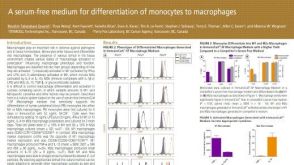 科学海报A Serum-Free Medium for Differentiation of Monocytes to Macrophages

 沪公网安备31010102008431号