Brafman DA ( 2015)
Methods in molecular biology (Clifton,N.J.) 1212 87--102
Generation, Expansion, and Differentiation of Human Pluripotent Stem Cell (hPSC) Derived Neural Progenitor Cells (NPCs).
Human pluripotent stem cell (hPSC)-derived neural progenitor cells (NPCs),a multipotent cell population that is capable of near indefinite expansion and subsequent differentiation into the various cell types that comprise the central nervous system (CNS),could provide an unlimited source of cells for neural-related cell-based therapies and disease modeling. However,the use of NPCs for the study and treatment of a variety of debilitating neurological diseases requires the development of scalable and reproducible protocols for their generation,expansion,characterization,and neuronal differentiation. Here,we describe a serum-free method for the stepwise generation of NPCs from hPSCs through the sequential formation of embryoid bodies (EBs) and neuro-epithelial-like rosettes. NPCs isolated from neural rosette cultures can be homogenously expanded while maintaining high expression of pan-neural markers such as SOX1,SOX2,and Nestin. Finally,this protocol allows for the robust differentiation of NPCs into microtubule-associated protein 2 (MAP2) and β-Tubulin-III (β3T) positive neurons.
View Publication
产品类型:
产品号#:
05860
05880
05850
05857
05870
05875
85850
85857
85870
85875
产品名:
mTeSR™1
mTeSR™1
Liu J et al. (NOV 2014)
FASEB journal : official publication of the Federation of American Societies for Experimental Biology 28 11 4642--4656
A reciprocal antagonism between miR-376c and TGF-$\$ regulates neural differentiation of human pluripotent stem cells.
Differentiation of neural lineages from human pluripotent stem cells (hPSCs) raises the hope of generating functional cells for the treatment of neural diseases. However,current protocols for differentiating hPSCs into neural lineages remain inefficient and largely variable between different hPSC lines. We report that microRNA 376c (miR-376c) significantly enhanced neural differentiation of hPSCs in a defined condition by suppressing SMAD4,the co-SMAD for TGF-β signaling. Downstream,SMAD4 directly bound and suppressed PAX6,the critical neural lineage specification factor. Interestingly,we also found that SMAD4 binds and suppresses miR-376c clusters in undifferentiated hESCs. In summary,our findings revealed a reciprocal antagonism between miR-376c and SMAD signaling that regulates cell fate during human neural differentiation.-Liu,J.,Wang,L.,Su,Z.,Wu,W.,Cai,X.,Li,D.,Hou,J.,Pei,D.,Pan,G. A reciprocal antagonism between miR-376c and TGF-β signaling regulates neural differentiation of hPSCs.
View Publication
产品类型:
产品号#:
05850
05857
05870
05875
85850
85857
85870
85875
产品名:
mTeSR™1
mTeSR™1
D'Aiuto L et al. (OCT 2014)
Organogenesis 10 4 365--377
Large-scale generation of human iPSC-derived neural stem cells/early neural progenitor cells and their neuronal differentiation.
Induced pluripotent stem cell (iPSC)-based technologies offer an unprecedented opportunity to perform high-throughput screening of novel drugs for neurological and neurodegenerative diseases. Such screenings require a robust and scalable method for generating large numbers of mature,differentiated neuronal cells. Currently available methods based on differentiation of embryoid bodies (EBs) or directed differentiation of adherent culture systems are either expensive or are not scalable. We developed a protocol for large-scale generation of neuronal stem cells (NSCs)/early neural progenitor cells (eNPCs) and their differentiation into neurons. Our scalable protocol allows robust and cost-effective generation of NSCs/eNPCs from iPSCs. Following culture in neurobasal medium supplemented with B27 and BDNF,NSCs/eNPCs differentiate predominantly into vesicular glutamate transporter 1 (VGLUT1) positive neurons. Targeted mass spectrometry analysis demonstrates that iPSC-derived neurons express ligand-gated channels and other synaptic proteins and whole-cell patch-clamp experiments indicate that these channels are functional. The robust and cost-effective differentiation protocol described here for large-scale generation of NSCs/eNPCs and their differentiation into neurons paves the way for automated high-throughput screening of drugs for neurological and neurodegenerative diseases.
View Publication
产品类型:
产品号#:
05850
05857
05870
05875
85850
85857
85870
85875
产品名:
mTeSR™1
mTeSR™1
Luo C et al. (APR 2016)
ACS Applied Materials and Interfaces 8 13 8367--8375
Improving the Gene Transfection in Human Embryonic Stem Cells: Balancing with Cytotoxicity and Pluripotent Maintenance
Manipulation of genes in human embryonic stem cells (hESCs) is imperative for their highly potential applications; however,the transduction efficiency remains very low. Although existing evidence revealed the type,size,and zeta potential of vector affect gene transfection efficiency in cells,the systematic study in hESCs is scarce. In this study,using poly(amidoamine) (PAMAM) dendrimers ended with amine,hydroxyl,or carboxyl as model,we tested the influences of size and surface group as well as cytotoxicity and endocytosis on hESC gene transfection. We found that in culture medium of mTeSR the particle sizes of G5,G7,G4.5COOH,and G5OH were around 5 nm and G1 had a smaller size of 3.14 nm. G5 and G7 had a slight and significant positive zeta potential,respectively,whereas G1 was slightly negative,and G4.5COOH and G5OH were significantly negative. We demonstrated that only amine-terminated dendrimers accomplished gene transfection in hESCs,which is greater than that from Lipofectamine 2000 transfection. Ten micromolar G5 had the greatest efficiency and was better than 1000 μM G1. Only a low concentration (0.5 and 1 μM) of G7 realized gene delivery. Amine-ended dendrimers,especially with higher generations,were detrimental to the growth and pluripotent maintenance of hESCs. In contrast,similarly sized hydroxyl- and carboxyl-terminated dendrimers exerted much lower cytotoxicity,in which carboxyl-terminated dendrimer maintained pluripotency of hESCs. We also confirmed the endocytosis into and significant exocytosis from hESCs using FITC-labeled G5 dendrimer. These results suggested that careful considerations of size,concentration,and zeta potential,particularly the identity and position of groups,as well as minimized exocytosis in the design of a vector for hESC gene delivery are necessary,which helps to better design an effective vector in hESC gene transduction.
View Publication
产品类型:
产品号#:
05850
05857
05870
05875
85850
85857
85870
85875
产品名:
mTeSR™1
mTeSR™1
Sokolov MV et al. (MAY 2011)
Mutation research 709-710 40--8
Dynamics of the transcriptome response of cultured human embryonic stem cells to ionizing radiation exposure.
One of the key consequences of exposure of human cells to genotoxic agents is the activation of DNA damage responses (DDR). While the mechanisms underpinning DDR in fully differentiated somatic human cells have been studied extensively,molecular signaling events and pathways involved in DDR in pluripotent human embryonic stem cells (hESC) remain largely unexplored. We studied changes in the human genome-wide transcriptome of H9 hESC line following exposures to 1Gy of gamma-radiation at 2h and 16h post-irradiation. Quantitative real-time PCR was performed to verify the expression data for a subset of genes. In parallel,the cell growth,DDR kinetics,and expression of pluripotency markers in irradiated hESC were monitored. The changes in gene expression in hESC after exposure to ionizing radiation (IR) are substantially different from those observed in somatic human cell lines. Gene expression patterns at 2h post-IR showed almost an exclusively p53-dependent,predominantly pro-apoptotic,signature with a total of only 30 up-regulated genes. In contrast,the gene expression patterns at 16h post-IR showed 354 differentially expressed genes,mostly involved in pro-survival pathways,such as increased expression of metallothioneins,ubiquitin cycle,and general metabolism signaling. Cell growth data paralleled trends in gene expression changes. DDR in hESC followed the kinetics reported for human somatic differentiated cells. The expression of pluripotency markers characteristic of undifferentiated hESC was not affected by exposure to IR during the time course of our analysis. Our data on dynamics of transcriptome response of irradiated hESCs may provide a valuable tool to screen for markers of IR exposure of human cells in their most naive state; thus unmasking the key elements of DDR; at the same time,avoiding the complexity of interpreting distinct cell type-dependent genotoxic stress responses of terminally differentiated cells.
View Publication
产品类型:
产品号#:
05850
05857
05870
05875
85850
85857
85870
85875
产品名:
mTeSR™1
mTeSR™1
M. Drukker et al. (may 2012)
Nature biotechnology 30 6 531--42
Isolation of primitive endoderm, mesoderm, vascular endothelial and trophoblast progenitors from human pluripotent stem cells.
To identify early populations of committed progenitors derived from human embryonic stem cells (hESCs),we screened self-renewing,BMP4-treated and retinoic acid-treated cultures with >400 antibodies recognizing cell-surface antigens. Sorting of >30 subpopulations followed by transcriptional analysis of developmental genes identified four distinct candidate progenitor groups. Subsets detected in self-renewing cultures,including CXCR4(+) cells,expressed primitive endoderm genes. Expression of Cxcr4 in primitive endoderm was confirmed in visceral endoderm of mouse embryos. BMP4-induced progenitors exhibited gene signatures of mesoderm,trophoblast and vascular endothelium,suggesting correspondence to gastrulation-stage primitive streak,chorion and allantois precursors,respectively. Functional studies in vitro and in vivo confirmed that ROR2(+) cells produce mesoderm progeny,APA(+) cells generate syncytiotrophoblasts and CD87(+) cells give rise to vasculature. The same progenitor classes emerged during the differentiation of human induced pluripotent stem cells (hiPSCs). These markers and progenitors provide tools for purifying human tissue-regenerating progenitors and for studying the commitment of pluripotent stem cells to lineage progenitors.
View Publication
产品类型:
产品号#:
05850
05857
05870
05875
85850
85857
85870
85875
07181
产品名:
mTeSR™1
mTeSR™1
Lian X et al. (JUL 2012)
Proceedings of the National Academy of Sciences of the United States of America 109 27 E1848--57
Robust cardiomyocyte differentiation from human pluripotent stem cells via temporal modulation of canonical Wnt signaling.
Human pluripotent stem cells (hPSCs) offer the potential to generate large numbers of functional cardiomyocytes from clonal and patient-specific cell sources. Here we show that temporal modulation of Wnt signaling is both essential and sufficient for efficient cardiac induction in hPSCs under defined,growth factor-free conditions. shRNA knockdown of β-catenin during the initial stage of hPSC differentiation fully blocked cardiomyocyte specification,whereas glycogen synthase kinase 3 inhibition at this point enhanced cardiomyocyte generation. Furthermore,sequential treatment of hPSCs with glycogen synthase kinase 3 inhibitors followed by inducible expression of β-catenin shRNA or chemical inhibitors of Wnt signaling produced a high yield of virtually (up to 98%) pure functional human cardiomyocytes from multiple hPSC lines. The robust ability to generate functional cardiomyocytes under defined,growth factor-free conditions solely by genetic or chemically mediated manipulation of a single developmental pathway should facilitate scalable production of cardiac cells suitable for research and regenerative applications.
View Publication
产品类型:
产品号#:
05850
05857
05870
05875
72032
72034
72552
72554
85850
85857
85870
85875
产品名:
BIO
BIO
IWP-4
IWP-4
mTeSR™1
mTeSR™1
Leydon C et al. (OCT 2013)
Tissue Engineering Part A 19 19-20 2233--2241
Human embryonic stem cell-derived epithelial cells in a novel in vitro model of vocal mucosa.
A satisfactory in vitro model of vocal fold mucosa does not exist,thus precluding a systematic,controlled study of vocal fold biology and biomechanics. We sought to create a valid,reproducible three-dimensional (3D) in vitro model of human origin of vocal fold mucosa of human origin. We hypothesized that coculture of human embryonic stem cell (hESC)-derived simple epithelial cells with primary vocal fold fibroblasts under appropriate conditions would elicit morphogenesis of progenitor cells into vocal fold epithelial-like cells and creation of a basement membrane. Using an in vitro prospective study design,hESCs were differentiated into cells that coexpressed the simple epithelial cell marker,keratin 18 (K18),and the transcription factor,p63. These simple epithelial cells were cocultured with primary vocal fold fibroblasts seeded in a collagen gel scaffold. The cells were cultured for 3 weeks in a keratinocyte medium at an air–liquid interface. After that time,the engineered mucosa demonstrated a stratified,squamous epithelium and a continuous basement membrane recapitulating the key morphologic and phenotypic characteristics of native vocal fold mucosa. hESC-derived epithelial cells exhibited positive staining for vocal fold stratified,squamous epithelial markers,keratin 13 (K13) and 14 (K14),as well as tight junctions,adherens junctions,gap junctions,and desmosomes. Despite the presence of components critical for epithelial structural integrity,the epithelium demonstrated greater permeability than native tissue indicating compromised functional integrity. While further work is warranted to improve functional barrier integrity,this study demonstrates that hESC-derived epithelial progenitor cells can be engineered to create a replicable 3D in vitro model of vocal fold mucosa featuring a multilayered,terminally differentiated epithelium.
View Publication
产品类型:
产品号#:
05850
05857
05870
05875
85850
85857
85870
85875
产品名:
mTeSR™1
mTeSR™1
Konorov SO et al. (OCT 2013)
Analytical Chemistry 85 19 8996--9002
Label-Free Determination of the Cell Cycle Phase in Human Embryonic Stem Cells by Raman Microspectroscopy
The cell cycle is a series of integrated and coordinated physiological events that results in cell growth and replication. Besides observing the event of cell division it is not feasible to determine the cell cycle phase without fatal and/or perturbing invasive procedures such as cell staining,fixing,and/or dissociation. Raman microspectroscopy (RMS) is a chemical imaging technique that exploits molecular vibrations as a contrast mechanism; it can be applied to single living cells noninvasively to allow unperturbed analysis over time. We used RMS to determine the cell cycle phase based on integrating the composite 783 cm(-1) nucleic acid band intensities across individual cell nuclei. After correcting for RNA contributions using the RNA 811 cm(-1) band,the measured intensities essentially reflected DNA content. When quantifying Raman images from single cells in a population of methanol-fixed human embryonic stem cells,the histogram of corrected 783 cm(-1) band intensities exhibited a profile analogous to that obtained using flow-cytometry with nuclear stains. The two population peaks in the histogram occur at Raman intensities corresponding to a 1-fold and 2-fold diploid DNA complement per cell,consistent with a distribution of cells with a population peak due to cells at the end of G1 phase (1-fold) and a peak due to cells entering M phase (2-fold). When treated with EdU to label the replicating DNA and block cell division,cells with higher EdU-related fluorescence generally had higher integrated Raman intensities. This provides proof-of-principle of an analytical method for label-free RMS determination in situ of cell cycle phase in adherent monolayers or even single adherent cells.
View Publication
产品类型:
产品号#:
05850
05857
05870
05875
85850
85857
85870
85875
产品名:
mTeSR™1
mTeSR™1
Yanagihara K et al. (DEC 2016)
Stem cells and development 25 24 1884--1897
Prediction of Differentiation Tendency Toward Hepatocytes from Gene Expression in Undifferentiated Human Pluripotent Stem Cells.
Functional hepatocytes derived from human pluripotent stem cells (hPSCs) have potential as tools for predicting drug-induced hepatotoxicity in the early phases of drug development. However,the propensity of hPSC lines to differentiate into specific lineages is reported to differ. The ability to predict low propensity of hPSCs to differentiate into hepatocytes would facilitate the selection of useful hPSC clones and substantially accelerate development of hPSC-derived hepatocytes for pharmaceutical research. In this study,we compared the expression of genes associated with hepatic differentiation in five hPSC lines including human ES cell line,H9,which is known to differentiate into hepatocytes,and an hPSC line reported with a poor propensity for hepatic differentiation. Genes distinguishing between undifferentiated hPSCs,hPSC-derived hepatoblast-like differentiated cells,and primary human hepatocytes were drawn by two-way cluster analysis. The order of expression levels of genes in undifferentiated hPSCs was compared with that in hPSC-derived hepatoblast-like cells. Three genes were selected as predictors of low propensity for hepatic differentiation. Expression of these genes was investigated in 23 hPSC clones. Review of representative cells by induction of hepatic differentiation suggested that low prediction scores were linked with low hepatic differentiation. Thus,our model using gene expression ranking and bioinformatic analysis could reasonably predict poor differentiation propensity of hPSC lines.
View Publication
产品类型:
产品号#:
05850
05857
05870
05875
85850
85857
85870
85875
产品名:
mTeSR™1
mTeSR™1
Carvalho JL et al. (NOV 2012)
Journal of tissue science & engineering Suppl 11 002
Characterization of Decellularized Heart Matrices as Biomaterials for Regular and Whole Organ Tissue Engineering and Initial In-vitro Recellularization with Ips Cells.
Tissue engineering strategies,based on solid/porous scaffolds,suffer from several limitations,such as ineffective vascularization,poor cell distribution and organization within scaffold,in addition to low final cell density,among others. Therefore,the search for other tissue engineering approaches constitutes an active area of investigation. Decellularized matrices (DM) present major advantages compared to solid scaffolds,such as ideal chemical composition,the preservation of vascularization structure and perfect three-dimensional structure. In the present study,we aimed to characterize and investigate murine heart decellularized matrices as biomaterials for regular and whole organ tissue engineering. Heart decellularized matrices were characterized according to: 1. DNA content,through DNA quantificationo and PCR of isolated genomic DNA; 2. Histological structure,assessed after Hematoxylin and Eosin,as well as Masson's Trichrome stainings; 3. Surface nanostructure analysis,performed,using SEM. Those essays allowed us to conclude that DM was indeed decellularized,with preserved extracellular matrix structure. Following characterization,decellularized heart slices were seeded with induced Pluripotent Stem cells (iPS). As expected,but - to the best of our knowledge - never shown before,decellularization of murine heart matrices maintained matrix biocompatibility,as iPS cells rapidly attached to the surface of the material and proliferated. Strikingly though,heart DM presented a differentiation induction effect over those cells,which lost their pluripotency markers after 7 days of culture in the DM. Such loss of differentiation markers was observed,even though bFGF containing media mTSR was used during such period. Gene expression of iPS cells cultured on DM will be further analyzed,in order to assess the effects of culturing pluripotent stem cells in decellularized heart matrices.
View Publication


 EasySep™小鼠TIL(CD45)正选试剂盒





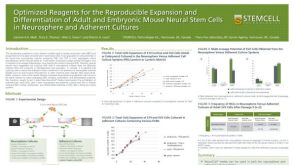 科学海报Optimized Reagents for the Reproducible Expansion and Differentiation of Adult and Embryonic Mouse Neural Stem Cells in Neurosphere and Adherent Cultures
 沪公网安备31010102008431号