Duelen R et al. ( 2017)
Stem cells international 2017 4651238
Activin A Modulates CRIPTO-1/HNF4α(+) Cells to Guide Cardiac Differentiation from Human Embryonic Stem Cells.
The use of human pluripotent stem cells in basic and translational cardiac research requires efficient differentiation protocols towards cardiomyocytes. In vitro differentiation yields heterogeneous populations of ventricular-,atrial-,and nodal-like cells hindering their potential applications in regenerative therapies. We described the effect of the growth factor Activin A during early human embryonic stem cell fate determination in cardiac differentiation. Addition of high levels of Activin A during embryoid body cardiac differentiation augmented the generation of endoderm derivatives,which in turn promoted cardiomyocyte differentiation. Moreover,a dose-dependent increase in the coreceptor expression of the TGF-β superfamily member CRIPTO-1 was observed in response to Activin A. We hypothesized that interactions between cells derived from meso- and endodermal lineages in embryoid bodies contributed to improved cell maturation in early stages of cardiac differentiation,improving the beating frequency and the percentage of contracting embryoid bodies. Activin A did not seem to affect the properties of cardiomyocytes at later stages of differentiation,measuring action potentials,and intracellular Ca(2+) dynamics. These findings are relevant for improving our understanding on human heart development,and the proposed protocol could be further explored to obtain cardiomyocytes with functional phenotypes,similar to those observed in adult cardiac myocytes.
View Publication
产品类型:
产品号#:
05850
05857
05870
05875
85850
85857
85870
85875
产品名:
mTeSR™1
mTeSR™1
Ye L et al. ( 2015)
1299 103--114
Fabrication of a myocardial patch with cells differentiated from human-induced pluripotent stem cells
The incidence of cardiovascular disease represents a significant and growing health-care challenge to the developed and developing world. The ability of native heart muscle to regenerate in response to myocardial infarct is minimal. Tissue engineering and regenerative medicine approaches represent one promising response to this difficulty. Here,we present methods for the construction of a cell-seeded cardiac patch with the potential to promote regenerative outcomes in heart muscle with damage secondary to myocardial infarct. This method leverages iPS cells and a fibrin-based scaffold to create a simple and commercially viable tissue-engineered cardiac patch. Human-induced pluripotent stem cells (hiPSCs) can,in principle,be differentiated into cells of any lineage. However,most of the protocols used to generate hiPSC-derived endothelial cells (ECs) and cardiomyocytes (CMs) are unsatisfactory because the yield and phenotypic stability of the hiPSC-ECs are low,and the hiPSC-CMs are often purified via selection for expression of a promoter-reporter construct. In this chapter,we describe an hiPSC-EC differentiation protocol that generates large numbers of stable ECs and an hiPSC-CM differentiation protocol that does not require genetic manipulation,single-cell selection,or sorting with fluorescent dyes or other reagents. We also provide a simple but effective method that can be used to combine hiPSC-ECs and hiPSC-CMs with hiPSC-derived smooth muscle cells to engineer a contracting patch of cardiac cells.
View Publication
产品类型:
产品号#:
05850
05857
05870
05875
85850
85857
85870
85875
产品名:
mTeSR™1
mTeSR™1
Momcilovic O et al. (JAN 2010)
PLoS ONE 5 10 e13410
DNA damage responses in human induced pluripotent stem cells and embryonic stem cells.
BACKGROUND: Induced pluripotent stem (iPS) cells have the capability to undergo self-renewal and differentiation into all somatic cell types. Since they can be produced through somatic cell reprogramming,which uses a defined set of transcription factors,iPS cells represent important sources of patient-specific cells for clinical applications. However,before these cells can be used in therapeutic designs,it is essential to understand their genetic stability. METHODOLOGY/PRINCIPAL FINDINGS: Here,we describe DNA damage responses in human iPS cells. We observe hypersensitivity to DNA damaging agents resulting in rapid induction of apoptosis after γ-irradiation. Expression of pluripotency factors does not appear to be diminished after irradiation in iPS cells. Following irradiation,iPS cells activate checkpoint signaling,evidenced by phosphorylation of ATM,NBS1,CHEK2,and TP53,localization of ATM to the double strand breaks (DSB),and localization of TP53 to the nucleus of NANOG-positive cells. We demonstrate that iPS cells temporary arrest cell cycle progression in the G(2) phase of the cell cycle,displaying a lack of the G(1)/S cell cycle arrest similar to human embryonic stem (ES) cells. Furthermore,both cell types remove DSB within six hours of γ-irradiation,form RAD51 foci and exhibit sister chromatid exchanges suggesting homologous recombination repair. Finally,we report elevated expression of genes involved in DNA damage signaling,checkpoint function,and repair of various types of DNA lesions in ES and iPS cells relative to their differentiated counterparts. CONCLUSIONS/SIGNIFICANCE: High degrees of similarity in DNA damage responses between ES and iPS cells were found. Even though reprogramming did not alter checkpoint signaling following DNA damage,dramatic changes in cell cycle structure,including a high percentage of cells in the S phase,increased radiosensitivity and loss of DNA damage-induced G(1)/S cell cycle arrest,were observed in stem cells generated by induced pluripotency.
View Publication
产品类型:
产品号#:
05850
05857
05870
05875
07923
85850
85857
85870
85875
产品名:
Dispase (1 U/mL)
mTeSR™1
mTeSR™1
Kozhich OA et al. (AUG 2013)
Stem Cell Reviews and Reports 9 4 531--536
Standardized Generation and Differentiation of Neural Precursor Cells from Human Pluripotent Stem Cells
Precise,robust and scalable directed differentiation of pluripotent stem cells is an important goal with respect to disease modeling or future therapies. Using the AggreWell™400 system we have standardized the differentiation of human embryonic and induced pluripotent stem cells to a neuronal fate using defined conditions. This allows reproducibility in replicate experiments and facilitates the direct comparison of cell lines. Since the starting point for EB formation is a single cell suspension,this protocol is suitable for standard and novel methods of pluripotent stem cell culture. Moreover,an intermediate population of neural precursor cells,which are routinely textgreater95% NCAM(pos) and Tra-1-60(neg) by FACS analysis,may be expanded and frozen prior to differentiation allowing a convenient starting point for downstream experiments.
View Publication
产品类型:
产品号#:
05850
05857
05870
05875
85850
85857
85870
85875
27845
27945
27840
27865
27940
27965
产品名:
mTeSR™1
mTeSR™1
Hughes CS et al. (FEB 2011)
Proteomics 11 4 675--90
Proteomics of human embryonic stem cells.
Human embryonic stem cells (hESCs) offer exciting potential in regenerative medicine for the treatment of a host of diseases including cancer,Alzheimer's and Parkinson's disease. They also provide insight into human development and disease and can be used as models for drug discovery and toxicity analyses. The key properties of hESCs that make them so promising for medical use are that they have the ability to self-renew indefinitely in culture and they are pluripotent,which means that they can differentiate into any of more than 200 human cell types. Since proteins are the effectors of cellular processes,it is important to investigate hESC expression at the protein level as well as at the transcript level. In addition,post-translational modifications,such as phosphorylation,may influence the activity of pivotal proteins in hESCs,and this information can only be determined by studying the proteome. In this review,we summarize the results obtained from several proteomics analyses of hESCs that have been reported in the last few years.
View Publication
产品类型:
产品号#:
05850
05857
05870
05875
85850
85857
85870
85875
产品名:
mTeSR™1
mTeSR™1
Wills QF et al. (JAN 2017)
BMC genomics 18 1 53
The nature and nurture of cell heterogeneity: accounting for macrophage gene-environment interactions with single-cell RNA-Seq.
BACKGROUND Single-cell RNA-Seq can be a valuable and unbiased tool to dissect cellular heterogeneity,despite the transcriptome's limitations in describing higher functional phenotypes and protein events. Perhaps the most important shortfall with transcriptomic 'snapshots' of cell populations is that they risk being descriptive,only cataloging heterogeneity at one point in time,and without microenvironmental context. Studying the genetic ('nature') and environmental ('nurture') modifiers of heterogeneity,and how cell population dynamics unfold over time in response to these modifiers is key when studying highly plastic cells such as macrophages. RESULTS We introduce the programmable Polaris microfluidic lab-on-chip for single-cell sequencing,which performs live-cell imaging while controlling for the culture microenvironment of each cell. Using gene-edited macrophages we demonstrate how previously unappreciated knockout effects of SAMHD1,such as an altered oxidative stress response,have a large paracrine signaling component. Furthermore,we demonstrate single-cell pathway enrichments for cell cycle arrest and APOBEC3G degradation,both associated with the oxidative stress response and altered proteostasis. Interestingly,SAMHD1 and APOBEC3G are both HIV-1 inhibitors ('restriction factors'),with no known co-regulation. CONCLUSION As single-cell methods continue to mature,so will the ability to move beyond simple 'snapshots' of cell populations towards studying the determinants of population dynamics. By combining single-cell culture,live-cell imaging,and single-cell sequencing,we have demonstrated the ability to study cell phenotypes and microenvironmental influences. It's these microenvironmental components - ignored by standard single-cell workflows - that likely determine how macrophages,for example,react to inflammation and form treatment resistant HIV reservoirs.
View Publication
产品类型:
产品号#:
85850
85857
85870
85875
产品名:
mTeSR™1
mTeSR™1
Zeng H et al. (SEP 2016)
Cell stem cell 19 3 326--340
An Isogenic Human ESC Platform for Functional Evaluation of Genome-wide-Association-Study-Identified Diabetes Genes and Drug Discovery.
Genome-wide association studies (GWASs) have increased our knowledge of loci associated with a range of human diseases. However,applying such findings to elucidate pathophysiology and promote drug discovery remains challenging. Here,we created isogenic human ESCs (hESCs) with mutations in GWAS-identified susceptibility genes for type 2 diabetes. In pancreatic beta-like cells differentiated from these lines,we found that mutations in CDKAL1,KCNQ1,and KCNJ11 led to impaired glucose secretion in vitro and in vivo,coinciding with defective glucose homeostasis. CDKAL1 mutant insulin+ cells were also hypersensitive to glucolipotoxicity. A high-content chemical screen identified a candidate drug that rescued CDKAL1-specific defects in vitro and in vivo by inhibiting the FOS/JUN pathway. Our approach of a proof-of-principle platform,which uses isogenic hESCs for functional evaluation of GWAS-identified loci and identification of a drug candidate that rescues gene-specific defects,paves the way for precision therapy of metabolic diseases.
View Publication
产品类型:
产品号#:
05850
05857
05870
05875
85850
85857
85870
85875
产品名:
mTeSR™1
mTeSR™1
Kim J et al. (MAY 2017)
Stem cell reports
Expansion and Purification Are Critical for the Therapeutic Application of Pluripotent Stem Cell-Derived Myogenic Progenitors.
Recent reports have documented the differentiation of human pluripotent stem cells toward the skeletal myogenic lineage using transgene- and cell purification-free approaches. Although these protocols generate myocytes,they have not demonstrated scalability,safety,and in vivo engraftment,which are key aspects for their future clinical application. Here we recapitulate one prominent protocol,and show that it gives rise to a heterogeneous cell population containing myocytes and other cell types. Upon transplantation,the majority of human donor cells could not contribute to myofiber formation. As a proof-of-principle,we incorporated the inducible PAX7 lentiviral system into this protocol,which then enabled scalable expansion of a homogeneous population of skeletal myogenic progenitors capable of forming myofibers in vivo. Our findings demonstrate the methods for scalable expansion of PAX7(+) myogenic progenitors and their purification are critical for practical application to cell replacement treatment of muscle degenerative diseases.
View Publication
产品类型:
产品号#:
05850
05857
05870
05875
85850
85857
85870
85875
产品名:
mTeSR™1
mTeSR™1
McGrath PS et al. (JUL 2015)
Diabetes 64 7 2497--2505
The basic helix-loop-helix transcription factor neurog3 is required for development of the human endocrine pancreas
Neurogenin3 (NEUROG3) is a basic helix-loop-helix transcription factor required for development of the endocrine pancreas in mice. In contrast,humans with NEUROG3 mutations are born with endocrine pancreas function,calling into question whether NEUROG3 is required for human endocrine pancreas development. To test this directly,we generated human embryonic stem cell (hESC) lines where both alleles of NEUROG3 were disrupted using CRISPR/Cas9-mediated gene targeting. NEUROG3(-/-) hESC lines efficiently formed pancreatic progenitors but lacked detectible NEUROG3 protein and did not form endocrine cells in vitro. Moreover,NEUROG3(-/-) hESC lines were unable to form mature pancreatic endocrine cells after engraftment of PDX1(+)/NKX6.1(+) pancreatic progenitors into mice. In contrast,a 75-90% knockdown of NEUROG3 caused a reduction,but not a loss,of pancreatic endocrine cell development. We conclude that NEUROG3 is essential for endocrine pancreas development in humans and that as little as 10% NEUROG3 is sufficient for formation of pancreatic endocrine cells.
View Publication
产品类型:
产品号#:
05850
05857
05870
05875
07920
85850
85857
85870
85875
07922
产品名:
ACCUTASE™
mTeSR™1
mTeSR™1
ACCUTASE™
Bagutti C et al. (OCT 1996)
Developmental biology 179 1 184--96
Differentiation of embryonal stem cells into keratinocytes: comparison of wild-type and beta 1 integrin-deficient cells.
beta 1 Integrins are known to regulate terminal differentiation and morphogenesis in the adult epidermis. We have investigated their role in the embryonic development of keratinocytes by comparing the differentiation of wild-type and beta 1-null mouse embryonal stem (ES) cells. By 12-15 days in culture,differentiation of embryonic or simple epithelial cells occurred in both ES cell populations,as detected by expression of keratins 8,18,and 19. From 21 days,expression of keratins 10 and 14 and of the cornified envelope precursor involucrin indicated that some of the wild-type cells had differentiated into keratinocytes. In contrast,keratinocyte markers were not expressed in beta 1-null cultures. The beta 1-null cells failed to express the alpha 2 and alpha 3 integrin subunits on the cell surface,consistent with the association of these a subunits with beta 1. Furthermore,alpha 6 and beta 4 expression was reduced in the beta 1-null cultures. Although beta 1-null ES cells failed to undergo differentiation into keratinocytes in vitro,they did form keratinocyte cysts expressing alpha 6 beta 4,keratins 1 and 14,and involucrin when allowed to form teratomas by subcutaneous injection in mice; furthermore,beta 1-null keratinocytes were found in the epidermis of a wild-type/beta 1-null chimeric mouse. As judged by immunofluorescence microscopy,extracellular matrix assembly was severely impaired in beta 1-null ES cell cultures,but not in the teratomas or chimeric mouse skin. We therefore speculate that the failure of beta 1-null cells to differentiate into keratinocytes in vitro may reflect an inability to assemble a basement membrane.
View Publication
产品类型:
产品号#:
06902
06952
00321
00322
00323
00324
00325
产品名:
Okabe S et al. (SEP 1996)
Mechanisms of development 59 1 89--102
Development of neuronal precursor cells and functional postmitotic neurons from embryonic stem cells in vitro.
To understand the mechanism of the sequential restriction of multipotency of stem cells during development,we have established culture conditions that allow the differentiation of neuroepithelial precursor cells from embryonic stem (ES) cells. A highly enriched population of neuroepithelial precursor cells derived from ES cells proliferates in the presence of basic fibroblast growth factor (bFGF). These cells differentiate into both neurons and glia following withdrawal of bFGF. By further differentiating the cells in serum-containing medium,the neurons express a wide variety of neuron-specific genes and generate both excitatory and inhibitory synaptic connections. The expression pattern of position-specific neural markers suggests the presence of a variety of central nervous system (CNS) neuronal cell types. These findings indicate that neuronal precursor cells can be isolated from ES cells and that these cells can efficiently differentiate into functional post-mitotic neurons of diverse CNS structures.
View Publication


 EasySep™小鼠TIL(CD45)正选试剂盒





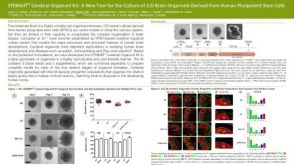 科学海报STEMdiff™ Cerebral Organoid Kit: A New Tool for the Culture of 3D Brain Organoids Derived from hPSCs
 沪公网安备31010102008431号