Sequiera GL et al. (JAN 2013)
Life Sciences 92 1 63--71
Ontogenic development of cardiomyocytes derived from transgene-free human induced pluripotent stem cells and its homology with human heart
Aim: Reprogramming of somatic cells utilizing viral free methods provide a remarkable method to generate human induced pluripotent stem cells (hiPSCs) for regenerative medicine. In this study,we evaluate developmental ontogeny of cardiomyocytes following induced differentiation of hiPSCs. Main Methods: Fibroblasts were reprogrammed with episomal vectors to generate hiPSC and were subsequently differentiated to cardiomyocytes. Ontogenic development of cardiomyocytes was studied by real-time PCR. Key findings: Human iPSCs derived from episomal based vectors maintain classical pluripotency markers,generate teratomas and spontaneously differentiate into three germ layers in vitro. Cardiomyogenic induction of these hiPSCs efficiently generated cardiomyocytes. Ontogenic gene expression studies demonstrated that differentiation of cardiomyocytes was initiated by increased expression of mesodermal markers,followed by early cardiac committed markers,structural and ion channel genes. Furthermore,our correlation analysis of gene expression studies with human heart demonstrated that pivotal structural genes like cardiac troponin,actinin,myosin light chain maintained a high correlation with ion channel genes indicating coordinated activation of cardiac transcriptional machinery. Finally,microelectrode recordings show that these cardiomyocytes could respond aptly to pharmacologically active drugs. Cardiomyocytes showed a chronotropic response to isoproterenol,reduced Na+ influx with quinidine,prolongation of beating rate corrected field potential duration (cFPD) with E-4031 and reduced beating frequency and shortened cFPD with verapamil. Significance: Our study shows that viral free hiPSCs efficiently differentiate into cardiomyocytes with cardiac-specific molecular,structural,and functional properties that recapitulate developmental ontogeny of cardiogenesis. These results,coupled with the potential to generate patient-specific hiPSC lines hold great promise for the development of in vitro platform for drug pharmacogenomics; disease modeling and regenerative medicine. textcopyright 2012 Elsevier Inc. All rights reserved.
View Publication
产品类型:
产品号#:
05850
05857
05870
05875
85850
85857
85870
85875
产品名:
mTeSR™1
mTeSR™1
Artyukhov AS et al. (MAY 2017)
Gene
New genes for accurate normalization of qRT-PCR results in study of iPS and iPS-derived cells.
iPSC-derived cells (from induced pluripotent stem cells) are a useful source that provide a powerful and widely accepted tool for the study of various types of human cells in vitro. Indeed,iPSC-derived cells from patients with hereditary diseases have been shown to reproduce the hallmarks of these diseases in vitro,phenotypes that can then also be manipulated in vitro. Quantitative reverse transcription PCR (qRT-PCR) is often used to characterize the progress of iPSC differentiation,validate mature cell types and to determine levels of pathological markers. Quantitative reverse transcription PCR (qRT-PCR) is used to quantify mRNA levels. This method requires some way of normalizing the data,typically by relating the obtained levels of gene expression to the levels of expression of a house keeping gene"�
View Publication
产品类型:
产品号#:
05850
05857
05870
05875
85850
85857
85870
85875
产品名:
mTeSR™1
mTeSR™1
Shinkuma S et al. (MAY 2016)
Proceedings of the National Academy of Sciences of the United States of America 113 20 5676--5681
Site-specific genome editing for correction of induced pluripotent stem cells derived from dominant dystrophic epidermolysis bullosa.
Genome editing with engineered site-specific endonucleases involves nonhomologous end-joining,leading to reading frame disruption. The approach is applicable to dominant negative disorders,which can be treated simply by knocking out the mutant allele,while leaving the normal allele intact. We applied this strategy to dominant dystrophic epidermolysis bullosa (DDEB),which is caused by a dominant negative mutation in the COL7A1 gene encoding type VII collagen (COL7). We performed genome editing with TALENs and CRISPR/Cas9 targeting the mutation,c.80688084delinsGA. We then cotransfected Cas9 and guide RNA expression vectors expressed with GFP and DsRed,respectively,into induced pluripotent stem cells (iPSCs) generated from DDEB fibroblasts. After sorting,90% of the iPSCs were edited,and we selected four gene-edited iPSC lines for further study. These iPSCs were differentiated into keratinocytes and fibroblasts secreting COL7. RT-PCR and Western blot analyses revealed gene-edited COL7 with frameshift mutations degraded at the protein level. In addition,we confirmed that the gene-edited truncated COL7 could neither associate with normal COL7 nor undergo triple helix formation. Our data establish the feasibility of mutation site-specific genome editing in dominant negative disorders.
View Publication
产品类型:
产品号#:
05850
05857
05870
05875
85850
85857
85870
85875
产品名:
mTeSR™1
mTeSR™1
Yap MS et al. (DEC 2016)
Virology journal 13 1 5
Pluripotent Human embryonic stem cell derived neural lineages for in vitro modelling of enterovirus 71 infection and therapy.
BACKGROUND The incidence of neurological complications and fatalities associated with Hand,Foot & Mouth disease has increased over recent years,due to emergence of newly-evolved strains of Enterovirus 71 (EV71). In the search for new antiviral therapeutics against EV71,accurate and sensitive in vitro cellular models for preliminary studies of EV71 pathogenesis is an essential prerequisite,before progressing to expensive and time-consuming live animal studies and clinical trials. METHODS This study thus investigated whether neural lineages derived from pluripotent human embryonic stem cells (hESC) can fulfil this purpose. EV71 infection of hESC-derived neural stem cells (NSC) and mature neurons (MN) was carried out in vitro,in comparison with RD and SH-SY5Y cell lines. RESULTS Upon assessment of post-infection survivability and EV71 production by the various types,it was observed that NSC were significantly more susceptible to EV71 infection compared to MN,RD (rhabdomyosarcoma) and SH-SY5Y cells,which was consistent with previous studies on mice. The SP81 peptide had significantly greater inhibitory effect on EV71 production by NSC and MN compared to the cancer-derived RD and SH-SY5Y cell lines. CONCLUSIONS Hence,this study demonstrates that hESC-derived neural lineages can be utilized as in vitro models for studying EV71 pathogenesis and for screening of antiviral therapeutics.
View Publication
产品类型:
产品号#:
05850
05857
05870
05875
85850
85857
85870
85875
产品名:
mTeSR™1
mTeSR™1
Gu Q et al. (MAY 2017)
Advanced healthcare materials
3D Bioprinting Human Induced Pluripotent Stem Cell Constructs for In Situ Cell Proliferation and Successive Multilineage Differentiation.
The ability to create 3D tissues from induced pluripotent stem cells (iPSCs) is poised to revolutionize stem cell research and regenerative medicine,including individualized,patient-specific stem cell-based treatments. There are,however,few examples of tissue engineering using iPSCs. Their culture and differentiation is predominantly planar for monolayer cell support or induction of self-organizing embryoids (EBs) and organoids. Bioprinting iPSCs with advanced biomaterials promises to augment efforts to develop 3D tissues,ideally comprising direct-write printing of cells for encapsulation,proliferation,and differentiation. Here,such a method,employing a clinically amenable polysaccharide-based bioink,is described as the first example of bioprinting human iPSCs for in situ expansion and sequential differentiation. Specifically,There are extrusion printed the bioink including iPSCs,alginate (Al; 5% weight/volume [w/v]),carboxymethyl-chitosan (5% w/v),and agarose (Ag; 1.5% w/v),crosslinked the bioink in calcium chloride for a stable and porous construct,proliferated the iPSCs within the construct and differentiated the same iPSCs into either EBs comprising cells of three germ lineages-endoderm,ectoderm,and mesoderm,or more homogeneous neural tissues containing functional migrating neurons and neuroglia. This defined,scalable,and versatile platform is envisaged being useful in iPSC research and translation for pharmaceuticals development and regenerative medicine.
View Publication
产品类型:
产品号#:
05850
05857
05870
05875
85850
85857
85870
85875
产品名:
mTeSR™1
mTeSR™1
Bhinge A et al. (JAN 2016)
Stem cells (Dayton,Ohio) 34 1 124--134
MiR-375 is Essential for Human Spinal Motor Neuron Development and May Be Involved in Motor Neuron Degeneration.
The transcription factor REST is a key suppressor of neuronal genes in non-neuronal tissues. REST has been shown to suppress proneuronal microRNAs in neural progenitors indicating that REST-mediated neurogenic suppression may act in part via microRNAs. We used neural differentiation of Rest-null mouse ESC to identify dozens of microRNAs regulated by REST during neural development. One of the identified microRNAs,miR-375,was upregulated during human spinal motor neuron development. We found that miR-375 facilitates spinal motor neurogenesis by targeting the cyclin kinase CCND2 and the transcription factor PAX6. Additionally,miR-375 inhibits the tumor suppressor p53 and protects neurons from apoptosis in response to DNA damage. Interestingly,motor neurons derived from a spinal muscular atrophy patient displayed depressed miR-375 expression and elevated p53 protein levels. Importantly,SMA motor neurons were significantly more susceptible to DNA damage induced apoptosis suggesting that miR-375 may play a protective role in motor neurons.
View Publication
产品类型:
产品号#:
05850
05857
05870
05875
85850
85857
85870
85875
产品名:
mTeSR™1
mTeSR™1
Ruiz S et al. (JAN 2011)
Current biology : CB 21 1 45--52
A high proliferation rate is required for cell reprogramming and maintenance of human embryonic stem cell identity.
Human embryonic stem (hES) cells show an atypical cell-cycle regulation characterized by a high proliferation rate and a short G1 phase. In fact,a shortened G1 phase might protect ES cells from external signals inducing differentiation,as shown for certain stem cells. It has been suggested that self-renewal and pluripotency are intimately linked to cell-cycle regulation in ES cells,although little is known about the overall importance of the cell-cycle machinery in maintaining ES cell identity. An appealing model to address whether the acquisition of stem cell properties is linked to cell-cycle regulation emerged with the ability to generate induced pluripotent stem (iPS) cells by expression of defined transcription factors. Here,we show that the characteristic cell-cycle signature of hES cells is acquired as an early event in cell reprogramming. We demonstrate that induction of cell proliferation increases reprogramming efficiency,whereas cell-cycle arrest inhibits successful reprogramming. Furthermore,we show that cell-cycle arrest is sufficient to drive hES cells toward irreversible differentiation. Our results establish a link that intertwines the mechanisms of cell-cycle control with the mechanisms underlying the acquisition and maintenance of ES cell identity.
View Publication
Byrne SM et al. (FEB 2015)
Nucleic Acids Research 43 3 e21
Multi-kilobase homozygous targeted gene replacement in human induced pluripotent stem cells.
Sequence-specific nucleases such as TALEN and the CRISPR/Cas9 system have so far been used to disrupt,correct or insert transgenes at precise locations in mammalian genomes. We demonstrate efficient 'knock-in' targeted replacement of multi-kilobase genes in human induced pluripotent stem cells (iPSC). Using a model system replacing endogenous human genes with their mouse counterpart,we performed a comprehensive study of targeting vector design parameters for homologous recombination. A 2.7 kilobase (kb) homozygous gene replacement was achieved in up to 11% of iPSC without selection. The optimal homology arm length was around 2 kb,with homology length being especially critical on the arm not adjacent to the cut site. Homologous sequence inside the cut sites was detrimental to targeting efficiency,consistent with a synthesis-dependent strand annealing (SDSA) mechanism. Using two nuclease sites,we observed a high degree of gene excisions and inversions,which sometimes occurred more frequently than indel mutations. While homozygous deletions of 86 kb were achieved with up to 8% frequency,deletion frequencies were not solely a function of nuclease activity and deletion size. Our results analyzing the optimal parameters for targeting vector design will inform future gene targeting efforts involving multi-kilobase gene segments,particularly in human iPSC.
View Publication
产品类型:
产品号#:
05850
05857
05870
05875
85850
85857
85870
85875
产品名:
mTeSR™1
mTeSR™1
Martinez RA et al. (MAY 2015)
Nucleic acids research 43 10 e65
Genome engineering of isogenic human ES cells to model autism disorders
Isogenic pluripotent stem cells are critical tools for studying human neurological diseases by allowing one to study the effects of a mutation in a fixed genetic background. Of particular interest are the spectrum of autism disorders,some of which are monogenic such as Timothy syndrome (TS); others are multigenic such as the microdeletion and microduplication syndromes of the 16p11.2 chromosomal locus. Here,we report engineered human embryonic stem cell (hESC) lines for modeling these two disorders using locus-specific endonucleases to increase the efficiency of homology-directed repair (HDR). We developed a system to: (1) computationally identify unique transcription activator-like effector nuclease (TALEN) binding sites in the genome using a new software program,TALENSeek,(2) assemble the TALEN genes by combining golden gate cloning with modified constructs from the FLASH protocol,and (3) test the TALEN pairs in an amplification-based HDR assay that is more sensitive than the typical non-homologous end joining assay. We applied these methods to identify,construct,and test TALENs that were used with HDR donors in hESCs to generate an isogenic TS cell line in a scarless manner and to model the 16p11.2 copy number disorder without modifying genomic loci with high sequence similarity.
View Publication
产品类型:
产品号#:
05850
05857
05870
05875
85850
85857
85870
85875
产品名:
mTeSR™1
mTeSR™1
Kempf H et al. (SEP 2015)
Nature protocols 10 9 1345--1361
Cardiac differentiation of human pluripotent stem cells in scalable suspension culture.
Cardiomyocytes (CMs) generated from human pluripotent stem cells (hPSCs) are a potential cell source for regenerative therapies,drug discovery and disease modeling. All these applications require a routine supply of relatively large quantities of in vitro-generated CMs. This protocol describes a suspension culture-based strategy for the generation of hPSC-CMs as cell-only aggregates,which facilitates process development and scale-up. Aggregates are formed for 4 d in hPSC culture medium followed by 10 d of directed differentiation by applying chemical Wnt pathway modulators. The protocol is applicable to static multiwell formats supporting fast adaptation to specific hPSC line requirements. We also demonstrate how to apply the protocol using stirred tank bioreactors at a 100-ml scale,providing a well-controlled upscaling platform for CM production. In bioreactors,the generation of 40-50 million CMs per differentiation batch at textgreater80% purity without further lineage enrichment can been achieved within 24 d.
View Publication
产品类型:
产品号#:
05850
05857
05870
05875
85850
85857
85870
85875
产品名:
mTeSR™1
mTeSR™1
Burkart AM et al. ( 2016)
Scientific reports 6 February 22788
Insulin Resistance in Human iPS Cells Reduces Mitochondrial Size and Function.
Insulin resistance,a critical component of type 2 diabetes (T2D),precedes and predicts T2D onset. T2D is also associated with mitochondrial dysfunction. To define the cause-effect relationship between insulin resistance and mitochondrial dysfunction,we compared mitochondrial metabolism in induced pluripotent stem cells (iPSC) from 5 healthy individuals and 4 patients with genetic insulin resistance due to insulin receptor mutations. Insulin-resistant iPSC had increased mitochondrial number and decreased mitochondrial size. Mitochondrial oxidative function was impaired,with decreased citrate synthase activity and spare respiratory capacity. Simultaneously,expression of multiple glycolytic enzymes was decreased,while lactate production increased 80%. These perturbations were accompanied by an increase in ADP/ATP ratio and 3-fold increase in AMPK activity,indicating energetic stress. Insulin-resistant iPSC also showed reduced catalase activity and increased susceptibility to oxidative stress. Thus,insulin resistance can lead to mitochondrial dysfunction with reduced mitochondrial size,oxidative activity,and energy production.
View Publication


 EasySep™小鼠TIL(CD45)正选试剂盒





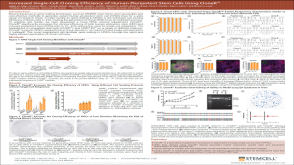 科学海报Increased Single-Cell Cloning Efficiency of Human Pluripotent Stem Cells Using CloneR™
 沪公网安备31010102008431号