Fenouille N et al. (DEC 2010)
Cancer research 70 23 9659--70
Persistent activation of the Fyn/ERK kinase signaling axis mediates imatinib resistance in chronic myelogenous leukemia cells through upregulation of intracellular SPARC.
SPARC is an extracellular matrix protein that exerts pleiotropic effects on extracellular matrix organization,growth factor availability,cell adhesion,differentiation,and immunity in cancer. Chronic myelogenous leukemia (CML) cells resistant to the BCR-ABL inhibitor imatinib (IM-R cells) were found to overexpress SPARC mRNA. In this study,we show that imatinib triggers SPARC accumulation in a variety of tyrosine kinase inhibitor (TKI)-resistant CML cell lines. SPARC silencing in IM-R cells restored imatinib sensitivity,whereas enforced SPARC expression in imatinib-sensitive cells promoted viability as well as protection against imatinib-mediated apoptosis. Notably,we found that the protective effect of SPARC required intracellular retention inside cells. Accordingly,SPARC was not secreted into the culture medium of IM-R cells. Increased SPARC expression was intimately linked to persistent activation of the Fyn/ERK kinase signaling axis. Pharmacologic inhibition of this pathway or siRNA-mediated knockdown of Fyn kinase resensitized IM-R cells to imatinib. In support of our findings,increased levels of SPARC mRNA were documented in blood cells from CML patients after 1 year of imatinib therapy compared with initial diagnosis. Taken together,our results highlight an important role for the Fyn/ERK signaling pathway in imatinib-resistant cells that is driven by accumulation of intracellular SPARC.
View Publication
产品类型:
产品号#:
04100
产品名:
MethoCult™ H4100
Wang D et al. (OCT 2013)
Transfusion 53 10 2134--40
Antibody-mediated glycophorin C coligation on K562 cells induces phosphatidylserine exposure and cell death in an atypical apoptotic process.
BACKGROUND Glycophorin C (GPC) is necessary in the maintenance of red blood cell structure. Severe autoimmune hemolytic anemia and hemolytic disease of the fetus and newborn (HDFN) have been associated with Gerbich (Ge) blood group system antigens expressed on GPC. Previous in vitro studies with cord blood progenitor cells have shown that anti-Ge suppresses erythropoiesis. STUDY DESIGN AND METHODS Here,we evaluated the K562 erythroleukemic cell line to study the cellular effects of a murine anti-GPC. Cell proliferation was evaluated after treatment with anti-GPC. Flow cytometry was used to evaluate exofacial phosphatidylserine (PS) expression and cell viability (propidium iodide binding). Cell morphology was evaluated under light microscopy with cytospin preparations stained with May-Grünwald Giemsa. RESULTS Anti-GPC dramatically inhibited K562 proliferation and increased PS expression,consistent with cytoplasmic blebbing,suggesting evidence of apoptosis. Z-VAD-FMK,an inhibitor of classical apoptosis,was unable to reverse the suppressive effect of anti-GPC. However,hemin was able to attenuate growth suppression. CONCLUSION Together,the data suggest that anti-GPC suppresses erythroid proliferation through the induction of nonclassical apoptosis.
View Publication
Bielawski KS et al. (SEP 2016)
Tissue engineering. Part C,Methods
Real-Time Force and Frequency Analysis of Engineered Human Heart Tissue Derived from Induced Pluripotent Stem Cells Using Magnetic Sensing.
Engineered heart tissues made from human pluripotent stem cell-derived cardiomyocytes have been used for modeling cardiac pathologies,screening new therapeutics,and providing replacement cardiac tissue. Current methods measure the functional performance of engineered heart tissue by their twitch force and beating frequency,typically obtained by optical measurements. In this article,we describe a novel method for assessing twitch force and beating frequency of engineered heart tissue using magnetic field sensing,which enables multiple tissues to be measured simultaneously. The tissues are formed as thin structures suspended between two silicone posts,where one post is rigid and another is flexible and contains an embedded magnet. When the tissue contracts it causes the flexible post to bend in proportion to its twitch force. We measured the bending of the post using giant magnetoresistive (GMR) sensors located underneath a 24-well plate containing the tissues. We validated the accuracy of the readings from the GMR sensors against optical measurements. We demonstrated the utility and sensitivity of our approach by testing the effects of three concentrations of isoproterenol and verapamil on twitch force and beating frequency in real-time,parallel experiments. This system should be scalable beyond the 24-well format,enabling greater automation in assessing the contractile function of cardiomyocytes in a tissue-engineered environment.
View Publication
产品类型:
产品号#:
05850
05857
05870
05875
85850
85857
85870
85875
产品名:
mTeSR™1
mTeSR™1
Lagarkova MA et al. (NOV 2008)
Cell Cycle 7 22 3610--3612
CD 30 is a marker of undifferentiated human embryonic stem cells rather than a biomarker of transformed hESCs
Recently it has been demonstrated that CD30 expression was rather specific for transformed than for normal human ES cells and therefore CD30 maybe suggested as a potential marker for human ES cells bearing chromosomal abnormalities. Using immunohistochemistry and RT-PCR analysis we examined �?¡D30 expression in 10 hESCs lines with normal and abberant karyotypes. All hESC lines expressed CD30 antigen and RNA in undifferentiated state whether cell line beared chromosomal abnormalities or not. In contrast to previous notions our data demonstrate that CD30 could be considered as marker of undifferentiated hESCs without respect to karyotype changes.
View Publication
产品类型:
产品号#:
05850
05857
05870
05875
85850
85857
85870
85875
产品名:
mTeSR™1
mTeSR™1
Barbaric I et al. (JUL 2014)
Stem Cell Reports 3 1 142--155
Time-lapse analysis of human embryonic stem cells reveals multiple bottlenecks restricting colony formation and their relief upon culture adaptation
Using time-lapse imaging,we have identified a series of bottlenecks that restrict growth of early-passage human embryonic stem cells (hESCs) and that are relieved by karyotypically abnormal variants that are selected by prolonged culture. Only a minority of karyotypically normal cells divided after plating,and these were mainly cells in the later stages of cell cycle at the time of plating. Furthermore,the daughter cells showed a continued pattern of cell death after division,so that few formed long-term proliferating colonies. These colony-forming cells showed distinct patterns of cell movement. Increasing cell density enhanced cell movement facilitating cell:cell contact,which resulted in increased proportion of dividing cells and improved survival postplating of normal hESCs. In contrast,most of the karyotypically abnormal cells reentered the cell cycle on plating and gave rise to healthy progeny,without the need for cell:cell contacts and independent of their motility patterns. ?? 2014 The Authors.
View Publication
Tay FC et al. (OCT 2013)
Journal of Gene Medicine 15 10 384--395
Targeted transgene insertion into the AAVS1 locus driven by baculoviral vector-mediated zinc finger nuclease expression in human-induced pluripotent stem cells
Background The AAVS1 locus is viewed as a ‘safe harbor' for transgene insertion into human genome. In the present study,we report a new method for AAVS1 targeting in human-induced pluripotent stem cells (hiPSCs). Methods We have developed two baculoviral transduction systems: one to deliver zinc finger nuclease (ZFN) and a DNA donor template for site-specific gene insertion and another to mediate Cre recombinase-mediated cassette exchange system to replace the inserted transgene with a new transgene. Results Our ZFN system provided the targeted integration efficiency of a Neo-EGFP cassette of 93.8% in G418-selected,stable hiPSC colonies. Southern blotting analysis of 20 AASV1 targeted colonies revealed no random integration events. Among 24 colonies examined for mono- or biallelic AASV1 targeting,25% of them were biallelically modified. The selected hiPSCs displayed persistent enhanced green fluorescent protein expression and continued the expression of stem cell pluripotency markers. The hiPSCs maintained the ability to differentiate into three germ lineages in derived embryoid bodies and transgene expression was retained in the differentiated cells. After pre-including the loxP-docking sites into the Neo-EGFP cassette,we demonstrated that a baculovirus-Cre/loxP system could be used to facilitate the replacement of the Neo-EGFP cassette with another transgene cassette at the AAVS1 locus. Conclusions Given high targeting efficiency,stability in expression of inserted transgene and flexibility in transgene exchange,the approach reported in the present study holds potential for generating genetically-modified human pluripotent stem cells suitable for developmental biology research,drug development,regenerative medicine and gene therapy. Copyright textcopyright 2013 John Wiley & Sons,Ltd.
View Publication
产品类型:
产品号#:
05850
05857
05870
05875
07923
85850
85857
85870
85875
产品名:
Dispase (1 U/mL)
mTeSR™1
mTeSR™1
Alamein MA et al. (SEP 2015)
Journal of Tissue Engineering and Regenerative Medicine 9 9 1078--1083
Polymeric nanofibrous substrates stimulate pluripotent stem cells to form three-dimensional multilayered patty-like spheroids in feeder-free culture and maintain their pluripotency
Expansion of pluripotent stem cells in defined media devoid of animal-derived feeder cells to generate multilayered three-dimensional (3D) bulk preparations or spheroids,rather than two-dimensional (2D) monolayers,is advantageous for many regenerative,biological or disease-modelling studies. Here we show that electrospun polymer matrices comprised of nanofibres that mimic the architecture of the natural fibrous extracellular matrix allow for feeder-free expansion of pluripotent human induced pluripotent stem cells (IPSCs) and human embryonic stem cells (HESCs) into multilayered 3D 'patty-like' spheroid structures in defined xeno-free culture medium. The observation that IPSCs and HESCs readily revert to 2D growth in the absence of the synthetic nanofibre membranes suggests that this 3D expansion behaviour is mediated by the physical microenvironment and artificial niche provided by the nanofibres only. Importantly,we could show that such 3D growth as patties maintained the pluripotency of cells as long as they were kept on nanofibres. The generation of complex multilayered 3D structures consisting of only pluripotent cells on biodegradable nanofibre matrices of the desired shape and size will enable both industrial-scale expansion and intricate organ-tissue engineering applications with human pluripotent stem cells,where simultaneous coupling of differentiation pathways of all germ layers from one stem cell source may be required for organ formation.
View Publication
产品类型:
产品号#:
05850
05857
05870
05875
85850
85857
85870
85875
产品名:
mTeSR™1
mTeSR™1
Wolfrum K et al. (JAN 2010)
PLoS ONE 5 10 e13703
The LARGE principle of cellular reprogramming: lost, acquired and retained gene expression in foreskin and amniotic fluid-derived human iPS cells.
Human amniotic fluid cells (AFCs) are routinely obtained for prenatal diagnostics procedures. Recently,it has been illustrated that these cells may also serve as a valuable model system to study developmental processes and for application in regenerative therapies. Cellular reprogramming is a means of assigning greater value to primary AFCs by inducing self-renewal and pluripotency and,thus,bypassing senescence. Here,we report the generation and characterization of human amniotic fluid-derived induced pluripotent stem cells (AFiPSCs) and demonstrate their ability to differentiate into the trophoblast lineage after stimulation with BMP2/BMP4. We further carried out comparative transcriptome analyses of primary human AFCs,AFiPSCs,fibroblast-derived iPSCs (FiPSCs) and embryonic stem cells (ESCs). This revealed that the expression of key senescence-associated genes are down-regulated upon the induction of pluripotency in primary AFCs (AFiPSCs). By defining distinct and overlapping gene expression patterns and deriving the LARGE (Lost,Acquired and Retained Gene Expression) Principle of Cellular Reprogramming,we could further highlight that AFiPSCs,FiPSCs and ESCs share a core self-renewal gene regulatory network driven by OCT4,SOX2 and NANOG. Nevertheless,these cell types are marked by distinct gene expression signatures. For example,expression of the transcription factors,SIX6,EGR2,PKNOX2,HOXD4,HOXD10,DLX5 and RAXL1,known to regulate developmental processes,are retained in AFiPSCs and FiPSCs. Surprisingly,expression of the self-renewal-associated gene PRDM14 or the developmental processes-regulating genes WNT3A and GSC are restricted to ESCs. Implications of this,with respect to the stability of the undifferentiated state and long-term differentiation potential of iPSCs,warrant further studies.
View Publication
产品类型:
产品号#:
05850
05857
05870
05875
85850
85857
85870
85875
产品名:
mTeSR™1
mTeSR™1
Jaramillo M and Banerjee I (MAR 2012)
Journal of visualized experiments : JoVE 61 2--7
Endothelial cell co-culture mediates maturation of human embryonic stem cell to pancreatic insulin producing cells in a directed differentiation approach.
Embryonic stem cells (ESC) have two main characteristics: they can be indefinitely propagated in vitro in an undifferentiated state and they are pluripotent,thus having the potential to differentiate into multiple lineages. Such properties make ESCs extremely attractive for cell based therapy and regenerative treatment applications. However for its full potential to be realized the cells have to be differentiated into mature and functional phenotypes,which is a daunting task. A promising approach in inducing cellular differentiation is to closely mimic the path of organogenesis in the in vitro setting. Pancreatic development is known to occur in specific stages,starting with endoderm,which can develop into several organs,including liver and pancreas. Endoderm induction can be achieved by modulation of the nodal pathway through addition of Activin A in combination with several growth factors. Definitive endoderm cells then undergo pancreatic commitment by inhibition of sonic hedgehog inhibition,which can be achieved in vitro by addition of cyclopamine. Pancreatic maturation is mediated by several parallel events including inhibition of notch signaling; aggregation of pancreatic progenitors into 3-dimentional clusters; induction of vascularization; to name a few. By far the most successful in vitro maturation of ESC derived pancreatic progenitor cells have been achieved through inhibition of notch signaling by DAPT supplementation. Although successful,this results in low yield of the mature phenotype with reduced functionality. A less studied area is the effect of endothelial cell signaling in pancreatic maturation,which is increasingly being appreciated as an important contributing factor in in-vivo pancreatic islet maturation. The current study explores such effect of endothelial cell signaling in maturation of human ESC derived pancreatic progenitor cells into insulin producing islet-like cells. We report a multi-stage directed differentiation protocol where the human ESCs are first induced towards endoderm by Activin A along with inhibition of PI3K pathway. Pancreatic specification of endoderm cells is achieved by inhibition of sonic hedgehog signaling by Cyclopamine along with retinoid induction by addition of Retinoic Acid. The final stage of maturation is induced by endothelial cell signaling achieved by a co-culture configuration. While several endothelial cells have been tested in the co-culture,herein we present our data with rat heart microvascular endothelial Cells (RHMVEC),primarily for the ease of analysis.
View Publication
产品类型:
产品号#:
05850
05857
05870
05875
85850
85857
85870
85875
产品名:
mTeSR™1
mTeSR™1
Zhang Q-S et al. (DEC 2010)
Blood 116 24 5140--8
Fancd2-/- mice have hematopoietic defects that can be partially corrected by resveratrol.
Progressive bone marrow failure is a major cause of morbidity and mortality in human Fanconi Anemia patients. In an effort to develop a Fanconi Anemia murine model to study bone marrow failure,we found that Fancd2(-/-) mice have readily measurable hematopoietic defects. Fancd2 deficiency was associated with a significant decline in the size of the c-Kit(+)Sca-1(+)Lineage(-) (KSL) pool and reduced stem cell repopulation and spleen colony-forming capacity. Fancd2(-/-) KSL cells showed an abnormal cell cycle status and loss of quiescence. In addition,the supportive function of the marrow microenvironment was compromised in Fancd2(-/-) mice. Treatment with Sirt1-mimetic and the antioxidant drug,resveratrol,maintained Fancd2(-/-) KSL cells in quiescence,improved the marrow microenvironment,partially corrected the abnormal cell cycle status,and significantly improved the spleen colony-forming capacity of Fancd2(-/-) bone marrow cells. We conclude that Fancd2(-/-) mice have readily quantifiable hematopoietic defects,and that this model is well suited for pharmacologic screening studies.
View Publication


 EasySep™小鼠TIL(CD45)正选试剂盒





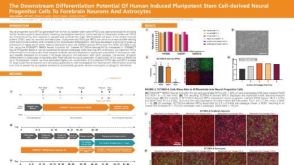 科学海报The Downstream Differentiation Potential of Human Induced Pluripotent Stem Cell-Derived Neural Progenitor Cells to Forebrain Neurons and Astrocytes

 沪公网安备31010102008431号