Rodrigues G et al. (APR 2014)
Stem Cell Reviews and Reports 10 2 151--161
Integrated Platform for Production and Purification of Human Pluripotent Stem Cell-Derived Neural Precursors
Human pluripotent stem cells (hPSCs) are a promising source of cells for clinical applications,such as transplantation of clinically engineered tissues and organs,and drug discovery programs due to their ability to self-renew and to be differentiated into cells from the three embryonic germ layers. In this study,the differentiation of two hPSC-lines into neural precursors (NPs) was accomplished with more than 80 % efficiency,by means of the dual-SMAD inhibition protocol,based on the use of two small molecules (SB431542 and LDN193189) to generate Pax6 and Nestin-positive neural entities. One of the major hurdles related to the in vitro generation of PSC-derived populations is the tumorigenic potential of cells that remain undifferentiated. These remaining hPSCs have the potential to generate teratomas after being transplanted,and may interfere with the outcome of in vitro differentiation protocols. One strategy to tackle this problem is to deplete these contaminating" cells during the differentiation process. Magnetic activated cell sorting (MACS) was used for the first time for purification of hPSC-derived NPs after the neural commitment stage using anti-Tra-1-60 micro beads for negative selection of the unwanted hPSCs. The depletion had an average efficiency of 80.4 ± 5 % and less than 1.5 % of Tra-1-60 positive cells were present in the purified populations. After re-plating�
View Publication
产品类型:
产品号#:
05850
05857
05870
05875
85850
85857
85870
85875
产品名:
mTeSR™1
mTeSR™1
De Palma M et al. (MAR 2005)
Blood 105 6 2307--15
Promoter trapping reveals significant differences in integration site selection between MLV and HIV vectors in primary hematopoietic cells.
Recent reports have indicated that human immunodeficiency virus (HIV) and murine leukemia virus (MLV) vectors preferentially integrate into active genes. Here,we used a novel approach based on genetic trapping to rapidly score several thousand integration sites and found that MLV vectors trapped cellular promoters more efficiently than HIV vectors. Remarkably,1 in 5 MLV integrations trapped an active promoter in different cell lines and primary hematopoietic cells. Such frequency was even higher in growth-stimulated lymphocytes. We show that the different behavior of MLV and HIV vectors was dependent on a different integration pattern within transcribed genes. Whereas MLV-based traps showed a strong bias for promoter-proximal integration leading to efficient reporter expression,HIV-based traps integrated throughout transcriptional units and were limited for expression by the distance from the promoter and the reading frame of the targeted gene. Our results indicate a strong propensity of MLV to establish transcriptional interactions with cellular promoters,a behavior that may have evolved to enhance proviral expression and may increase the insertional mutagenesis risk. Promoter trapping efficiency provides a convenient readout to assess transcriptional interactions between the vector and its flanking genes at the integration site and to compare integration site selection among different cell types and in different growth conditions.
View Publication
产品类型:
产品号#:
03434
03444
09600
09650
18757
18757RF
产品名:
MethoCult™ GF M3434
MethoCult™ GF M3434
StemSpan™ SFEM
StemSpan™ SFEM
EasySep™小鼠CD117(cKIT)正选试剂盒
RoboSep™ 小鼠CD117(cKIT)正选试剂盒含滤芯吸头
Guan X et al. (MAR 2014)
Stem Cell Research 12 2 467--480
Dystrophin-deficient cardiomyocytes derived from human urine: New biologic reagents for drug discovery
The ability to extract somatic cells from a patient and reprogram them to pluripotency opens up new possibilities for personalized medicine. Induced pluripotent stem cells (iPSCs) have been employed to generate beating cardiomyocytes from a patient's skin or blood cells. Here,iPSC methods were used to generate cardiomyocytes starting from the urine of a patient with Duchenne muscular dystrophy (DMD). Urine was chosen as a starting material because it contains adult stem cells called urine-derived stem cells (USCs). USCs express the canonical reprogramming factors c-myc and klf4,and possess high telomerase activity. Pluripotency of urine-derived iPSC clones was confirmed by immunocytochemistry,RT-PCR and teratoma formation. Urine-derived iPSC clones generated from healthy volunteers and a DMD patient were differentiated into beating cardiomyocytes using a series of small molecules in monolayer culture. Results indicate that cardiomyocytes retain the DMD patient's dystrophin mutation. Physiological assays suggest that dystrophin-deficient cardiomyocytes possess phenotypic differences from normal cardiomyocytes. These results demonstrate the feasibility of generating cardiomyocytes from a urine sample and that urine-derived cardiomyocytes retain characteristic features that might be further exploited for mechanistic studies and drug discovery. ?? 2013.
View Publication
产品类型:
产品号#:
05850
05857
05870
05875
85850
85857
85870
85875
产品名:
mTeSR™1
mTeSR™1
Chen KG et al. (JUL 2014)
Journal of visualized experiments : JoVE 89 1--10
Alternative cultures for human pluripotent stem cell production, maintenance, and genetic analysis.
Human pluripotent stem cells (hPSCs) hold great promise for regenerative medicine and biopharmaceutical applications. Currently,optimal culture and efficient expansion of large amounts of clinical-grade hPSCs are critical issues in hPSC-based therapies. Conventionally,hPSCs are propagated as colonies on both feeder and feeder-free culture systems. However,these methods have several major limitations,including low cell yields and generation of heterogeneously differentiated cells. To improve current hPSC culture methods,we have recently developed a new method,which is based on non-colony type monolayer (NCM) culture of dissociated single cells. Here,we present detailed NCM protocols based on the Rho-associated kinase (ROCK) inhibitor Y-27632. We also provide new information regarding NCM culture with different small molecules such as Y-39983 (ROCK I inhibitor),phenylbenzodioxane (ROCK II inhibitor),and thiazovivin (a novel ROCK inhibitor). We further extend our basic protocol to cultivate hPSCs on defined extracellular proteins such as the laminin isoform 521 (LN-521) without the use of ROCK inhibitors. Moreover,based on NCM,we have demonstrated efficient transfection or transduction of plasmid DNAs,lentiviral particles,and oligonucleotide-based microRNAs into hPSCs in order to genetically modify these cells for molecular analyses and drug discovery. The NCM-based methods overcome the major shortcomings of colony-type culture,and thus may be suitable for producing large amounts of homogeneous hPSCs for future clinical therapies,stem cell research,and drug discovery.
View Publication
产品类型:
产品号#:
05850
05857
05870
05875
85850
85857
85870
85875
产品名:
mTeSR™1
mTeSR™1
Safi R et al. (FEB 2009)
Molecular endocrinology (Baltimore,Md.) 23 2 188--201
Pharmacological manipulation of the RAR/RXR signaling pathway maintains the repopulating capacity of hematopoietic stem cells in culture.
The retinoid X receptor (RXR) contributes to the regulation of diverse biological pathways via its role as a heterodimeric partner of several nuclear receptors. However,RXR has no established role in the regulation of hematopoietic stem cell (HSC) fate. In this study,we sought to determine whether direct modulation of RXR signaling could impact human HSC self-renewal or differentiation. Treatment of human CD34(+)CD38(-)lin(-) cells with LG1506,a selective RXR modulator,inhibited the differentiation of HSCs in culture and maintained long-term repopulating HSCs in culture that were otherwise lost in response to cytokine treatment. Further studies revealed that LG1506 had a distinct mechanism of action in that it facilitated the recruitment of corepressors to the retinoic acid receptor (RAR)/RXR complex at target gene promoters,suggesting that this molecule was functioning as an inverse agonist in the context of this heterodimer. Interestingly,using combinatorial peptide phage display,we identified unique surfaces presented on RXR when occupied by LG1506 and demonstrated that other modulators that exhibited these properties functioned similarly at both a mechanistic and biological level. These data indicate that the RAR/RXR heterodimer is a critical regulator of human HSC differentiation,and pharmacological modulation of RXR signaling prevents the loss of human HSCs that otherwise occurs in short-term culture.
View Publication
产品类型:
产品号#:
04434
04444
产品名:
MethoCult™ H4434 Classic
MethoCult™ H4434 Classic
Prowse A et al. (JUL 2009)
BioTechniques 47 1 599--606
A rapid, cost-effective method for counting human embryonic stem cell numbers as clumps.
Enumeration of human embryonic stem cell (hESC) numbers through single cell digestion can be time consuming especially in high-throughput or multi-factorial analysis containing 50+ samples. We have developed a reproducible,cost-effective method of counting hESCs in clumps circumventing the need to manually dissociate each sample to single cells. The method is based on the DNA binding capacity of propidium iodide (PI) and subsequent fluorescent signal detection. Standard curves generated for cell numbers versus PI fluorescence as single cells or clumps showed an almost identical relationship in the lines of best fit. The reproducibility of the assay was first demonstrated by seeding hESC clumps at specific cell densities ranging 0.05[x02013]2x10⁵ cells/well and then secondly by using the assay to count cell numbers after different growth conditions. Validation tests showed that consistent seeding densities are important in maintaining undifferentiated hESC culture and that the assay can be used to estimate relative cell numbers and growth curves with high accuracy.
View Publication
产品类型:
产品号#:
05850
05857
05870
05875
85850
85857
85870
85875
产品名:
mTeSR™1
mTeSR™1
Naylor RW et al. ( 2016)
PloS one 11 10 e0165464
Derivation of Corneal Keratocyte-Like Cells from Human Induced Pluripotent Stem Cells.
Corneal diseases such as keratoconus represent a relatively common disorder in the human population. However,treatment is restricted to corneal transplantation,which only occurs in the most advanced cases. Cell based therapies may offer an alternative approach given that the eye is amenable to such treatments and corneal diseases like keratoconus have been associated specifically with the death of corneal keratocytes. The ability to generate corneal keratocytes in vitro may enable a cell-based therapy to treat patients with keratoconus. Human induced pluripotent stem cells (hiPSCs) offer an abundant supply of cells from which any cell in the body can be derived. In the present study,hiPSCs were successfully differentiated into neural crest cells (NCCs),the embryonic precursor to keratocytes,and then cultured on cadaveric corneal tissue to promote keratocyte differentiation. The hiPSC-derived NCCs were found to migrate into the corneal stroma where they acquired a keratocyte-like morphology and an expression profile similar to corneal keratocytes in vivo. These results indicate that hiPSCs can be used to generate corneal keratocytes in vitro and lay the foundation for using these cells in cornea cell-based therapies.
View Publication
Santoni de Sio FR et al. (JUN 2006)
Blood 107 11 4257--65
Proteasome activity restricts lentiviral gene transfer into hematopoietic stem cells and is down-regulated by cytokines that enhance transduction.
The therapeutic potential of hematopoietic stem cell (HSC) gene therapy can be fully exploited only by reaching efficient gene transfer into HSCs without compromising their biologic properties. Although HSCs can be transduced by HIV-derived lentiviral vectors (LVs) in short ex vivo culture,they display low permissivity to the vector,requiring cytokine stimulation to reach high-frequency transduction. Using stringent assays of competitive xenograft repopulation,we show that early-acting cytokines synergistically enhanced human HSC gene transfer by LVs without impairing engraftment and repopulation capacity. Using S-phase suicide assays,we show that transduction enhancement by cytokines was not dependent on cell cycle progression and that LVs can transduce quiescent HSCs. Pharmacologic inhibition of the proteasome during transduction dramatically enhanced HSC gene transfer,allowing the reach of very high levels of vector integration in their progeny in vivo. Thus,LVs are effectively restricted at a postentry step by the activity of this proteolytic complex. Unexpectedly,cytokine stimulation rapidly and substantially down-regulated proteasome activity in hematopoietic progenitors,highlighting one mechanism by which cytokines may enhance permissiveness to LV gene transfer. These findings demonstrate that antiviral responses ultimately mediated by proteasomes strongly limit the efficiency of HSC transduction by LVs and establish improved conditions for HSC-based gene therapy.
View Publication


 EasySep™小鼠TIL(CD45)正选试剂盒




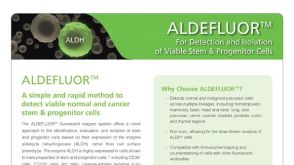 产品手册ALDEFLUOR™: For Identification and Isolation of Viable Stem & Progenitor Cells

 沪公网安备31010102008431号