Seeger FH et al. (MAR 2007)
European heart journal 28 6 766--72
Cell isolation procedures matter: a comparison of different isolation protocols of bone marrow mononuclear cells used for cell therapy in patients with acute myocardial infarction.
AIM: The recently published REPAIR-AMI and ASTAMI trial showed differences in contractile recovery of left ventricular function after infusion of bone marrow-derived cells in acute myocardial infarction. Since the trials used different protocols for cell isolation and storage (REPAIR-AMI: Ficoll,storage in X-vivo 10 medium plus serum; ASTAMI: Lymphoprep,storage in NaCl plus plasma),we compared the functional activity of BMC isolated by the two different protocols. METHODS AND RESULTS: The recovery of total cell number,colony-forming units (CFU),and the number of mesenchymal stem cells were significantly reduced to 77 +/- 4%,83 +/- 16%,and 65 +/- 15%,respectively,when using the ASTAMI protocol compared with the REPAIR protocol. The capacity of the isolated BMC to migrate in response to stromal cell-derived factor 1 (SDF-1) was profoundly reduced when using the ASTAMI cell isolation procedure (42 +/- 8% and 78 +/- 3% reduction in healthy and CAD-patient cells,respectively). Finally,infusion of BMC into a hindlimb ischaemia model demonstrated a significantly blunted blood-flow-recovery by BMC isolated with the ASTAMI protocol (54 +/- 6% of the effect obtained by REPAIR cells). Comparison of the individual steps identified the use of NaCl and plasma for cell storage as major factors for functional impairment of the BMC. CONCLUSION: Cell isolation protocols have a major impact on the functional activity of bone marrow-derived progenitor cells. The assessment of cell number and viability may not entirely reflect the functional capacity of cells in vivo. Additional functional testing appears to be mandatory to assure proper cell function before embarking on clinical cell therapy trials.
View Publication
产品类型:
产品号#:
04564
04534
04544
产品名:
MethoCult™ H4534 Classic 无 EPO 入门试剂盒
MethoCult™ H4534 Classic(不含 EPO)
MethoCult™ H4534 Classic(不含 EPO)
Stumpf M et al. (DEC 2010)
Proceedings of the National Academy of Sciences of the United States of America 107 50 21541--6
Specific erythroid-lineage defect in mice conditionally deficient for Mediator subunit Med1.
The Mediator complex forms the bridge between transcriptional activators and the RNA polymerase II. Med1 (also known as PBP or TRAP220) is a key component of Mediator that interacts with nuclear hormone receptors and GATA transcription factors. Here,we show dynamic recruitment of GATA-1,TFIIB,Mediator,and RNA polymerase II to the β-globin locus in induced mouse erythroid leukemia cells and in an erythropoietin-inducible hematopoietic progenitor cell line. Using Med1 conditional knockout mice,we demonstrate a specific block in erythroid development but not in myeloid or lymphoid development,highlighted by the complete absence of β-globin gene expression. Thus,Mediator subunit Med1 plays a pivotal role in erythroid development and in β-globin gene activation.
View Publication
产品类型:
产品号#:
03334
产品名:
MethoCult™ M3334
Liu C et al. (SEP 2013)
Biochemical and Biophysical Research Communications 439 1 154--159
Neural differentiation of human embryonic stem cells as an in vitro tool for the study of the expression patterns of the neuronal cytoskeleton during neurogenesis
The neural differentiation of human embryonic stem cells (ESCs) is a potential tool for elucidating the key mechanisms involved in human neurogenesis. Nestin and ??-III-tubulin,which are cytoskeleton proteins,are marker proteins of neural stem cells (NSCs) and neurons,respectively. However,the expression patterns of nestin and ??-III-tubulin in neural derivatives from human ESCs remain unclear. In this study,we found that neural progenitor cells (NPCs) derived from H9 cells express high levels of nestin and musashi-1. In contrast,??-III-tubulin was weakly expressed in a few NPCs. Moreover,in these cells,nestin formed filament networks,whereas ??-III-tubulin was distributed randomly as small particles. As the differentiation proceeded,the nestin filament networks and the ??-III-tubulin particles were found in both the cell soma and the cellular processes. Moreover,the colocalization of nestin and ??-III-tubulin was found mainly in the cell processes and neurite-like structures and not in the cell soma. These results may aid our understanding of the expression patterns of nestin and ??-III-tubulin during the neural differentiation of H9 cells. ?? 2013 Elsevier Inc.
View Publication
产品类型:
产品号#:
05850
05857
05870
05875
85850
85857
85870
85875
产品名:
mTeSR™1
mTeSR™1
Kwok CTD et al. (MAR 2016)
Stem Cell Research 16 3 651--661
The Forkhead box transcription factor FOXM1 is required for the maintenance of cell proliferation and protection against oxidative stress in human embryonic stem cells
Human embryonic stem cells (hESCs) exhibit unique cell cycle structure,self-renewal and pluripotency. The Forkhead box transcription factor M1 (FOXM1) is critically required for the maintenance of pluripotency in mouse embryonic stem cells and mouse embryonal carcinoma cells,but its role in hESCs remains unclear. Here,we show that FOXM1 expression was enriched in undifferentiated hESCs and was regulated in a cell cycle-dependent manner with peak levels detected at the G2/M phase. Expression of FOXM1 did not correlate with OCT4 and NANOG during in vitro differentiation of hESCs. Importantly,knockdown of FOXM1 expression led to aberrant cell cycle distribution with impairment in mitotic progression but showed no profound effect on the undifferentiated state. Interestingly,FOXM1 depletion sensitized hESCs to oxidative stress. Moreover,genome-wide analysis of FOXM1 targets by ChIP-seq identified genes important for M phase including CCNB1 and CDK1,which were subsequently confirmed by ChIP and RNA interference analyses. Further peak set comparison against a differentiating hESC line and a cancer cell line revealed a substantial difference in the genomic binding profile of FOXM1 in hESCs. Taken together,our findings provide the first evidence to support FOXM1 as an important regulator of cell cycle progression and defense against oxidative stress in hESCs.
View Publication
Friedel T et al. (MAR 2016)
Stem cells and development 25 9 729--39
CD30 Receptor-Targeted Lentiviral Vectors for Human Induced Pluripotent Stem Cell-Specific Gene Modification.
Cultures of induced pluripotent stem cells (iPSCs) often contain cells of varying grades of pluripotency. We present novel lentiviral vectors targeted to the surface receptor CD30 (CD30-LV) to transfer genes into iPSCs that are truly pluripotent as demonstrated by marker gene expression. We demonstrate that CD30 expression is restricted to SSEA4high cells of human iPSC cultures and a human embryonic stem cell line. When CD30-LV was added to iPSCs during routine cultivation,efficient and exclusive transduction of cells positive for the pluripotency marker Oct-4 was achieved,while retaining their pluripotency. When added during the reprogramming process,CD30-LV solely transduced cells that became fully reprogrammed iPSCs as confirmed by co-expression of endogenous Nanog and the reporter gene. Thus,CD30-LV may serve as novel tool for the selective gene transfer into pluripotent stem cells with broad applications in basic and therapeutic research.
View Publication
产品类型:
产品号#:
05850
05857
05870
05875
85850
85857
85870
85875
产品名:
mTeSR™1
mTeSR™1
Prasain N et al. (NOV 2014)
Nature biotechnology 32 11 1151--1157
Differentiation of human pluripotent stem cells to cells similar to cord-blood endothelial colony-forming cells.
The ability to differentiate human pluripotent stem cells into endothelial cells with properties of cord-blood endothelial colony-forming cells (CB-ECFCs) may enable the derivation of clinically relevant numbers of highly proliferative blood vessel-forming cells to restore endothelial function in patients with vascular disease. We describe a protocol to convert human induced pluripotent stem cells (hiPSCs) or embryonic stem cells (hESCs) into cells similar to CB-ECFCs at an efficiency of textgreater10(8) ECFCs produced from each starting pluripotent stem cell. The CB-ECFC-like cells display a stable endothelial phenotype with high clonal proliferative potential and the capacity to form human vessels in mice and to repair the ischemic mouse retina and limb,and they lack teratoma formation potential. We identify Neuropilin-1 (NRP-1)-mediated activation of KDR signaling through VEGF165 as a critical mechanism for the emergence and maintenance of CB-ECFC-like cells.
View Publication
产品类型:
产品号#:
05850
05857
05870
05875
85850
85857
85870
85875
产品名:
mTeSR™1
mTeSR™1
Pastos KM et al. (NOV 2006)
Blood 108 10 3360--2
Differential effects of recombinant thrombopoietin and bone marrow stromal-conditioned media on neonatal versus adult megakaryocytes.
Umbilical cord blood (CB) is a valuable source of stem cells for transplantation,but CB transplantations are frequently complicated by delayed platelet engraftment. The reasons underlying this are unclear. We hypothesized that CB- and peripheral-blood (PB)-derived megakaryocytes (MKs) respond differently to the adult hematopoietic microenvironment and to thrombopoietin (Tpo). To test this,we cultured CB- and PB-CD34(+) cells in adult bone marrow stromal conditioned media (CM) or unconditioned media (UCM) with increasing concentrations of recombinant Tpo and compared the effects of these conditions on CB-versus PB-MKs. PB-MKs reached highest ploidy in response to UCM + 100 ng/mL rTpo,and the addition of CM inhibited their maturation. In contrast,CB-MKs reached highest ploidy in CM without rTpo,and high rTpo concentrations (textgreater 0.1 ng/mL) inhibited their maturation. This is the first evidence that human neonatal and adult MKs have substantially different biologic responses to Tpo and potentially to other cytokines.
View Publication
Myogenesis GRC 2017,Till and McCulloch Meeting 2017
产品号#:
05980
05982
05983
产品名:
MyoCult™-SF 扩增添加物试剂盒 (人)
MyoCult™-SF 扩增10X添加物(人)
MyoCult™-SF 贴附基质
Nakano T et al. (AUG 1994)
Science (New York,N.Y.) 265 5175 1098--101
Generation of lymphohematopoietic cells from embryonic stem cells in culture.
An efficient system was developed that induced the differentiation of embryonic stem (ES) cells into blood cells of erythroid,myeloid,and B cell lineages by coculture with the stromal cell line OP9. This cell line does not express functional macrophage colony-stimulating factor (M-CSF). The presence of M-CSF had inhibitory effects on the differentiation of ES cells to blood cells other than macrophages. Embryoid body formation or addition of exogenous growth factors was not required,and differentiation was highly reproducible even after the selection of ES cells with the antibiotic G418. Combined with the ability to genetically manipulate ES cells,this system will facilitate the study of molecular mechanisms involved in development and differentiation of hematopoietic cells.
View Publication
产品类型:
产品号#:
06902
06952
00321
00322
00323
00324
00325
产品名:
Yang J et al. (SEP 2007)
Blood 110 6 2034--40
AZD1152, a novel and selective aurora B kinase inhibitor, induces growth arrest, apoptosis, and sensitization for tubulin depolymerizing agent or topoisomerase II inhibitor in human acute leukemia cells in vitro and in vivo.
Aurora kinases play an important role in chromosome alignment,segregation,and cytokinesis during mitosis. We have recently shown that hematopoietic malignant cells including those from acute myeloid leukemia (AML) and acute lymphoblastic leukemia (ALL) aberrantly expressed Aurora A and B kinases,and ZM447439,a potent inhibitor of Aurora kinases,effectively induced growth arrest and apoptosis of a variety of leukemia cells. The present study explored the effect of AZD1152,a highly selective inhibitor of Aurora B kinase,on various types of human leukemia cells. AZD1152 inhibited the proliferation of AML lines (HL-60,NB4,MOLM13),ALL line (PALL-2),biphenotypic leukemia (MV4-11),acute eosinophilic leukemia (EOL-1),and the blast crisis of chronic myeloid leukemia K562 cells with an IC50 ranging from 3 nM to 40 nM,as measured by thymidine uptake on day 2 of culture. These cells had 4N/8N DNA content followed by apoptosis,as measured by cell-cycle analysis and annexin V staining,respectively. Of note,AZD1152 synergistically enhanced the antiproliferative activity of vincristine,a tubulin depolymerizing agent,and daunorubicin,a topoisomerase II inhibitor,against the MOLM13 and PALL-2 cells in vitro. Furthermore,AZD1152 potentiated the action of vincristine and daunorubicin in a MOLM13 murine xenograft model. Taken together,AZD1152 is a promising new agent for treatment of individuals with leukemia. The combined administration of AZD1152 and conventional chemotherapeutic agent to patients with leukemia warrants further investigation.
View Publication
产品类型:
产品号#:
04564
04534
04544
产品名:
MethoCult™ H4534 Classic 无 EPO 入门试剂盒
MethoCult™ H4534 Classic(不含 EPO)
MethoCult™ H4534 Classic(不含 EPO)
Lai AY et al. (OCT 2005)
Journal of immunology (Baltimore,Md. : 1950) 175 8 5016--23
Heterogeneity of Flt3-expressing multipotent progenitors in mouse bone marrow.
Mechanisms of lymphoid and myeloid lineage choice by hemopoietic stem cells remain unclear. In this study we show that the multipotent progenitor (MPP) population,which is immediately downstream of hemopoietic stem cells,is heterogeneous and can be subdivided in terms of VCAM-1 expression. VCAM-1(+) MPPs were fully capable of differentiating into both lymphoid and myeloid lineages. In contrast,VCAM-1(-) MPPs gave rise to lymphocytes predominately in vivo. T and B cell development from VCAM-1(-) MPPs was 1 wk faster than that from VCAM-1(+) MPPs. Furthermore,VCAM-1(+) MPPs gave rise to common myeloid progenitors and VCAM-1(-) MPPs in vivo,indicating that VCAM-1(-) MPPs are progenies of VCAM-1(+) MPPs. VCAM-1(-) MPPs,in turn,developed into lymphoid lineage-restricted common lymphoid progenitors. These results establish a hierarchy of developmental relationship between MPP subsets and lymphoid and myeloid progenitors. In addition,VCAM-1(+) MPPs may represent the branching point between the lymphoid and myeloid lineages.
View Publication


 EasySep™小鼠TIL(CD45)正选试剂盒





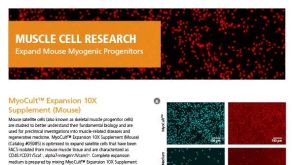 产品手册Culture and Expand Mouse Myogenic Progenitors
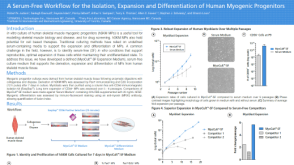 科学海报A Serum-Free Workflow for the Isolation, Expansion and Differentiation of Human Myogenic Progenitors
 沪公网安备31010102008431号