Sakai R et al. (MAR 2003)
Toxicological sciences : an official journal of the Society of Toxicology 72 1 84--91
TCDD treatment eliminates the long-term reconstitution activity of hematopoietic stem cells.
2,3,7,8-tetrachlorodibenzo-p-dioxin (TCDD),an endocrine disrupting chemical (EDC),can cause carcinogenesis,immunosuppression,and teratogenesis,through a ligand-activated transcription factor,the aryl hydrocarbon receptor (AhR). Despite remarkable recent advances in stem cell biology,the influence of TCDD on hematopoietic stem cells (HSCs),which possess the ability to reconstitute long-term multilineage hematopoiesis,has not been well investigated. In this study we examined the influence of TCDD on HSCs enriched for CD34(-),c-kit(+),Sca-1(+),lineage negative (CD34-KSL) cells. The number of the CD34-KSL cells was found to be increased about four-fold upon a single oral administration of TCDD (40 micro g/kg body weight). Surprisingly,we found that these TCDD-treated cells almost lost long-term reconstitution activity. This defect was not present in AhR(-/-) mice. These findings suggest that modulation of AhR/ARNT system activity may have an effect on HSC function or survival.
View Publication
产品类型:
产品号#:
03434
03444
产品名:
MethoCult™ GF M3434
MethoCult™ GF M3434
Liu Z et al. (JUN 2011)
The Journal of biological chemistry 286 23 20606--14
Multiple apoptotic defects in hematopoietic cells from mice lacking lipocalin 24p3.
The lipocalin mouse 24p3 has been implicated in diverse physiological processes,including apoptosis,iron trafficking,development and innate immunity. Studies from our laboratory as well as others demonstrated the proapoptotic activity of 24p3 in a variety of cultured models. However,a general role for the lipocalin 24p3 in the hematopoietic system has not been tested in vivo. To study the role of 24p3,we derived 24p3 null mice and back-crossed them onto C57BL/6 and 129/SVE backgrounds. Homozygous 24p3(-/-) mice developed a progressive accumulation of lymphoid,myeloid,and erythroid cells,which was not due to enhanced hematopoiesis because competitive repopulation and recovery from myelosuppression were the same as for wild type. Instead,apoptotic defects were unique to many mature hematopoietic cell types,including neutrophils,cytokine-dependent mast cells,thymocytes,and erythroid cells. Thymocytes isolated from 24p3 null mice also displayed resistance to apoptosis-induced by dexamethasone. Bim response to various apoptotic stimuli was attenuated in 24p3(-/-) cells,thus explaining their resistance to the ensuing cell death. The results of these studies,in conjunction with those of previous studies,reveal 24p3 as a regulator of the hematopoietic compartment with important roles in normal physiology and disease progression. Interestingly,these functions are limited to relatively mature blood cell compartments.
View Publication
产品类型:
产品号#:
03234
产品名:
MethoCult™ M3234
Goossens S et al. (MAY 2011)
Blood 117 21 5620--30
The EMT regulator Zeb2/Sip1 is essential for murine embryonic hematopoietic stem/progenitor cell differentiation and mobilization.
Zeb2 (Sip1/Zfhx1b) is a member of the zinc-finger E-box-binding (ZEB) family of transcriptional repressors previously demonstrated to regulate epithelial-to-mesenchymal transition (EMT) processes during embryogenesis and tumor progression. We found high Zeb2 mRNA expression levels in HSCs and hematopoietic progenitor cells (HPCs),and examined Zeb2 function in hematopoiesis through a conditional deletion approach using the Tie2-Cre and Vav-iCre recombination mouse lines. Detailed cellular analysis demonstrated that Zeb2 is dispensable for hematopoietic cluster and HSC formation in the aorta-gonadomesonephros region of the embryo,but is essential for normal HSC/HPC differentiation. In addition,Zeb2-deficient HSCs/HPCs fail to properly colonize the fetal liver and/or bone marrow and show enhanced adhesive properties associated with increased β1 integrin and Cxcr4 expression. Moreover,deletion of Zeb2 resulted in embryonic (Tie2-Cre) and perinatal (Vav-icre) lethality due to severe cephalic hemorrhaging and decreased levels of angiopoietin-1 and,subsequently,improper pericyte coverage of the cephalic vasculature. These results reveal essential roles for Zeb2 in embryonic hematopoiesis and are suggestive of a role for Zeb2 in hematopoietic-related pathologies in the adult.
View Publication
产品类型:
产品号#:
03434
03444
04960
04902
04900
产品名:
MethoCult™ GF M3434
MethoCult™ GF M3434
MegaCult™-C胶原和无细胞因子培养基
胶原蛋白溶液
MegaCult™-C无细胞因子培养基
Wang Y et al. (MAR 2017)
Nucleic acids research 45 5 e29
Integration-defective lentiviral vector mediates efficient gene editing through homology-directed repair in human embryonic stem cells.
Human embryonic stem cells (hESCs) are used as platforms for disease study,drug screening and cell-based therapy. To facilitate these applications,it is frequently necessary to genetically manipulate the hESC genome. Gene editing with engineered nucleases enables site-specific genetic modification of the human genome through homology-directed repair (HDR). However,the frequency of HDR remains low in hESCs. We combined efficient expression of engineered nucleases and integration-defective lentiviral vector (IDLV) transduction for donor template delivery to mediate HDR in hESC line WA09. This strategy led to highly efficient HDR with more than 80% of the selected WA09 clones harboring the transgene inserted at the targeted genomic locus. However,certain portions of the HDR clones contained the concatemeric IDLV genomic structure at the target site,probably resulted from recombination of the IDLV genomic input before HDR with the target. We found that the integrase protein of IDLV mediated the highly efficient HDR through the recruitment of a cellular protein,LEDGF/p75. This study demonstrates that IDLV-mediated HDR is a powerful and broadly applicable technology to carry out site-specific gene modification in hESCs.
View Publication
产品类型:
产品号#:
05850
05857
05870
05875
85850
85857
85870
85875
产品名:
mTeSR™1
mTeSR™1
Yang S-L et al. (DEC 2012)
Protein & cell 3 12 934--942
Compound screening platform using human induced pluripotent stem cells to identify small molecules that promote chondrogenesis.
Articular cartilage,which is mainly composed of collagen II,enables smooth skeletal movement. Degeneration of collagen II can be caused by various events,such as injury,but degeneration especially increases over the course of normal aging. Unfortunately,the body does not fully repair itself from this type of degeneration,resulting in impaired movement. Microfracture,an articular cartilage repair surgical technique,has been commonly used in the clinic to induce the repair of tissue at damage sites. Mesenchymal stem cells (MSC) have also been used as cell therapy to repair degenerated cartilage. However,the therapeutic outcomes of all these techniques vary in different patients depending on their age,health,lesion size and the extent of damage to the cartilage. The repairing tissues either form fibrocartilage or go into a hypertrophic stage,both of which do not reproduce the equivalent functionality of endogenous hyaline cartilage. One of the reasons for this is inefficient chondrogenesis by endogenous and exogenous MSC. Drugs that promote chondrogenesis could be used to induce self-repair of damaged cartilage as a non-invasive approach alone,or combined with other techniques to greatly assist the therapeutic outcomes. The recent development of human induced pluripotent stem cell (iPSCs),which are able to self-renew and differentiate into multiple cell types,provides a potentially valuable cell resource for drug screening in a more relevant" cell type. Here we report a screening platform using human iPSCs in a multi-well plate format to identify compounds that could promote chondrogenesis."
View Publication
产品类型:
产品号#:
05850
05857
05870
05875
85850
85857
85870
85875
产品名:
mTeSR™1
mTeSR™1
Ramachandra CJA et al. (SEP 2011)
Nucleic Acids Research 39 16 e107
Efficient recombinase-mediated cassette exchange at the AAVS1 locus in human embryonic stem cells using baculoviral vectors
Insertion of a transgene into a defined genomic locus in human embryonic stem cells (hESCs) is crucial in preventing random integration-induced insertional mutagenesis,and can possibly enable persistent transgene expression during hESC expansion and in their differentiated progenies. Here,we employed homologous recombination in hESCs to introduce heterospecific loxP sites into the AAVS1 locus,a site with an open chromatin structure that allows averting transgene silencing phenomena. We then performed Cre recombinase mediated cassette exchange using baculoviral vectors to insert a transgene into the modified AAVS1 locus. Targeting efficiency in the master hESC line with the loxP-docking sites was up to 100%. Expression of the inserted transgene lasted for at least 20 passages during hESC expansion and was retained in differentiated cells derived from the genetically modified hESCs. Thus,this study demonstrates the feasibility of genetic manipulation at the AAVS1 locus with homologous recombination and using viral transduction in hESCs to facilitate recombinase-mediated cassette exchange. The method developed will be useful for repeated gene targeting at a defined locus of the hESC genome.
View Publication
Vascular endothelial growth factor (VEGF) and its receptors play an essential role in the formation and maintenance of the hematopoietic and vascular compartments. The VEGF receptor-2 (VEGFR-2) is expressed on a population of hematopoietic cells,although its role in hematopoiesis is still unclear. In this report,we have utilized a strategy to selectively activate VEGFR-2 and study its effects in primary bone marrow cells. We found that VEGFR-2 can maintain the hematopoietic progenitor population in mouse bone marrow cultured in the absence of exogenous cytokines. Maintenance of the hematopoietic progenitor population is due to increased cell survival with minimal effect on proliferation. Progenitor survival is mainly mediated by activation of the phosphatidylinositol 3'-kinase/Akt pathway. Although VEGFR-2 also activated Erk1/2 mitogen-activated protein kinase,it did not induce cell proliferation,and blockade of this pathway only partially decreased VEGFR-2-mediated survival of hematopoietic progenitors. Thus,the role of VEGFR-2 in hematopoiesis is likely to maintain survival of hematopoietic progenitors through the activation of antiapoptotic pathways.
View Publication
产品类型:
产品号#:
09500
产品名:
BIT 9500血清替代物
Phanstiel D et al. (MAR 2008)
Proceedings of the National Academy of Sciences of the United States of America 105 11 4093--8
Mass spectrometry identifies and quantifies 74 unique histone H4 isoforms in differentiating human embryonic stem cells.
Epigenetic regulation through chromatin is thought to play a critical role in the establishment and maintenance of pluripotency. Traditionally,antibody-based technologies were used to probe for specific posttranslational modifications (PTMs) present on histone tails,but these methods do not generally reveal the presence of multiple modifications on a single-histone tail (combinatorial codes). Here,we describe technology for the discovery and quantification of histone combinatorial codes that is based on chromatography and mass spectrometry. We applied this methodology to decipher 74 discrete combinatorial codes on the tail of histone H4 from human embryonic stem (ES) cells. Finally,we quantified the abundances of these codes as human ES cells undergo differentiation to reveal striking changes in methylation and acetylation patterns. For example,H4R3 methylation was observed only in the presence of H4K20 dimethylation; such context-specific patterning exemplifies the power of this technique.
View Publication
产品类型:
产品号#:
05850
05857
05870
05875
85850
85857
85870
85875
产品名:
mTeSR™1
mTeSR™1
Wö et al. (NOV 2010)
Blood 116 20 4116--25
Lineage-instructive function of C/EBPα in multipotent hematopoietic cells and early thymic progenitors.
Hematopoiesis is tightly controlled by transcription regulatory networks,but how and when specific transcription factors control lineage commitment are still largely unknown. Within the hematopoietic stem cell (Lin(-)Sca-1(+)c-Kit(+)) compartment these lineage-specific transcription factors are expressed at low levels but are up-regulated with the process of lineage specification. CCAAT/enhancer binding protein α (C/EBPα) represents one of these factors and is involved in myeloid development and indispensable for formation of granulocytes. To track the cellular fate of stem and progenitor cells,which express C/EBPα,we developed a mouse model expressing Cre recombinase from the Cebpa promoter and a conditional EYFP allele. We show that Cebpa/EYFP(+) cells represent a significant subset of multipotent hematopoietic progenitors,which predominantly give rise to myeloid cells in steady-state hematopoiesis. C/EBPα induced a strong myeloid gene expression signature and down-regulated E2A-induced regulators of early lymphoid development. In addition,Cebpa/EYFP(+) cells compose a fraction of early thymic progenitors with robust myeloid potential. However,Cebpa/EYFP(+) multipotent hematopoietic progenitors and early thymic progenitors retained the ability to develop into erythroid and T-lymphoid lineages,respectively. These findings support an instructive but argue against a lineage-restrictive role of C/EBPα in multipotent hematopoietic and thymic progenitors.
View Publication
产品类型:
产品号#:
03231
产品名:
MethoCult™ M3231
Saghizadeh M et al. (NOV 2013)
PLoS ONE 8 11 e79632
A Simple Alkaline Method for Decellularizing Human Amniotic Membrane for Cell Culture
Human amniotic membrane is a standard substratum used to culture limbal epithelial stem cells for transplantation to patients with limbal stem cell deficiency. Various methods were developed to decellularize amniotic membrane,because denuded membrane is poorly immunogenic and better supports repopulation by dissociated limbal epithelial cells. Amniotic membrane denuding usually involves treatment with EDTA and/or proteolytic enzymes; in many cases additional mechanical scraping is required. Although ensuring limbal cell proliferation,these methods are not standardized,require relatively long treatment times and can result in membrane damage. We propose to use 0.5 M NaOH to reliably remove amniotic cells from the membrane. This method was used before to lyse cells for DNA isolation and radioactivity counting. Gently rubbing a cotton swab soaked in NaOH over the epithelial side of amniotic membrane leads to nearly complete and easy removal of adherent cells in less than a minute. The denuded membrane is subsequently washed in a neutral buffer. Cell removal was more thorough and uniform than with EDTA,or EDTA plus mechanical scraping with an electric toothbrush,or n-heptanol plus EDTA treatment. NaOH-denuded amniotic membrane did not show any perforations compared with mechanical or thermolysin denuding,and showed excellent preservation of immunoreactivity for major basement membrane components including laminin α2,γ1-γ3 chains,α1/α2 and α6 type IV collagen chains,fibronectin,nidogen-2,and perlecan. Sodium hydroxide treatment was efficient with fresh or cryopreserved (10% dimethyl sulfoxide or 50% glycerol) amniotic membrane. The latter method is a common way of membrane storage for subsequent grafting in the European Union. NaOH-denuded amniotic membrane supported growth of human limbal epithelial cells,immortalized corneal epithelial cells,and induced pluripotent stem cells. This simple,fast and reliable method can be used to standardize decellularized amniotic membrane preparations for expansion of limbal stem cells in vitro before transplantation to patients.
View Publication
产品类型:
产品号#:
05850
05857
05870
05875
85850
85857
85870
85875
产品名:
mTeSR™1
mTeSR™1
O'Connor MD et al. (JAN 2011)
Methods in molecular biology (Clifton,N.J.) 690 67--80
Functional assays for human embryonic stem cell pluripotency.
Realizing the potential that human embryonic stem cells (hESCs) hold,both for the advancement of biomedical science and the development of new treatments for many human disorders,will be greatly facilitated by the introduction of standardized methods for assessing and altering the biological properties of these cells. The 7-day in vitro alkaline phosphatase colony-forming cell (AP(+)-CFC) assay currently offers the most sensitive and specific method to quantify the frequency of undifferentiated cells present in a culture. In this regard,it is superior to any phenotypic assessment protocol. The AP(+)-CFC assay,thus,provides a valuable tool for monitoring the quality of hESC cultures,and also for evaluating quantitative changes in pluripotent cell numbers following manipulations that may affect the self-renewal and differentiation properties of the treated cells. Two other methods routinely used to evaluate hESC pluripotency involve either culturing the cells under conditions that promote the formation of nonadherent differentiating cell aggregates (termed embryoid bodies),or transplanting the cells into immunodeficient mice to obtain teratomas containing differentiated cells representative of endoderm,mesoderm,and ectoderm lineages.
View Publication


 EasySep™小鼠TIL(CD45)正选试剂盒





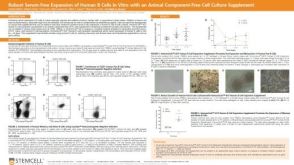 科学海报Robust Serum-Free Expansion of Human B Cells In Vitro with an Animal Component-Free Cell Culture Supplement
 沪公网安备31010102008431号