Wagner W et al. (OCT 2007)
Stem cells (Dayton,Ohio) 25 10 2638--47
Molecular and secretory profiles of human mesenchymal stromal cells and their abilities to maintain primitive hematopoietic progenitors.
Mesenchymal stromal cells (MSC) provide a supportive cellular microenvironment and are able to maintain the self-renewal capacity of hematopoietic progenitor cells (HPC). Isolation procedures for MSC vary extensively,and this may influence their biologic properties. In this study,we have compared human MSC isolated from bone marrow (BM) using two culture conditions,from cord blood (CB),and from adipose tissue (AT). The ability to maintain long-term culture-initiating cell frequency and a primitive CD34(+)CD38(-) immunophenotype was significantly higher for MSC derived from BM and CB compared with those from AT. These results were in line with a significantly higher adhesion of HPC to MSC from BM and CB versus MSC from AT. We have compared the cytokine production of MSC by cytokine antibody arrays,enzyme-linked immunosorbent assay,and a cytometric bead array. There were reproducible differences in the chemokine secretion profiles of various MSC preparations,but there was no clear concordance with differences in their potential to maintain primitive function of HPC. Global gene expression profiles of MSC preparations were analyzed and showed that adhesion proteins including cadherin-11,N-cadherin,vascular cell adhesion molecule 1,neural cell adhesion molecule 1,and integrins were highly expressed in MSC preparations derived from BM and CB. Thus,MSC from BM and CB are superior to MSC from AT for maintenance of primitive HPC. The latter property is associated with specific molecular profiles indicating the significance of cell-cell junctions but not with secretory profiles. Disclosure of potential conflicts of interest is found at the end of this article.
View Publication
产品类型:
产品号#:
05401
05402
05411
产品名:
MesenCult™ MSC 基础培养基(人)
MesenCult™ MSC刺激添加物(人)
MesenCult™ 增殖试剂盒(人)
Kanninen LK et al. (JUN 2016)
Biomaterials 103 86--100
Laminin-511 and laminin-521-based matrices for efficient hepatic specification of human pluripotent stem cells
Human pluripotent stem cells (hPSCs) have gained a solid foothold in basic research and drug industry as they can be used in??vitro to study human development and have potential to offer limitless supply of various somatic cell types needed in drug development. Although the hepatic differentiation of hPSCs has been extensively studied,only a little attention has been paid to the role of the extracellular matrix. In this study we used laminin-511,laminin-521,and fibronectin,found in human liver progenitor cells,as culture matrices for hPSC-derived definitive endoderm cells. We observed that laminin-511 and laminin-521 either alone or in combination support the hepatic specification and that fibronectin is not a vital matrix protein for the hPSC-derived definitive endoderm cells. The expression of the laminin-511/521-specific integrins increased during the definitive endoderm induction and hepatic specification. The hepatic cells differentiated on laminin matrices showed the upregulation of liver-specific markers both at mRNA and protein levels,secreted human albumin,stored glycogen,and exhibited cytochrome P450 enzyme activity and inducibility. Altogether,we found that laminin-511 and laminin-521 can be used as stage-specific matrices to guide the hepatic specification of hPSC-derived definitive endoderm cells.
View Publication
产品类型:
产品号#:
05850
05857
05870
05875
85850
85857
85870
85875
产品名:
mTeSR™1
mTeSR™1
Titmarsh D et al. (DEC 2011)
Biotechnology and Bioengineering 108 12 2894--2904
Optimization of flowrate for expansion of human embryonic stem cells in perfusion microbioreactors.
Microfluidic systems create significant opportunities to establish highly controlled microenvironmental conditions for screening pluripotent stem cell fate. However,since cell fate is crucially dependent on this microenvironment,it remains unclear as to whether continual perfusion of culture medium supports pluripotent stem cell maintenance in feeder-free,chemically defined conditions,and further,whether optimum perfusion conditions exist for subsequent use of human embryonic stem cell (hESCs) in other microfludic systems. To investigate this,we designed microbioreactors based on resistive flow to screen hESCs under a linear range of flowrates. We report that at low rates (conditions where glucose transport is convection-limited with Péclet number textless1),cells are affected by apparent nutrient depletion and waste accumulation,evidenced by reduced cell expansion and altered morphology. At higher rates,cells are spontaneously washed out,and display morphological changes which may be indicative of early-stage differentiation. However,between these thresholds exists a narrow range of flowrates in which hESCs expand comparably to the equivalent static culture system,with regular morphology and maintenance of the pluripotency marker TG30 in textgreater95% of cells over 7 days. For MEL1 hESCs the optimum flowrate also coincided with the time-averaged medium exchange rate in static cultures,which may therefore provide a good first estimate of appropriate perfusion rates. Overall,we demonstrate hESCs can be maintained in microbioreactors under continual flow for up to 7 days,a critical outcome for the future development of microbioreactor-based screening systems and assays for hESC culture.
View Publication
产品类型:
产品号#:
05850
05857
05870
05875
85850
85857
85870
85875
产品名:
mTeSR™1
mTeSR™1
Zhang X et al. (NOV 2014)
Stem Cell Research 13 Part A 379--389
Src-family tyrosine kinase activities are essential for differentiation of human embryonic stem cells
Embryonic stem (ES) cells are characterized by pluripotency,defined as the developmental potential to generate cell lineages derived from all three primary germ layers. In the past decade,great progress has been made on the cell culture conditions,transcription factor programs and intracellular signaling pathways that control both murine and human ES cell fates. ES cells of mouse vs. human origin have distinct culture conditions,responding to some tyrosine kinase signaling pathways in opposite ways. Previous work has implicated the Src family of non-receptor protein-tyrosine kinases in mouse ES cell self-renewal and differentiation. Seven members of the Src kinase family are expressed in mouse ES cells,and individual family members appear to play distinct roles in regulating their developmental fate. Both Hck and c-Yes are important in self-renewal,while c-Src activity alone is sufficient to induce differentiation. While these findings implicate Src-family kinase signaling in mouse ES cell renewal and differentiation,the role of this kinase family in human ES cells is largely unknown. Here,we explored Src-family kinase expression patterns and signaling in human ES cells during self-renewal and differentiation. Of the eleven Src-related kinases in the human genome,Fyn,c-Yes,c-Src,Lyn,Lck and Hck were expressed in H1,H7 and H9 hES cells,while Fgr,Blk,Srm,Brk,and Frk transcripts were not detected. Of these,c-Yes,Lyn,and Hck transcript levels remained constant in self-renewing human ES cells vs. differentiated EBs,while c-Src and Fyn showed a modest increase in expression as a function of differentiation. In contrast,Lck expression levels dropped dramatically as a function of EB differentiation. To assess the role of overall Src-family kinase activity in human ES cell differentiation,cultures were treated with inhibitors specific for the Src kinase family. Remarkably,human ES cells maintained in the presence of the potent Src-family kinase inhibitor A-419259 retained the morphology of domed,pluripotent colonies and continued to express the self-renewal marker TRA-1-60 despite culture under differentiation conditions. Taken together,these observations support a role for Src-family kinase signaling in the regulation of human ES cell fate,and suggest that the activities of individual Src-family members are required for the initiation of the differentiation program.
View Publication
产品类型:
产品号#:
05850
05857
05870
05875
07913
07920
05893
85850
85857
85870
85875
07922
产品名:
Dispase(5 U/mL)
ACCUTASE™
AggreWell™ EB形成培养基
mTeSR™1
mTeSR™1
ACCUTASE™
Onuma Y et al. (FEB 2013)
Biochemical and biophysical research communications 431 3 524--529
RBC2LCN, a new probe for live cell imaging of human pluripotent stem cells
Cell surface biomarkers have been applied to discriminate pluripotent human embryonic stem cells and induced pluripotent stem cells from differentiated cells. Here,we demonstrate that a recombinant lectin probe,rBC2LCN,a new tool for fluorescence-based imaging and flow cytometry analysis of pluripotent stem cells,is an alternative to conventional pluripotent maker antibodies. Live or fixed colonies of both human embryonic stem cells and induced pluripotent stem cells were visualized in culture medium containing fluorescent dye-labeled rBC2LCN. Fluorescent dye-labeled rBC2LCN was also successfully used to separate live pluripotent stem cells from a mixed cell population by flow cytometry. textcopyright 2013 Elsevier Inc.
View Publication
产品类型:
产品号#:
05850
05857
05870
05875
85850
85857
85870
85875
产品名:
mTeSR™1
mTeSR™1
Leong MF et al. (SEP 2016)
Tissue engineering. Part C,Methods 22 9 884--894
Alginate Microfiber System for Expansion and Direct Differentiation of Human Embryonic Stem Cells.
Pluripotent human embryonic stem cells (hESCs) are a potential renewable cell source for regenerative medicine and drug testing. To obtain adequate cell numbers for these applications,there is a need to develop scalable cell culture platforms to propagate hESCs. In this study,we encapsulated hESCs in calcium alginate microfibers as single cells,for expansion and differentiation under chemically defined conditions. hESCs were suspended in 1% (w/v) alginate solution at high cell density (textgreater10(7) cells/mL) and extruded at 5 m/min into a low calcium concentration bath (10 mM) for gelation. Mild citrate buffer (2.5 mM),which did not affect hESCs viability,was used to release the cells from the calcium alginate hydrogel. Encapsulation as single cells was critical,as this allowed the hESCs to grow in the form of relatively small and uniform aggregates. This alginate microfiber system allowed for expansion of an hESC line,HUES7,for up to five passages while maintaining pluripotency. Immunohistochemistry,polymerase chain reaction,and other analyses showed that passage 5 (P5) HUES7 cells expressed proteins and genes characteristic of pluripotent stem cells,possessed normal karyotype,and were able to form representative tissues of the three embryonic germ layers in vitro and in vivo. Encapsulated HUES7 cells at P5 could also be induced to directly differentiate into liver-like cells. Collectively,our experiments show that the alginate microfiber system can be used as a three-dimensional cell culture platform for long-term expansion and differentiation of hESCs under defined conditions.
View Publication
Bardy J et al. (SEP 2013)
Tissue engineering. Part C,Methods 19 2 120904064742009
Microcarrier suspension cultures for high-density expansion and differentiation of human pluripotent stem cells to neural progenitor cells.
Neural progenitor cells (NPCs) derived from human induced pluripotent stem cells (hiPSCs) can be differentiated to neural cells that model neurodegenerative diseases and be used in the screening of potential drugs to ameliorate the disease phenotype. Traditionally,NPCs are produced in 2D cultures,in low yields,using a laborious process that includes generation of embryonic bodies,plating,and colony selections. To simplify the process and generate large numbers of hiPSC-derived NPCs,we introduce a microcarrier (MC) system for the expansion of a hiPSC line and its subsequent differentiation to NPC,using iPS (IMR90) as a model cell line. In the expansion stage,a process of cell propagation in serum-free MC culture was developed first in static culture,which is then scaled up in stirred spinner flasks. A 7.7-fold expansion of iPS (IMR90) and cell yield of 1.3×10�?� cells/mL in 7 days of static MC culture were achieved. These cells maintained expression of OCT 3/4 and TRA-1-60 and possessed a normal karyotype over 10 passages. A higher cell yield of 6.1×10�?� cells/mL and 20-fold hiPSC expansion were attained using stirred spinner flasks (seeded from MC static cultures) and changing the medium-exchange regimen from once to twice a day. In the differentiation stage,NPCs were generated with 78%-85% efficiency from hiPSCs using a simple serum-free differentiation protocol. Finally,the integrated process of cell expansion and differentiation of hiPSCs into NPCs using an MC in spinner flasks yielded 333 NPCs per seeded hiPSC as compared to 53 in the classical 2D tissue culture protocol. Similar results were obtained with the HES-3 human embryonic stem cell line. These NPCs were further differentiated into βIII-tubulin�?� neurons,GFAP�?� astrocytes,and O4�?� oligodendrocytes,showing that cells maintained their multilineage differentiation potential.
View Publication
产品类型:
产品号#:
05850
05857
05870
05875
07923
85850
85857
85870
85875
产品名:
Dispase (1 U/mL)
mTeSR™1
mTeSR™1
Dybedal I et al. (JUL 2003)
Blood 102 1 118--26
Human reconstituting hematopoietic stem cells up-regulate Fas expression upon active cell cycling but remain resistant to Fas-induced suppression.
The Fas receptor and its ligand have been implicated in mediating the bone marrow (BM) suppression observed in graft-versus-host disease and a number of other BM-failure syndromes. However,previous studies have suggested that Fas is probably not expressed on human hematopoietic stem cells (HSCs),but up-regulated as a consequence of their commitment and differentiation,suggesting that progenitors or differentiated blood cells,rather than HSCs,are the targets of Fas-mediated suppression. The present studies confirm that candidate HSCs in human cord blood and BM lack constitutive expression of Fas,but demonstrate that Fas expression on CD34+ progenitor and stem cells is correlated to their cell cycle and activation status. With the use of recently developed in vitro conditions promoting HSC self-renewing divisions,Fas was up-regulated on virtually all HSCs capable of multilineage reconstituting nonobese diabetic/severe combined immunodeficiency (NOD-SCID) mice in vivo,as well as on long-term culture-initiating cells (LTC-ICs). Similarly,in vivo cycling of NOD-SCID repopulating cells upon transplantation,resulted in up-regulation of Fas expression. However,repopulating HSCs expressing high levels of Fas remained highly resistant to Fas-mediated suppression,and HSC function was compromised only upon coactivation with tumor necrosis factor. Thus,reconstituting human HSCs up-regulate Fas expression upon active cycling,demonstrating that HSCs could be targets for Fas-mediated BM suppression.
View Publication
产品类型:
产品号#:
04100
05150
05350
09500
09600
09650
产品名:
MethoCult™ H4100
MyeloCult™ H5100
BIT 9500血清替代物
StemSpan™ SFEM
StemSpan™ SFEM
Porayette P et al. (DEC 2007)
Biochemical and biophysical research communications 364 3 522--527
Amyloid-?? precursor protein expression and modulation in human embryonic stem cells: A novel role for human chorionic gonadotropin
The amyloid-beta precursor protein (AbetaPP) is a ubiquitously expressed adhesion and neuritogenic protein whose processing has previously been shown to be regulated by reproductive hormones including the gonadotropin luteinizing hormone (LH) in human neuroblastoma cells. We report for the first time the expression of AbetaPP in human embryonic stem (hES) cells at the mRNA and protein levels. Using N- and C-terminal antibodies against AbetaPP,we detected both the mature and immature forms of AbetaPP as well as truncated variants ( approximately 53kDa,47kDa,and 29kDa) by immunoblot analyses. Expression of AbetaPP is regulated by both the stemness of the cells and pregnancy-associated hormones. Addition of human chorionic gonadotropin,the fetal equivalent of LH that is dramatically elevated during pregnancy,markedly increased the expression of all AbetaPP forms. These results indicate a critical molecular signaling link between the hormonal environment of pregnancy and the expression of AbetaPP in hES cells that is suggestive of an important function for this protein during early human embryogenesis prior to the formation of neural precursor cells.
View Publication
产品类型:
产品号#:
05850
05857
05870
05875
85850
85857
85870
85875
产品名:
mTeSR™1
mTeSR™1
Davenport C et al. (issue=109 2016)
Journal of visualized experiments : JoVE 109
A Quick and Efficient Method for the Purification of Endoderm Cells Generated from Human Embryonic Stem Cells.
The differentiation capabilities of pluripotent stem cells such as embryonic stem cells (ESCs) allow a potential therapeutic application for cell replacement therapies. Terminally differentiated cell types could be used for the treatment of various degenerative diseases. In vitro differentiation of these cells towards tissues of the lung,liver and pancreas requires as a first step the generation of definitive endodermal cells. This step is rate-limiting for further differentiation towards terminally matured cell types such as insulin-producing beta cells,hepatocytes or other endoderm-derived cell types. Cells that are committed towards the endoderm lineage highly express a multitude of transcription factors such as FOXA2,SOX17,HNF1B,members of the GATA family,and the surface receptor CXCR4. However,differentiation protocols are rarely 100% efficient. Here,we describe a method for the purification of a CXCR4+ cell population after differentiation into the DE by using magnetic microbeads. This purification additionally removes cells of unwanted lineages. The gentle purification method is quick and reliable and might be used to improve downstream applications and differentiations.
View Publication


 EasySep™小鼠TIL(CD45)正选试剂盒





 31:39
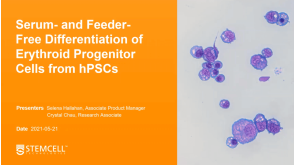
线上讲座Serum- and Feeder-Free Differentiation of Erythroid Progenitor Cells from hPSCs发布日期: 05/21/2021
31:39
线上讲座Serum- and Feeder-Free Differentiation of Erythroid Progenitor Cells from hPSCs发布日期: 05/21/2021

 沪公网安备31010102008431号