Randrianarison-Huetz V et al. (APR 2010)
Blood 115 14 2784--95
Gfi-1B controls human erythroid and megakaryocytic differentiation by regulating TGF-beta signaling at the bipotent erythro-megakaryocytic progenitor stage.
Growth factor independence-1B (Gfi-1B) is a transcriptional repressor essential for erythropoiesis and megakaryopoiesis. Targeted gene disruption of GFI1B in mice leads to embryonic lethality resulting from failure to produce definitive erythrocytes,hindering the study of Gfi-1B function in adult hematopoiesis. We here show that,in humans,Gfi-1B controls the development of erythrocytes and megakaryocytes by regulating the proliferation and differentiation of bipotent erythro-megakaryocytic progenitors. We further identify in this cell population the type III transforming growth factor-beta receptor gene,TGFBR3,as a direct target of Gfi-1B. Knockdown of Gfi-1B results in altered transforming growth factor-beta (TGF-beta) signaling as shown by the increase in Smad2 phosphorylation and its inability to associate to the transcription intermediary factor 1-gamma (TIF1-gamma). Because the Smad2/TIF1-gamma complex is known to specifically regulate erythroid differentiation,we propose that,by repressing TGF-beta type III receptor (TbetaRIotaII) expression,Gfi-1B favors the Smad2/TIF1-gamma interaction downstream of TGF-beta signaling,allowing immature progenitors to differentiate toward the erythroid lineage.
View Publication
产品类型:
产品号#:
09850
产品名:
Ng S-Y et al. (FEB 2012)
The EMBO journal 31 3 522--33
Human long non-coding RNAs promote pluripotency and neuronal differentiation by association with chromatin modifiers and transcription factors.
Long non-coding RNAs (lncRNAs) are a numerous class of newly discovered genes in the human genome,which have been proposed to be key regulators of biological processes,including stem cell pluripotency and neurogenesis. However,at present very little functional characterization of lncRNAs in human differentiation has been carried out. In the present study,we address this using human embryonic stem cells (hESCs) as a paradigm for pluripotency and neuronal differentiation. With a newly developed method,hESCs were robustly and efficiently differentiated into neurons,and we profiled the expression of thousands of lncRNAs using a custom-designed microarray. Some hESC-specific lncRNAs involved in pluripotency maintenance were identified,and shown to physically interact with SOX2,and PRC2 complex component,SUZ12. Using a similar approach,we identified lncRNAs required for neurogenesis. Knockdown studies indicated that loss of any of these lncRNAs blocked neurogenesis,and immunoprecipitation studies revealed physical association with REST and SUZ12. This study indicates that lncRNAs are important regulators of pluripotency and neurogenesis,and represents important evidence for an indispensable role of lncRNAs in human brain development.
View Publication
产品类型:
产品号#:
05850
05857
05870
05875
85850
85857
85870
85875
产品名:
mTeSR™1
mTeSR™1
Yin D et al. (JAN 2012)
Methods in molecular biology (Clifton,N.J.) 873 247--259
Comparison of neural differentiation potential of human pluripotent stem cell lines using a quantitative neural differentiation protocol.
Neural differentiation of human embryonic (ES) and induced pluripotent (iPS) stem cell lines has been used for research in early human development,drug discovery,and cell replacement therapies. It is critical to establish generic differentiation protocols to compare the neural specification potential of each individually derived pluripotent stem cell line and identify the efficacious lines for research and therapeutic use. Here,we describe a reproducible and quantitative protocol to assess the neural progenitor (NP) generation of human pluripotent stem cell lines. This method includes a robust and well-defined neural inducing platform for Pax6(+) neural rosette (neuroectodermal cells) generation,propagation,and subsequent differentiation into nestin(+) NPs. A side-by-side comparison under common culture conditions among three human ES cell lines,TE03,TE06,and BG01V,and one iPS cell line,HD02,showed highly variable efficiency in their differentiation into NPs.
View Publication
产品类型:
产品号#:
05850
05857
05870
05875
85850
85857
85870
85875
产品名:
mTeSR™1
mTeSR™1
van den Akker E et al. (SEP 2010)
Haematologica 95 9 1594--8
The majority of the in vitro erythroid expansion potential resides in CD34(-) cells, outweighing the contribution of CD34(+) cells and significantly increasing the erythroblast yield from peripheral blood samples.
The study of human erythropoiesis in health and disease requires a robust culture system that consistently and reliably generates large numbers of immature erythroblasts that can be induced to differentiate synchronously. We describe a culture method modified from Leberbauer et al. (2005) and obtain a homogenous population of erythroblasts from peripheral blood mononuclear cells (PBMC) without prior purification of CD34(+) cells. This pure population of immature erythroblasts can be expanded to obtain 4x10(8) erythroblasts from 1x10(8) PBMC after 13-14 days in culture. Upon synchronized differentiation,high levels of enucleation (80-90%) and low levels of cell death (textless10%) are achieved. We compared the yield of erythroblasts obtained from PBMC,CD34(+) cells or PBMC depleted of CD34(+) cells and show that CD34(-) cells represent the most significant early erythroid progenitor population. This culture system may be particularly useful for investigating the pathophysiology of anemic patients where only small blood volumes are available.
View Publication
产品类型:
产品号#:
09600
09650
产品名:
StemSpan™ SFEM
StemSpan™ SFEM
Liang P et al. (APR 2013)
Circulation 127 16 1677--1691
Drug screening using a library of human induced pluripotent stem cell-derived cardiomyocytes reveals disease-specific patterns of cardiotoxicity
BACKGROUND: Cardiotoxicity is a leading cause for drug attrition during pharmaceutical development and has resulted in numerous preventable patient deaths. Incidents of adverse cardiac drug reactions are more common in patients with preexisting heart disease than the general population. Here we generated a library of human induced pluripotent stem cell-derived cardiomyocytes (hiPSC-CMs) from patients with various hereditary cardiac disorders to model differences in cardiac drug toxicity susceptibility for patients of different genetic backgrounds.backslashnbackslashnMETHODS AND RESULTS: Action potential duration and drug-induced arrhythmia were measured at the single cell level in hiPSC-CMs derived from healthy subjects and patients with hereditary long QT syndrome,familial hypertrophic cardiomyopathy,and familial dilated cardiomyopathy. Disease phenotypes were verified in long QT syndrome,hypertrophic cardiomyopathy,and dilated cardiomyopathy hiPSC-CMs by immunostaining and single cell patch clamp. Human embryonic stem cell-derived cardiomyocytes (hESC-CMs) and the human ether-a-go-go-related gene expressing human embryonic kidney cells were used as controls. Single cell PCR confirmed expression of all cardiac ion channels in patient-specific hiPSC-CMs as well as hESC-CMs,but not in human embryonic kidney cells. Disease-specific hiPSC-CMs demonstrated increased susceptibility to known cardiotoxic drugs as measured by action potential duration and quantification of drug-induced arrhythmias such as early afterdepolarizations and delayed afterdepolarizations.backslashnbackslashnCONCLUSIONS: We have recapitulated drug-induced cardiotoxicity profiles for healthy subjects,long QT syndrome,hypertrophic cardiomyopathy,and dilated cardiomyopathy patients at the single cell level for the first time. Our data indicate that healthy and diseased individuals exhibit different susceptibilities to cardiotoxic drugs and that use of disease-specific hiPSC-CMs may predict adverse drug responses more accurately than the standard human ether-a-go-go-related gene test or healthy control hiPSC-CM/hESC-CM screening assays.
View Publication
产品类型:
产品号#:
05850
05857
05870
05875
85850
85857
85870
85875
产品名:
mTeSR™1
mTeSR™1
Clark PA et al. (JUL 2016)
Molecular pharmaceutics acs.molpharmaceut.6b00441
Analysis of Cancer-targeting Alkylphosphocholine Analog Permeability Characteristics Using a Human Induced Pluripotent Stem Cell Blood-Brain Barrier Model.
Cancer-targeting alkylphosphocholine (APC) analogs are being clinically developed for diagnostic imaging,intraoperative visualization,and therapeutic applications. These APC analogs derived from chemically-synthesized phospholipid ethers were identified and optimized for cancer-targeting specificity using extensive structure-activity studies. While they strongly label human brain cancers associated with disrupted blood-brain barriers (BBB),APC permeability across intact BBB remains unknown. Three of our APC analogs,CLR1404 (PET radiotracer),CLR1501 (green fluorescence),and CLR1502 (near infrared fluorescence),were tested for permeability across a BBB model composed of human induced pluripotent stem cell-derived brain microvascular endothelial cells (iPSC-derived BMECs). This in vitro BBB system has reproducibly consistent high barrier integrity marked by high transendothelial electrical resistance (TEERtextgreater1500 Ω-cm(2)) and functional expression of drug efflux transporters. Our radioiodinated and fluorescent APC analogs demonstrated fairly low permeability across the iPSC-BMEC (35±5.7 (CLR1404),54±3.2 (CLR1501),and 26±4.9 (CLR1502) x10(-5) cm/min) compared with BBB-impermeable sucrose (13±2.5) and BBB-permeable diazepam (170±29). Only our fluorescent APC analogs (CLR1501,CLR1502) underwent BCRP and MRP polarized drug efflux transport in the brain-to-blood direction of the BBB model and this efflux can be specifically blocked with pharmacological inhibition. None of our tested APC analogs appeared to undergo substantial P-gp transport. Limited permeability of our APC analogs across an intact BBB into normal brain likely contributes to the high tumor to background ratios observed in initial human trials. Moreover,addition of fluorescent moieties to APCs resulted in greater BMEC efflux via MRP and BCRP,and may affect fluorescence-guided applications. Overall,the characterization of APC analog permeability across human BBB is significant for advancing future brain tumor-targeted applications of these agents.
View Publication
产品类型:
产品号#:
05850
05857
05870
05875
85850
85857
85870
85875
产品名:
mTeSR™1
mTeSR™1
Liu L et al. (OCT 2016)
Stem cell research 17 3 584--586
Generation of human embryonic stem cell line chHES-472 from abnormal embryos diagnosed with Spinocerebellar ataxia type 3.
Spinocerebellar ataxia type3 (SCA3) is an autosomal dominant neurodegenerative disorder. Human embryonic stem cell line chHES-472 was derived from abnormal embryo donated by SCA3 patient after preimplantation genetic diagnosis (PGD) treatment. This cell line had a normal karyotype and retained the disease-causing mutant in ATXN3 gene. Characteristic tests proved that the embryonic stem cell line presented typical markers of pluripotency and had the capability to form the three germlayers in vivo.
View Publication
A bioengineered niche promotes in vivo engraftment and maturation of pluripotent stem cell derived human lung organoids.
Human pluripotent stem cell (hPSC) derived tissues often remain developmentally immature in vitro,and become more adult-like in their structure,cellular diversity and function following transplantation into immunocompromised mice. Previously we have demonstrated that hPSC-derived human lung organoids (HLOs) resembled human fetal lung tissue in vitro (Dye et al.,2015). Here we show that HLOs required a bioartificial microporous poly(lactide-co-glycolide) (PLG) scaffold niche for successful engraftment,long-term survival,and maturation of lung epithelium in vivo. Analysis of scaffold-grown transplanted tissue showed airway-like tissue with enhanced epithelial structure and organization compared to HLOs grown in vitro. By further comparing in vitro and in vivo grown HLOs with fetal and adult human lung tissue,we found that in vivo transplanted HLOs had improved cellular differentiation of secretory lineages that is reflective of differences between fetal and adult tissue,resulting in airway-like structures that were remarkably similar to the native adult human lung.
View Publication
产品类型:
产品号#:
05850
05857
05870
05875
85850
85857
85870
85875
产品名:
mTeSR™1
mTeSR™1
Ovchinnikov DA et al. (JUL 2012)
World journal of stem cells 4 7 71--9
Generation of a human embryonic stem cell line stably expressing high levels of the fluorescent protein mCherry.
AIM: The generation and characterization of a human embryonic stem cell (hESC) line stably expressing red fluorescent mCherry protein.backslashnbackslashnMETHODS: Lentiviral transduction of a ubiquitously-expressed human EF-1α promoter driven mCherry transgene was performed in MEL2 hESC. Red fluore-scence was assessed by immunofluorescence and flow cytometry. Pluripotency of stably transduced hESC was determined by immunofluorescent pluripotency marker expression,flow cytometry,teratoma assays and embryoid body-based differentiation followed by reverse transcriptase-polymerase chain reaction. Quantification of cell motility and survival was performed with time lapse microscopy.backslashnbackslashnRESULTS: Constitutively fluorescently-labeled hESCs are useful tools for facile in vitro and in vivo tracking of survival,motility and cell spreading on various surfaces before and after differentiation. Here we describe the generation and characterization of a hESC line (MEL2) stably expressing red fluorescent protein,mCherry. This line was generated by random integration of a fluorescent protein-expressing cassette,driven by the ubiquitously-expressed human EF-1α promoter. Stably transfected MEL2-mCherry hESC were shown to express pluripotency markers in the nucleus (POU5F1/OCT4,NANOG and SOX2) and on the cell surface (SSEA4,TRA1-60 and TG30/CD9) and were shown to maintain a normal karyotype in long-term (for at least 35 passages) culture. MEL2-mCherry hESC further readily differentiated into representative cell types of the three germ layers in embryoid body and teratoma based assays and,importantly,maintained robust mCherry expression throughout differentiation. The cell line was next adapted to single-cell passaging,rendering it compatible with numerous bioengineering applications such as measurement of cell motility and cell spreading on various protein modified surfaces,quantification of cell attachment to nanoparticles and rapid estimation of cell survival.backslashnbackslashnCONCLUSION: The MEL2-mCherry hESC line conforms to the criteria of bona fide pluripotent stem cells and maintains red fluorescence throughout differentiation,making it a useful tool for bioengineering and in vivo tracking experiments.
View Publication
产品类型:
产品号#:
05850
05857
05870
05875
85850
85857
85870
85875
产品名:
mTeSR™1
mTeSR™1
Kumagai T et al. (JUN 2003)
Journal of the National Cancer Institute 95 12 896--905
Vitamin D2 analog 19-nor-1,25-dihydroxyvitamin D2: antitumor activity against leukemia, myeloma, and colon cancer cells.
BACKGROUND: 1,25-Dihydroxyvitamin D(3) inhibits growth of several types of human cancer cells in vitro,but its therapeutic use is hampered because it causes hypercalcemia. 19-nor-1,25-Dihydroxyvitamin D(2) (paricalcitol) is a noncalcemic vitamin D analog that is approved by the Food and Drug Administration for the treatment of secondary hyperparathyroidism. We investigated the antitumor activity and mechanism of action of paricalcitol in vitro and in vivo. METHODS: Effects of paricalcitol on proliferation,the cell cycle,differentiation,and apoptosis were examined in cancer cell lines. Effects on tumor growth were examined with colon cancer cell xenografts in nude mice (five in the experimental group and five in the control group). The interaction of paricalcitol with the vitamin D receptor (VDR) in mononuclear spleen cells and myeloid stem cells from wild-type and VDR knockout mice was examined. All statistical tests were two-sided. RESULTS: Paricalcitol inhibited the proliferation of myeloid leukemia cell lines HL-60,NB-4,and THP-1 cells at an effective dose that inhibited growth 50% (ED(50)) of 2.4-5.8 x 10(-9) M by inducing cell cycle arrest and differentiation. Paricalcitol inhibited the proliferation of NCI-H929 myeloma cells at an ED(50) of 2.0 x 10(-10) M by inducing cell cycle arrest and apoptosis. Paricalcitol also inhibited the proliferation of colon cancer cell lines HT-29 (ED(50) = 1.7 x 10(-8) M) and SW837 (ED(50) = 3.2 x 10(-8) M). HT-29 colon cancer xenografts in paricalcitol-treated nude mice were smaller (1044 mm(3) and 1752 mm(3),difference = 708 mm(3),95% confidence interval = 311 to 1104 mm(3); P =.03) and weighed less (1487 mg and 4162 mg,difference = 2675 mg,95% confidence interval = 2103 to 3248 mg; Ptextless.001) than those in vehicle-treated mice. Paricalcitol induced committed myeloid hematopoietic stem cells from wild-type but not from VDR knockout mice to differentiate as macrophages. CONCLUSION: Paricalcitol has anticancer activity against myeloid leukemia,myeloma,and colon cancer cells that may be mediated through the VDR. Because it has been approved by the Food and Drug Administration,clinical trials of this agent in certain cancers are reasonable.
View Publication
产品类型:
产品号#:
03234
产品名:
MethoCult™ M3234
Carotta S et al. (SEP 2004)
Blood 104 6 1873--80
Directed differentiation and mass cultivation of pure erythroid progenitors from mouse embryonic stem cells.
Differentiating embryonic stem (ES) cells are an increasingly important source of hematopoietic progenitors,useful for both basic research and clinical applications. Besides their characterization in colony assays,protocols exist for the cultivation of lymphoid,myeloid,and erythroid cells. With the possible exception of mast cells,however,long-term expansion of pure hematopoietic progenitors from ES cells has not been possible without immortalization caused by overexpression of exogenous genes. Here,we describe for the first time an efficient yet easy strategy to generate mass cultures of pure,immature erythroid progenitors from mouse ES cells (ES-EPs),using serum-free medium plus recombinant cytokines and hormones. ES-EPs represent long-lived,adult,definitive erythroid progenitors that resemble immature erythroid cells expanding in vivo during stress erythropoiesis. When exposed to terminal differentiation conditions,ES-EPs differentiated into mature,enucleated erythrocytes. Importantly,ES-EPs injected into mice did not exhibit tumorigenic potential but differentiated into normal erythrocytes. Both the virtually unlimited supply of cells and the defined culture conditions render our system a valuable tool for the analysis of factors influencing proliferation and maturation of erythroid progenitors. In addition,the system allows detailed characterization of processes during erythroid proliferation and differentiation using wild-type (wt) and genetically modified ES cells.
View Publication


 EasySep™小鼠TIL(CD45)正选试剂盒





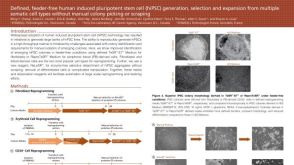 科学海报Defined, Feeder-Free Human Induced Pluripotent Stem Cell (hiPSC) Generation, Selection and Expansion from Multiple Somatic Cell Types
 沪公网安备31010102008431号