Molecular beacon-enabled purification of living cells by targeting cell type-specific mRNAs.
Molecular beacons (MBs) are dual-labeled oligonucleotides that fluoresce only in the presence of complementary mRNA. The use of MBs to target specific mRNAs allows sorting of specific cells from a mixed cell population. In contrast to existing approaches that are limited by available surface markers or selectable metabolic characteristics,the MB-based method enables the isolation of a wide variety of cells. For example,the ability to purify specific cell types derived from pluripotent stem cells (PSCs) is important for basic research and therapeutics. In addition to providing a general protocol for MB design,validation and nucleofection into cells,we describe how to isolate a specific cell population from differentiating PSCs. By using this protocol,we have successfully isolated cardiomyocytes differentiated from mouse or human PSCs (hPSCs) with ∼ 97% purity,as confirmed by electrophysiology and immunocytochemistry. After designing MBs,their ordering and validation requires 2 weeks,and the isolation process requires 3 h.
View Publication
产品类型:
产品号#:
05850
05857
05870
05875
85850
85857
85870
85875
产品名:
mTeSR™1
mTeSR™1
Paik KJ et al. (MAR 2014)
Plastic and reconstructive surgery 133 3 Suppl 174
Abstract 158: Identification of BMP-Responsive Long Noncoding RNAs in Pluripotent Cells.
Clonal analysis of deletions on chromosome 20q and JAK2-V617F in MPD suggests that del20q acts independently and is not one of the predisposing mutations for JAK2-V617F.
We developed a real-time copy number polymerase chain reaction assay for deletions on chromosome 20q (del20q),screened peripheral blood granulocytes from 664 patients with myeloproliferative disorders,and identified 19 patients with del20q (2.9%),of which 14 (74%) were also positive for JAK2-V617F. To examine the temporal relationship between the occurrence of del20q and JAK2-V617F,we performed colony assays in methylcellulose,picked individual burst-forming units-erythroid (BFU-E) and colony-forming units-granulocyte (CFU-G) colonies,and genotyped each colony individually for del20q and JAK2-V617F. In 2 of 9 patients,we found that some colonies with del20q carried only wild-type JAK2,whereas other del20q colonies were JAK2-V617F positive,indicating that del20q occurred before the acquisition of JAK2-V617F. However,in colonies from 3 of 9 patients,we observed the opposite order of events. The lack of a strict temporal order of occurrence makes it doubtful that del20q represents a predisposing event for JAK2-V617F. In 2 patients with JAK2-V617F and 1 patient with MPL-W515L,microsatellite analysis revealed that del20q affected chromosomes of different parental origin and/or 9pLOH occurred at least twice. The fact that rare somatic events,such as del20q or 9pLOH,occurred more than once in subclones from the same patients suggests that the myeloproliferative disorder clone carries a predisposition to acquiring such genetic alterations.
View Publication
A Multi-Lineage Screen Reveals mTORC1 Inhibition Enhances Human Pluripotent Stem Cell Mesendoderm and Blood Progenitor Production.
Human pluripotent stem cells (hPSCs) exist in heterogeneous micro-environments with multiple subpopulations,convoluting fate-regulation analysis. We patterned hPSCs into engineered micro-environments and screened responses to 400 small-molecule kinase inhibitors,measuring yield and purity outputs of undifferentiated,neuroectoderm,mesendoderm,and extra-embryonic populations. Enrichment analysis revealed mammalian target of rapamycin (mTOR) inhibition as a strong inducer of mesendoderm. Dose responses of mTOR inhibitors such as rapamycin synergized with Bone Morphogenetic protein 4 (BMP4) and activin A to enhance the yield and purity of BRACHYURY-expressing cells. Mechanistically,small interfering RNA knockdown of RAPTOR,a component of mTOR complex 1,phenocopied the mesendoderm-enhancing effects of rapamycin. Functional analysis during mesoderm and endoderm differentiation revealed that mTOR inhibition increased the output of hemogenic endothelial cells 3-fold,with a concomitant enhancement of blood colony-forming cells. These data demonstrate the power of our multi-lineage screening approach and identify mTOR signaling as a node in hPSC differentiation to mesendoderm and its derivatives.
View Publication
产品类型:
产品号#:
05850
05857
05870
05875
85850
85857
85870
85875
产品名:
mTeSR™1
mTeSR™1
Wang J et al. (NOV 2013)
Biomaterials 34 35 8878--8886
Effect of engineered anisotropy on the susceptibility of human pluripotent stem cell-derived ventricular cardiomyocytes to arrhythmias
Human (h) pluripotent stem cells (PSC) such as embryonic stem cells (ESC) can be directed into cardiomyocytes (CMs),representing a potential unlimited cell source for disease modeling,cardiotoxicity screening and myocardial repair. Although the electrophysiology of single hESC-CMs is now better defined,their multi-cellular arrhythmogenicity has not been thoroughly assessed due to the lack of a suitable experimental platform. Indeed,the generation of ventricular (V) fibrillation requires single-cell triggers as well as sustained multi-cellular reentrant events. Although native VCMs are aligned in a highly organized fashion such that electrical conduction is anisotropic for coordinated contractions,hESC-derived CM (hESC-CM) clusters are heterogenous and randomly organized,and therefore not representative of native conditions. Here,we reported that engineered alignment of hESC-VCMs on biomimetic grooves uniquely led to physiologically relevant responses. Aligned but not isotropic control preparations showed distinct longitudinal (L) and transverse (T) conduction velocities (CV),resembling the native human V anisotropic ratio (AR=LCV/TCV=1.8-2.0). Importantly,the total incidence of spontaneous and inducible arrhythmias significantly reduced from 57% in controls to 17-23% of aligned preparations,thereby providing a physiological baseline for assessing arrhythmogenicity. As such,promotion of pro-arrhythmic effect (e.g.,spatial dispersion by ?? adrenergic stimulation) could be better predicted. Mechanistically,such anisotropy-induced electrical stability was not due to maturation of the cellular properties of hESC-VCMs but their physical arrangement. In conclusion,not only do functional anisotropic hESC-VCMs engineered by multi-scale topography represent a more accurate model for efficacious drug discovery and development as well as arrhythmogenicity screening (of pharmacological and genetic factors),but our approach may also lead to future transplantable prototypes with improved efficacy and safety against arrhythmias. ?? 2013.
View Publication
产品类型:
产品号#:
05850
05857
05870
05875
85850
85857
85870
85875
产品名:
mTeSR™1
mTeSR™1
Yechikov S et al. (JUL 2016)
Stem Cells
Same-Single-Cell Analysis of Pacemaker-Specific Markers in Human Induced Pluripotent Stem Cell-Derived Cardiomyocyte Subtypes Classified by Electrophysiology
Insights into the expression of pacemaker-speci�?c markers in human induced pluripotent stemcell (hiPSC)-derived cardiomyocyte subtypes can facilitate the enrichment and track differentia-tion and maturation of hiPSC-derived pacemaker-like cardiomyocytes. To date,no study hasdirectly assessed gene expression in each pacemaker-,atria-,and ventricular-like cardiomyocytesubtype derived from hiPSCs since currently the subtypes of these immature cardiomyocytescan only be identi�?ed by action potential pro�?les. Traditional acquisition of action potentialsusing patch-clamp recordings renders the cells unviable for subsequent analysis. We circum-vented these issues by acquiring the action potential pro�?le of a single cell optically followedby assessment of protein expression through immunostaining in that same cell. Our same-single-cell analysis for the �?rst time revealed expression of proposed pacemaker-speci�?cmarkers—hyperpolarization-activated cyclic nucleotide-modulated (HCN)4 channel and Islet(Isl)1—at the protein level in all three hiPSC-derived cardiomyocyte subtypes. HCN4 expressionwas found to be higher in pacemaker-like hiPSC-derived cardiomyocytes than atrial- andventricular-like subtypes but its downregulation over time in all subtypes diminished the differ-ences. Isl1 expression in pacemaker-like hiPSC-derived cardiomyocytes was initially not statisti-cally different than the contractile subtypes but did become statistically higher than ventricular-like cells with time. Our observations suggest that although HCN4 and Isl1 are differentiallyexpressed in hiPSC-derived pacemaker-like relative to ventricular-like cardiomyocytes,thesemarkers alone are insuf�?cient in identifying hiPSC-derived pacemaker-like cardiomyocytes.
View Publication
Sun N et al. (JAN 2009)
Nature protocols 4 8 1192--201
Long term non-invasive imaging of embryonic stem cells using reporter genes.
Development of non-invasive and accurate methods to track cell fate after delivery will greatly expedite transition of embryonic stem (ES) cell therapy to the clinic. In this protocol,we describe the in vivo monitoring of stem cell survival,proliferation and migration using reporter genes. We established stable ES cell lines constitutively expressing double fusion (DF; enhanced green fluorescent protein and firefly luciferase) or triple fusion (TF; monomeric red fluorescent protein,firefly luciferase and herpes simplex virus thymidine kinase (HSVtk)) reporter genes using lentiviral transduction. We used fluorescence-activated cell sorting to purify these populations in vitro,bioluminescence imaging and positron emission tomography (PET) imaging to track them in vivo and fluorescence immunostaining to confirm the results ex vivo. Unlike other methods of cell tracking,such as iron particle and radionuclide labeling,reporter genes are inherited genetically and can be used to monitor cell proliferation and survival for the lifetime of transplanted cells and their progeny.
View Publication
产品类型:
产品号#:
05850
05857
05870
05875
85850
85857
85870
85875
产品名:
mTeSR™1
mTeSR™1
Calvanese V et al. (AUG 2010)
Proceedings of the National Academy of Sciences of the United States of America 107 31 13736--41
Sirtuin 1 regulation of developmental genes during differentiation of stem cells
The longevity-promoting NAD+-dependent class III histone deacetylase Sirtuin 1 (SIRT1) is involved in stem cell function by controlling cell fate decision and/or by regulating the p53-dependent expression of NANOG. We show that SIRT1 is down-regulated precisely during human embryonic stem cell differentiation at both mRNA and protein levels and that the decrease in Sirt1 mRNA is mediated by a molecular pathway that involves the RNA-binding protein HuR and the arginine methyltransferase coactivator-associated arginine methyltransferase 1 (CARM1). SIRT1 down-regulation leads to reactivation of key developmental genes such as the neuroretinal morphogenesis effectors DLL4,TBX3,and PAX6,which are epigenetically repressed by this histone deacetylase in pluripotent human embryonic stem cells. Our results indicate that SIRT1 is regulated during stem cell differentiation in the context of a yet-unknown epigenetic pathway that controls specific developmental genes in embryonic stem cells.
View Publication


 EasySep™小鼠TIL(CD45)正选试剂盒





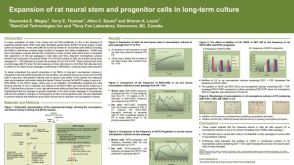 科学海报Expansion of Rat Neural Stem and Progenitor Cells in Long-Term Culture

 沪公网安备31010102008431号