Shetty DK et al. (MAR 2016)
Stem Cell Research 16 2 246--248
Generation of OCIAD1 inducible overexpression human embryonic stem cell line: BJNhem20-OCIAD1-Tet-On
Human embryonic stem cell line BJNhem20-OCIAD1-Tet-On was generated using non-viral method. The constructs pCAG-Tet-On and pTRE-Tight vector driving OCIAD1 expression were transfected using microporation procedure. pCAG-Tet-On cells can be used for inducible expression of any coding sequence cloned into pTRE-Tight vector. For example,in human embryonic stem cells,Tet-On system has been used to generate SOX2 overexpression cell line (Adachi et al.,2010).
View Publication
产品类型:
产品号#:
05850
05857
05870
05875
85850
85857
85870
85875
产品名:
mTeSR™1
mTeSR™1
Workman MJ et al. (JAN 2017)
Nature medicine 23 1 49--59
Engineered human pluripotent-stem-cell-derived intestinal tissues with a functional enteric nervous system.
The enteric nervous system (ENS) of the gastrointestinal tract controls many diverse functions,including motility and epithelial permeability. Perturbations in ENS development or function are common,yet there is no human model for studying ENS-intestinal biology and disease. We used a tissue-engineering approach with embryonic and induced pluripotent stem cells (PSCs) to generate human intestinal tissue containing a functional ENS. We recapitulated normal intestinal ENS development by combining human-PSC-derived neural crest cells (NCCs) and developing human intestinal organoids (HIOs). NCCs recombined with HIOs in vitro migrated into the mesenchyme,differentiated into neurons and glial cells and showed neuronal activity,as measured by rhythmic waves of calcium transients. ENS-containing HIOs grown in vivo formed neuroglial structures similar to a myenteric and submucosal plexus,had functional interstitial cells of Cajal and had an electromechanical coupling that regulated waves of propagating contraction. Finally,we used this system to investigate the cellular and molecular basis for Hirschsprung's disease caused by a mutation in the gene PHOX2B. This is,to the best of our knowledge,the first demonstration of human-PSC-derived intestinal tissue with a functional ENS and how this system can be used to study motility disorders of the human gastrointestinal tract.
View Publication
产品类型:
产品号#:
05850
05857
05870
05875
85850
85857
85870
85875
产品名:
mTeSR™1
mTeSR™1
Wu J et al. (JAN 2017)
Cell 168 3 473--486.e15
Interspecies Chimerism with Mammalian Pluripotent Stem Cells.
Interspecies blastocyst complementation enables organ-specific enrichment of xenogenic pluripotent stem cell (PSC) derivatives. Here,we establish a versatile blastocyst complementation platform based on CRISPR-Cas9-mediated zygote genome editing and show enrichment of rat PSC-derivatives in several tissues of gene-edited organogenesis-disabled mice. Besides gaining insights into species evolution,embryogenesis,and human disease,interspecies blastocyst complementation might allow human organ generation in animals whose organ size,anatomy,and physiology are closer to humans. To date,however,whether human PSCs (hPSCs) can contribute to chimera formation in non-rodent species remains unknown. We systematically evaluate the chimeric competency of several types of hPSCs using a more diversified clade of mammals,the ungulates. We find that naïve hPSCs robustly engraft in both pig and cattle pre-implantation blastocysts but show limited contribution to post-implantation pig embryos. Instead,an intermediate hPSC type exhibits higher degree of chimerism and is able to generate differentiated progenies in post-implantation pig embryos.
View Publication
Marchetti S et al. (MAY 2002)
Journal of cell science 115 Pt 10 2075--85
Endothelial cells genetically selected from differentiating mouse embryonic stem cells incorporate at sites of neovascularization in vivo.
Large scale purification of endothelial cells is of great interest as it could improve tissue transplantation,reperfusion of ischemic tissues and treatment of pathologies in which an endothelial cell dysfunction exists. In this study,we describe a novel genetic approach that selects for endothelial cells from differentiating embryonic stem (ES) cells. Our strategy is based on the establishment of ES-cell clones that carry an integrated puromycin resistance gene under the control of a vascular endothelium-specific promoter,tie-1. Using EGFP as a reporter gene,we first confirmed the endothelial specificity of the tie-1 promoter in the embryoid body model and in cells differentiated in 2D cultures. Subsequently,tie-1-EGFP ES cells were used as recipients for the tie-1-driven puror transgene. The resulting stable clones were expanded and differentiated for seven days in the presence of VEGF before puromycin selection. As expected,puromycin-resistant cells were positive for EGFP and also expressed several endothelial markers,including CD31,CD34,VEGFR-1,VEGFR-2,Tie-1,VE-cadherin and ICAM-2. Release from the puromycin selection resulted in the appearance of alpha-smooth muscle actin-positive cells. Such cells became more numerous when the population was cultured on laminin-1 or in the presence of TGF-beta1,two known inducers of smooth muscle cell differentiation. The hypothesis that endothelial cells or their progenitors may differentiate towards a smooth muscle cell phenotype was further supported by the presence of cells expressing both CD31 and alpha-smooth muscle actin markers. Finally,we show that purified endothelial cells can incorporate into the neovasculature of transplanted tumors in nude mice. Taken together,these results suggest that application of endothelial lineage selection to differentiating ES cells may become a useful approach for future pro-angiogenic and endothelial cell replacement therapies.
View Publication
Efficient generation of transgene-free induced pluripotent stem cells from normal and neoplastic bone marrow and cord blood mononuclear cells.
Reprogramming blood cells to induced pluripotent stem cells (iPSCs) provides a novel tool for modeling blood diseases in vitro. However,the well-known limitations of current reprogramming technologies include low efficiency,slow kinetics,and transgene integration and residual expression. In the present study,we have demonstrated that iPSCs free of transgene and vector sequences could be generated from human BM and CB mononuclear cells using non-integrating episomal vectors. The reprogramming described here is up to 100 times more efficient,occurs 1-3 weeks faster compared with the reprogramming of fibroblasts,and does not require isolation of progenitors or multiple rounds of transfection. Blood-derived iPSC lines lacked rearrangements of IGH and TCR,indicating that their origin is non-B- or non-T-lymphoid cells. When cocultured on OP9,blood-derived iPSCs could be differentiated back to the blood cells,albeit with lower efficiency compared to fibroblast-derived iPSCs. We also generated transgene-free iPSCs from the BM of a patient with chronic myeloid leukemia (CML). CML iPSCs showed a unique complex chromosomal translocation identified in marrow sample while displaying typical embryonic stem cell phenotype and pluripotent differentiation potential. This approach provides an opportunity to explore banked normal and diseased CB and BM samples without the limitations associated with virus-based methods.
View Publication
产品类型:
产品号#:
09600
09650
72252
72254
100-0247
产品名:
StemSpan™ SFEM
StemSpan™ SFEM
Thiazovivin
Thiazovivin
Thiazovivin
Perez JE et al. (FEB 2017)
Nanotechnology 28 5 55703
Mesenchymal stem cells cultured on magnetic nanowire substrates.
Stem cells have been shown to respond to extracellular mechanical stimuli by regulating their fate through the activation of specific signaling pathways. In this work,an array of iron nanowires (NWs) aligned perpendicularly to the surface was fabricated by pulsed electrodepositon in porous alumina templates followed by a partial removal of the alumina to reveal 2-3 μm of the NWs. This resulted in alumina substrates with densely arranged NWs of 33 nm in diameter separated by 100 nm. The substrates were characterized by scanning electron microscopy (SEM) energy dispersive x-ray analysis and vibrating sample magnetometer. The NW array was then used as a platform for the culture of human mesenchymal stem cells (hMSCs). The cells were stained for the cell nucleus and actin filaments,as well as immuno-stained for the focal adhesion protein vinculin,and then observed by fluorescence microscopy in order to characterize their spreading behavior. Calcein AM/ethidium homodimer-1 staining allowed the determination of cell viability. The interface between the cells and the NWs was studied using SEM. Results showed that hMSCs underwent a re-organization of actin filaments that translated into a change from an elongated to a spherical cell shape. Actin filaments and vinculin accumulated in bundles,suggesting the attachment and formation of focal adhesion points of the cells on the NWs. Though the overall number of cells attached on the NWs was lower compared to the control,the attached cells maintained a high viability (>90%) for up to 6 d. Analysis of the interface between the NWs and the cells confirmed the re-organization of F-actin and revealed the adhesion points of the cells on the NWs. Additionally,a net of filopodia surrounded each cell,suggesting the probing of the array to find additional adhesion points. The cells maintained their round shape for up to 6 d of culture. Overall,the NW array is a promising nanostructured platform for studying and influencing hMSCs differentiation.
View Publication
产品类型:
产品号#:
70022
70071
产品名:
Wu X et al. (JAN 2018)
Cell 172 3 423--438.e25
Intrinsic Immunity Shapes Viral Resistance of Stem Cells.
Stem cells are highly resistant to viral infection compared to their differentiated progeny; however,the mechanism is mysterious. Here,we analyzed gene expression in mammalian stem cells and cells at various stages of differentiation. We find that,conserved across species,stem cells express a subset of genes previously classified as interferon (IFN) stimulated genes (ISGs) but that expression is intrinsic,as stem cells are refractory to interferon. This intrinsic ISG expression varies in a cell-type-specific manner,and many ISGs decrease upon differentiation,at which time cells become IFN responsive,allowing induction of a broad spectrum of ISGs by IFN signaling. Importantly,we show that intrinsically expressed ISGs protect stem cells against viral infection. We demonstrate the in vivo importance of intrinsic ISG expression for protecting stem cells and their differentiation potential during viral infection. These findings have intriguing implications for understanding stem cell biology and the evolution of pathogen resistance.
View Publication
Naive embryonic stem cells hold great promise for research and therapeutics as they have broad and robust developmental potential. While such cells are readily derived from mouse blastocysts it has not been possible to isolate human equivalents easily,although human naive-like cells have been artificially generated (rather than extracted) by coercion of human primed embryonic stem cells by modifying culture conditions or through transgenic modification. Here we show that a sub-population within cultures of human embryonic stem cells (hESCs) and induced pluripotent stem cells (hiPSCs) manifests key properties of naive state cells. These naive-like cells can be genetically tagged,and are associated with elevated transcription of HERVH,a primate-specific endogenous retrovirus. HERVH elements provide functional binding sites for a combination of naive pluripotency transcription factors,including LBP9,recently recognized as relevant to naivety in mice. LBP9-HERVH drives hESC-specific alternative and chimaeric transcripts,including pluripotency-modulating long non-coding RNAs. Disruption of LBP9,HERVH and HERVH-derived transcripts compromises self-renewal. These observations define HERVH expression as a hallmark of naive-like hESCs,and establish novel primate-specific transcriptional circuitry regulating pluripotency.
View Publication
产品类型:
产品号#:
05850
05857
05870
05875
85850
85857
85870
85875
产品名:
mTeSR™1
mTeSR™1
Zhou T et al. (JUL 2011)
Journal of the American Society of Nephrology : JASN 22 7 1221--1228
Generation of induced pluripotent stem cells from urine
Forced expression of selected transcription factors can transform somatic cells into embryonic stem cell (ESC)-like cells,termed induced pluripotent stem cells (iPSCs). There is no consensus regarding the preferred tissue from which to harvest donor cells for reprogramming into iPSCs,and some donor cell types may be more prone than others to accumulation of epigenetic imprints and somatic cell mutations. Here,we present a simple,reproducible,noninvasive method for generating human iPSCs from renal tubular cells present in urine. This procedure eliminates many problems associated with other protocols,and the resulting iPSCs display an excellent ability to differentiate. These data suggest that urine may be a preferred source for generating iPSCs.
View Publication


 EasySep™小鼠TIL(CD45)正选试剂盒






 科学海报Establishing Conditions for the Enrichment of Oligodendrocytes from Cultures of Neurospheres Derived from Embryonic Rat and Mouse Brains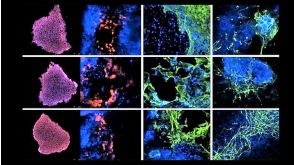

 沪公网安备31010102008431号