Matsa E and Denning C (OCT 2012)
Journal of cardiovascular translational research 5 5 581--92
In vitro uses of human pluripotent stem cell-derived cardiomyocytes.
Functional cardiomyocytes can be efficiently derived from human pluripotent stem cells (hPSCs),which collectively include embryonic and induced pluripotent stem cells. This cellular platform presents exciting new opportunities for development of pharmacologically relevant in vitro screens to detect cardiotoxicity,validate novel drug candidates in preclinical trials and understand complex congenital cardiovascular disorders,to advance current clinical therapies. Here,we discuss the progress and impediments the field has faced in using hPSC-derived cardiomyocytes for these in vitro applications,and highlight that rigorous protocol optimisation and standardisation,scalability and automation are remaining obstacles for the generation of pure,mature and clinically relevant hPSC cardiomyocytes.
View Publication
产品类型:
产品号#:
05850
05857
05870
05875
85850
85857
85870
85875
产品名:
mTeSR™1
mTeSR™1
iPSC Consortium H (MAY 2017)
Nature neuroscience 20 5 648--660
Developmental alterations in Huntington's disease neural cells and pharmacological rescue in cells and mice.
Neural cultures derived from Huntington's disease (HD) patient-derived induced pluripotent stem cells were used for 'omics' analyses to identify mechanisms underlying neurodegeneration. RNA-seq analysis identified genes in glutamate and GABA signaling,axonal guidance and calcium influx whose expression was decreased in HD cultures. One-third of gene changes were in pathways regulating neuronal development and maturation. When mapped to stages of mouse striatal development,the profiles aligned with earlier embryonic stages of neuronal differentiation. We observed a strong correlation between HD-related histone marks,gene expression and unique peak profiles associated with dysregulated genes,suggesting a coordinated epigenetic program. Treatment with isoxazole-9,which targets key dysregulated pathways,led to amelioration of expanded polyglutamine repeat-associated phenotypes in neural cells and of cognitive impairment and synaptic pathology in HD model R6/2 mice. These data suggest that mutant huntingtin impairs neurodevelopmental pathways that could disrupt synaptic homeostasis and increase vulnerability to the pathologic consequence of expanded polyglutamine repeats over time.
View Publication
产品类型:
产品号#:
05850
05857
05870
05875
85850
85857
85870
85875
产品名:
mTeSR™1
mTeSR™1
Ramos P et al. (JAN 2011)
Blood 117 4 1379--89
Enhanced erythropoiesis in Hfe-KO mice indicates a role for Hfe in the modulation of erythroid iron homeostasis.
In hereditary hemochromatosis,mutations in HFE lead to iron overload through abnormally low levels of hepcidin. In addition,HFE potentially modulates cellular iron uptake by interacting with transferrin receptor,a crucial protein during erythropoiesis. However,the role of HFE in this process was never explored. We hypothesize that HFE modulates erythropoiesis by affecting dietary iron absorption and erythroid iron intake. To investigate this,we used Hfe-KO mice in conditions of altered dietary iron and erythropoiesis. We show that Hfe-KO mice can overcome phlebotomy-induced anemia more rapidly than wild-type mice (even when iron loaded). Second,we evaluated mice combining the hemochromatosis and β-thalassemia phenotypes. Our results suggest that lack of Hfe is advantageous in conditions of increased erythropoietic activity because of augmented iron mobilization driven by deficient hepcidin response. Lastly,we demonstrate that Hfe is expressed in erythroid cells and impairs iron uptake,whereas its absence exclusively from the hematopoietic compartment is sufficient to accelerate recovery from phlebotomy. In summary,we demonstrate that Hfe influences erythropoiesis by 2 distinct mechanisms: limiting hepcidin expression under conditions of simultaneous iron overload and stress erythropoiesis,and impairing transferrin-bound iron uptake by erythroid cells. Moreover,our results provide novel suggestions to improve the treatment of hemochromatosis.
View Publication
Modeling anorexia nervosa: transcriptional insights from human iPSC-derived neurons.
Anorexia nervosa (AN) is a complex and multifactorial disorder occurring predominantly in women. Despite having the highest mortality among psychiatric conditions,it still lacks robust and effective treatment. Disorders such as AN are most likely syndromes with multiple genetic contributions,however,genome-wide studies have been underpowered to reveal associations with this uncommon illness. Here,we generated induced pluripotent stem cells (iPSCs) from adolescent females with AN and unaffected controls. These iPSCs were differentiated into neural cultures and subjected to extensive transcriptome analysis. Within a small cohort of patients who presented for treatment,we identified a novel gene that appears to contribute to AN pathophysiology,TACR1 (tachykinin 1 receptor). The participation of tachykinins in a variety of biological processes and their interactions with other neurotransmitters suggest novel mechanisms for how a disrupted tachykinin system might contribute to AN symptoms. Although TACR1 has been associated with psychiatric conditions,especially anxiety disorders,we believe this report is its first association with AN. Moreover,our human iPSC approach is a proof-of-concept that AN can be modeled in vitro with a full human genetic complement,and represents a new tool for understanding the elusive molecular and cellular mechanisms underlying the disease.
View Publication
产品类型:
产品号#:
05850
05857
05870
05875
85850
85857
85870
85875
产品名:
mTeSR™1
mTeSR™1
Avery S (SEP 2011)
Current protocols in stem cell biology Chapter 5 Unit5C.1
Generation of inducible shRNAi human embryonic stem cell lines.
This unit describes the generation of tetracycline-inducible short hairpin RNA interference (shRNAi) human embryonic stem cell (hESC) lines. Using this vector-based approach enables stable and long-term expression of target hairpins under the control of doxycycline/tetracycline. Target degradation can be controlled in both a dose- and time-dependent manner that can even be switched off,depending upon the particular requirements of the study.
View Publication
产品类型:
产品号#:
05850
05857
05870
05875
85850
85857
85870
85875
产品名:
mTeSR™1
mTeSR™1
Liu C et al. (MAY 2012)
Molecular biology reports 39 5 5875--81
Co-expression of Oct-4 and Nestin in human breast cancers.
The aim is to investigate the clinical implications of the Oct-4 and Nestin protein in human breast cancers. A total of 346 cases including 26 fresh and 320 paraffin-embedded tumor tissues were selected for characterizing the frequency of CD44(+)CD24(-) tumor cells by flow cytometry and the differential expression of the stem cell-related genes between CD44(+)CD24(-) and non-CD44(+)CD24(-) tumor cells was analyzed by PCR Array and immunofluorescence. In comparison with the non-CD44(+)CD24(-) tumor cells,the CD44(+)CD24(-),particularly for those with high percentage of Oct-4(+) and Nestin(+),tumor cells had higher tumorigenicity by forming mammospheres in vitro. More importantly,42 (13.125%) out of 320 tumor tissues were positive for Oct-4 and Nestin staining. Universal analysis and multivariate analysis revealed that the expression of Oct-4 and Nestin was associated significantly with younger age,pathogenic degrees,lymph node metastasis and triple-negative breast cancer independently (P textless 0.05) as well as shorter survival (P = 0.001). Oct-4 and Nestin were important regulators of the development of breast cancer,and Oct-4 and Nestin may be used as predictors for the prognosis of breast cancers.
View Publication
产品类型:
产品号#:
05620
产品名:
MammoCult™ 人源培养基套装
Dai D-F et al. ( 2017)
Stem cells international 2017 5153625
Mitochondrial Maturation in Human Pluripotent Stem Cell Derived Cardiomyocytes.
Human pluripotent stem cells derived cardiomyocytes (PSC-CMs) have been widely used for disease modeling,drug safety screening,and preclinical cell therapy to regenerate myocardium. Most studies have utilized PSC-CM grown in vitro for a relatively short period after differentiation. These PSC-CMs demonstrated structural,electrophysiological,and mechanical features of primitive cardiomyocytes. A few studies have extended in vitro PSC-CM culture time and reported improved maturation of structural and electromechanical properties. The degree of mitochondrial maturation,however,remains unclear. This study characterized the development of mitochondria during prolonged in vitro culture. PSC-CM demonstrated an improved mitochondrial maturation with prolonged culture,in terms of increased mitochondrial relative abundance,enhanced membrane potential,and increased activity of several mitochondrial respiratory complexes. These are in parallel with the maturation of other cellular components. However,the maturation of mitochondria in PSC-CMs grown for extended in vitro culture exhibits suboptimal maturation when compared with the maturation of mitochondria observed in the human fetal heart during similar time interval.
View Publication
产品类型:
产品号#:
85850
85857
85870
85875
产品名:
mTeSR™1
mTeSR™1
Liu C et al. (DEC 2010)
Blood 116 25 5518--27
Progenitor cell dose determines the pace and completeness of engraftment in a xenograft model for cord blood transplantation.
Two critical concerns in clinical cord blood transplantation are the initial time to engraftment and the subsequent restoration of immune function. These studies measured the impact of progenitor cell dose on both the pace and strength of hematopoietic reconstitution by transplanting nonobese diabetic/severe combined immunodeficiency/interleukin-2 receptor-gamma-null (NSγ) mice with lineage-depleted aldehyde dehydrogenase-bright CD34(+) human cord blood progenitors. The progress of each transplant was monitored over an extended time course by repeatedly analyzing the peripheral blood for human hematopoietic cells. In vivo human hematopoietic development was complete. After long-term transplantation assays (≥ 19 weeks),human T-cell development was documented within multiple tissues in 16 of 32 NSγ mice. Human T-cell differentiation was active within NSγ thymuses,as documented by the presence of CD4(+) CD8(+) T-cell progenitors as well as T-cell receptor excision circles. It is important to note that although myeloid and B-cell engraftment was detected as early as 4 weeks after transplantation,human T-cell development was exclusively late onset. High progenitor cell doses were associated with a robust human hematopoietic chimerism that accelerated both initial time to engraftment and subsequent T-cell development. At lower progenitor cell doses,the chimerism was weak and the human hematopoietic lineage development was frequently incomplete.
View Publication
A two-dimensionally coincident second difference cosmic ray spike removal method for the fully automated processing of Raman spectra.
Charge-coupled device detectors are vulnerable to cosmic rays that can contaminate Raman spectra with positive going spikes. Because spikes can adversely affect spectral processing and data analyses,they must be removed. Although both hardware-based and software-based spike removal methods exist,they typically require parameter and threshold specification dependent on well-considered user input. Here,we present a fully automated spike removal algorithm that proceeds without requiring user input. It is minimally dependent on sample attributes,and those that are required (e.g.,standard deviation of spectral noise) can be determined with other fully automated procedures. At the core of the method is the identification and location of spikes with coincident second derivatives along both the spectral and spatiotemporal dimensions of two-dimensional datasets. The method can be applied to spectra that are relatively inhomogeneous because it provides fairly effective and selective targeting of spikes resulting in minimal distortion of spectra. Relatively effective spike removal obtained with full automation could provide substantial benefits to users where large numbers of spectra must be processed.
View Publication
Yang L et al. ( 2014)
Current Protocols in Molecular Biology 107 31.1.1----17
CRISPR/Cas9-Directed Genome Editing of Cultured Cells.
Human genome engineering has been transformed by the introduction of the CRISPR (clustered regularly interspaced short palindromic repeats)/Cas (CRISPR-associated) system found in most bacteria and archaea. Type II CRISPR/Cas systems have been engineered to induce RNA-guided genome editing in human cells,where small RNAs function together with Cas9 nucleases for sequence-specific cleavage of target sequences. Here we describe the protocol for Cas9-mediated human genome engineering,including construct building and transfection methods necessary for delivering Cas9 and guide RNA (gRNA) into human-induced pluripotent stem cells (hiPSCs) and HEK293 cells. Following genome editing,we also describe methods to assess genome editing efficiency using next-generation sequencing and isolate monoclonal hiPSCs with the desired modifications for downstream applications.
View Publication


 EasySep™小鼠TIL(CD45)正选试剂盒





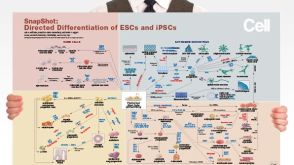 挂图Directed Differentiation of Pluripotent Stem Cells Strategies for differentiating ES and iPS cells into ectoderm, endoderm or mesoderm

 沪公网安备31010102008431号