Prowse ABJ et al. (NOV 2010)
Biomaterials 31 32 8281--8288
Long term culture of human embryonic stem cells on recombinant vitronectin in ascorbate free media.
Human embryonic stem cells (hESC) are expected to provide revolutionary therapeutic applications and drug discovery technologies. In order for this to be achieved a reproducible,defined animal component free culture system is required for the scale-up production of undifferentiated hESC. In this work we have investigated the applicability of a recombinantly produced domain of human vitronectin as an extracellular matrix alternative to the common standards Geltrex or Matrigel. In addition we have validated an ascorbate free media capable of supporting CD30(low) populations of hESC through a multi-factorial analysis of bFGF and Activin A. The recombinant vitronectin domain combined with the ascorbate free media were capable of supporting 3 cell lines,MEL1,MEL2 and hES3 for 10 or more passages while maintaining hESC pluripotency markers and differentiation capacity. The culture method outlined here provides a platform for future investigation into growth factor and extracellular matrix effects on hESC maintenance prior to bioreactor scale-up.
View Publication
产品类型:
产品号#:
05850
05857
05870
05875
85850
85857
85870
85875
产品名:
mTeSR™1
mTeSR™1
Camargo FD et al. (JAN 2006)
Blood 107 2 501--7
Hematopoietic stem cells do not engraft with absolute efficiencies.
Hematopoietic stem cells (HSCs) can be isolated from murine bone marrow by their ability to efflux the Hoechst 33342 dye. This method defines an extremely small and hematopoietically potent subset of cells known as the side population (SP). Recent studies suggest that transplanted single SP cells are capable of lymphohematopoietic repopulation at near absolute efficiencies. Here,we carefully reevaluate the hematopoietic potential of individual SP cells and find substantially lower rates of reconstitution. Our strategy involved the cotransplantation of single SP cells along with different populations of competitor cells that varied in their self-renewal capacity. Even with minimized HSC competition,SP cells were only able to reconstitute up to 35% of recipient mice. Furthermore,through immunophenotyping and clonal in vitro assays we find that SP cells are virtually homogeneous. Isolation of HSCs on the basis of Hoechst exclusion and a single cell-surface marker allows enrichment levels similar to that obtained with complex multicolor strategies. Altogether,our results indicate that even an extremely homogeneous HSC population,based on phenotype and dye efflux,cannot reconstitute mice at absolute efficiencies.
View Publication
产品类型:
产品号#:
03434
03444
产品名:
MethoCult™ GF M3434
MethoCult™ GF M3434
Ohmine S et al. (JAN 2011)
Stem Cell Research & Therapy 2 6 46
Induced pluripotent stem cells from GMP-grade hematopoietic progenitor cells and mononuclear myeloid cells
INTRODUCTION: The induced pluripotent stem cell (iPSC) technology allows generation of patient-specific pluripotent stem cells,thereby providing a novel cell-therapy platform for severe degenerative diseases. One of the key issues for clinical-grade iPSC derivation is the accessibility of donor cells used for reprogramming. METHODS: We examined the feasibility of reprogramming mobilized GMP-grade hematopoietic progenitor cells (HPCs) and peripheral blood mononuclear cells (PBMCs) and tested the pluripotency of derived iPS clones. RESULTS: Ectopic expression of OCT4,SOX2,KLF4,and c-MYC in HPCs and PBMCs resulted in rapid iPSC derivation. Long-term time-lapse imaging revealed efficient iPSC growth under serum- and feeder-free conditions with frequent mitotic events. HPC- and PBMC-derived iPS cells expressed pluripotency-associated markers,including SSEA-4,TRA-1-60,and NANOG. The global gene-expression profiles demonstrated the induction of endogenous pluripotent genes,such as LIN28,TERT,DPPA4,and PODXL,in derived iPSCs. iPSC clones from blood and other cell sources showed similar ultrastructural morphologies and genome-wide gene-expression profiles. On spontaneous and guided differentiation,HPC- and PBMC-derived iPSCs were differentiated into cells of three germ layers,including insulin-producing cells through endodermal lineage,verifying the pluripotency of the blood-derived iPSC clones. CONCLUSIONS: Because the use of blood cells allows minimally invasive tissue procurement under GMP conditions and rapid cellular reprogramming,mobilized HPCs and unmobilized PBMCs would be ideal somatic cell sources for clinical-grade iPSC derivation,especially from diabetes patients complicated by slow-healing wounds.
View Publication
产品类型:
产品号#:
05850
05857
05870
05875
85850
85857
85870
85875
产品名:
mTeSR™1
mTeSR™1
Houtenbos I et al. (JUL 2003)
Cancer immunology,immunotherapy : CII 52 7 455--62
Serum-free generation of antigen presenting cells from acute myeloid leukaemic blasts for active specific immunisation.
PURPOSE: Immunotherapy holds promise as a new strategy for the eradication of residual cells in acute myeloid leukaemia (AML). Leukaemic antigen presenting cells (APCs) combining optimal antigen presentation and tumour antigenicity could be used as potent T cell activators. For clinical purposes it is desirable to culture APCs under serum-free conditions. Therefore,we compared morphological,immunophenotypical and functional outcome of the serum-free culture of AML-APCs to their serum-enriched culture. METHODS: AML blasts (n=19) were cultured in the presence of either a cytokine mix or calcium ionophore (CI) for 14 and 2 days,respectively,in FCS-containing medium (FCS),StemSpan serum-free medium (SP) and CellGro serum-free medium (CG). After culture relative yields were calculated and immunophenotypic analysis of APC markers was performed. The mixed leukocyte reaction (MLR) was used to determine T cell stimulating capacity. RESULTS: Serum-free culture of AML-APCs resulted in comparable morphology,relative yields and immunophenotype to serum-enriched culture. By comparing both serum-free media we observed a trend towards a more mature phenotype of CI-cultured AML-APCs in SP. MLR showed that serum-free cultured cells have equal T cell stimulatory capacity in comparison with serum-enriched culture. CONCLUSION: These data show that the serum-free culture of AML-APCs is feasible and that these APCs are comparable to serum-enriched cultured AML-APCs with regard to morphological,immunophenotypical and functional characteristics. These AML-APCs are suitable for the development of active specific immunisation protocols which meet the criteria for good clinical practise (GCP).
View Publication
产品类型:
产品号#:
09600
09650
产品名:
StemSpan™ SFEM
StemSpan™ SFEM
Samper E et al. (APR 2002)
Blood 99 8 2767--75
Long-term repopulating ability of telomerase-deficient murine hematopoietic stem cells.
Telomere length must be tightly regulated in highly proliferative tissues,such as the lymphohematopoietic system. Under steady-state conditions,the levels and functionality of hematopoietic-committed or multipotent progenitors were not affected in late-generation telomerase-deficient mice (mTerc(-/-)) with critically short telomeres. Evaluation of self-renewal potential of mTerc(-/-) day-12 spleen colony-forming units demonstrated no alteration as compared with wildtype progenitors. However,the replating ability of mTerc(-/-) granulocyte-macrophage CFUs (CFU-GMs) was greatly reduced as compared with wildtype CFU-GMs,indicating a diminished capacity of late-generation mTerc(-/-) committed progenitors when forced to proliferate. Long-term bone marrow cultures of mTerc(-/-) bone marrow (BM) cells show a reduction in proliferative capacity; this defect can be mainly attributed to the hematopoietic,not to the stromal,mTerc(-/-) cells. In serial and competitive transplantations,mTerc(-/-) BM stem cells show reduced long-term repopulating capacity,concomitant with an increase in genetic instability compared with wildtype cells. Nevertheless,in competitive transplantations late-generation mTerc(-/-) precursors can occasionally overcome this proliferative impairment and reconstitute irradiated recipients. In summary,our results demonstrate that late-generation mTerc(-/-) BM cells with short telomeres,although exhibiting reduced proliferation ability and reduced long-term repopulating capacity,can still reconstitute myeloablated animals maintaining stem cell function.
View Publication
Adult human circulating CD34 cells can differentiate into hematopoietic and endothelial cells.
A precise identification of adult human hemangioblast is still lacking. To identify circulating precursors having the developmental potential of the hemangioblast,we established a new ex vivo long-term culture model supporting the differentiation of both hematopoietic and endothelial cell lineages. We identified from peripheral blood a population lacking the expression of CD34,lineage markers,CD45 and CD133 (CD34⁻Lin⁻CD45⁻CD133⁻ cells),endowed with the ability to differentiate after a 6-week culture into both hematopoietic and endothelial lineages. The bilineage potential of CD34⁻Lin⁻CD45⁻CD133⁻ cells was determined at the single-cell level in vitro and was confirmed by transplantation into NOD/SCID mice. In vivo,CD34⁻Lin⁻CD45⁻CD133⁻ cells showed the ability to reconstitute hematopoietic tissue and to generate functional endothelial cells that contribute to new vessel formation during tumor angiogenesis. Molecular characterization of CD34⁻Lin⁻D45⁻CD133⁻ cells unveiled a stem cell profile compatible with both hematopoietic and endothelial potentials,characterized by the expression of c-Kit and CXCR4 as well as EphB4,EphB2,and ephrinB2. Further molecular and functional characterization of CD34⁻Lin⁻CD45⁻CD133⁻ cells will help dissect their physiologic role in blood and blood vessel maintenance and repair in adult life.
View Publication
A novel role for ??-secretase in the formation of primitive streak-like intermediates from ES cells in culture
gamma-Secretase is a membrane-associated protease with multiple intracellular targets,a number of which have been shown to influence embryonic development and embryonic stem (ES) cell differentiation. This paper describes the use of the gamma-secretase inhibitor N-[N-(3,5-difluorophenacetyl)-L-alanyl]-S-phenylglycine t-butyl ester (DAPT) to evaluate the role of gamma-secretase in the differentiation of pluripotent stem cells to the germ lineages. The addition of DAPT did not prevent the formation of primitive ectoderm-like cells from ES cells in culture. In contrast,the addition of DAPT during primitive ectoderm-like cell differentiation interfered with the ability of both serum and BMP4 to induce a primitive streak-like intermediate and resulted in the preferential formation of neurectoderm. Similarly,DAPT reduced the formation of primitive streak-like intermediates from differentiating human ES cells; the culture conditions used resulted in a population enriched in human surface ectoderm. These data suggest that gamma-secretase may form part of the general pathway by which mesoderm is specified within the primitive streak. The addition of an E-cadherin neutralizing antibody was able to partially reverse the effect of DAPT,suggesting that DAPT may be preventing the formation of primitive streak-like intermediates and promoting neurectoderm differentiation by stabilizing E-cadherin and preventing its proteolysis.
View Publication
Hematopoietic and endothelial differentiation of human induced pluripotent stem cells.
Induced pluripotent stem cells (iPSCs) provide an unprecedented opportunity for modeling of human diseases in vitro,as well as for developing novel approaches for regenerative therapy based on immunologically compatible cells. In this study,we employed an OP9 differentiation system to characterize the hematopoietic and endothelial differentiation potential of seven human iPSC lines obtained from human fetal,neonatal,and adult fibroblasts through reprogramming with POU5F1,SOX2,NANOG,and LIN28 and compared it with the differentiation potential of five human embryonic stem cell lines (hESC,H1,H7,H9,H13,and H14). Similar to hESCs,all iPSCs generated CD34(+)CD43(+) hematopoietic progenitors and CD31(+)CD43(-) endothelial cells in coculture with OP9. When cultured in semisolid media in the presence of hematopoietic growth factors,iPSC-derived primitive blood cells formed all types of hematopoietic colonies,including GEMM colony-forming cells. Human induced pluripotent cells (hiPSCs)-derived CD43(+) cells could be separated into the following phenotypically defined subsets of primitive hematopoietic cells: CD43(+)CD235a(+)CD41a(+/-) (erythro-megakaryopoietic),lin(-)CD34(+)CD43(+)CD45(-) (multipotent),and lin(-)CD34(+)CD43(+)CD45(+) (myeloid-skewed) cells. Although we observed some variations in the efficiency of hematopoietic differentiation between different hiPSCs,the pattern of differentiation was very similar in all seven tested lines obtained through reprogramming of human fetal,neonatal,or adult fibroblasts with three or four genes. Although several issues remain to be resolved before iPSC-derived blood cells can be administered to humans for therapeutic purposes,patient-specific iPSCs can already be used for characterization of mechanisms of blood diseases and for identification of molecules that can correct affected genetic networks.
View Publication
产品类型:
产品号#:
04435
04445
产品名:
MethoCult™ H4435 Enriched
MethoCult™ H4435 Enriched
Chin ACP et al. (JUN 2010)
Stem cells and development 19 6 753--61
Defined and serum-free media support undifferentiated human embryonic stem cell growth.
Four commercially available serum-free and defined culture media tested on 2 human embryonic stem cell (hESC) lines were all found to support undifferentiated growth for textgreater10 continuous passages. For hESC cultured with defined StemPro and mTeSR1 media,the cells were maintained feeder-free on culture dishes coated with extracellular matrices (ECMs) with no requirement of feeder-conditioned media (CM). For xeno-free serum replacer (XSR),HEScGRO,and KnockOut media,mitotically inactivated human foreskin feeders (hFFs) were required for hESC growth. Under the different media conditions,cells continued to exhibit alkaline phosphatase activity and expressed undifferentiated hESC markers Oct-4,stage-specific embryonic antigens 4 (SSEA-4),and Tra-1-60. In addition,hESC maintained the expression of podocalyxin-like protein-1 (PODXL),an antigen recently reported in another study to be present in undifferentiated hESC. The cytotoxic antibody mAb 84 binds via PODXL expressed on hESC surface and kills textgreater90% of hESC within 45 min of incubation. When these cells were spontaneously differentiated to form embryoid bodies,derivatives representing the 3 germ layers were obtained. Injection of hESC into animal models resulted in teratomas and the formation of tissue types indicative of ectodermal,endodermal,and mesodermal lineages were observed. Our data also suggested that StemPro and mTeSR1 media were more optimal for hESC proliferation compared to cells grown on CM because the growth rate of hESC increased by 30%-40%,higher split ratio was thus required for weekly passaging. This is advantageous for the large-scale cultivation of hESC required in clinical applications.
View Publication


 EasySep™小鼠TIL(CD45)正选试剂盒





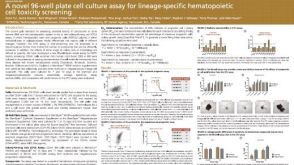 科学海报A Novel 96-well Plate Cell Culture Assay for Lineage-Specific Hematopoietic Cell Toxicity Screening

 沪公网安备31010102008431号