Valamehr B et al. (SEP 2011)
Regenerative medicine 6 5 623--34
Developing defined culture systems for human pluripotent stem cells.
Human pluripotent stem cells hold promising potential in many therapeutics applications including regenerative medicine and drug discovery. Over the past three decades,embryonic stem cell research has illustrated that embryonic stem cells possess two important and distinct properties: the ability to continuously self-renew and the ability to differentiate into all specialized cell types. In this article,we will discuss the continuing evolution of human pluripotent stem cell culture by examining requirements needed for the maintenance of self-renewal in vitro. We will also elaborate on the future direction of the field toward generating a robust and completely defined culture system,which has brought forth collaborations amongst biologists and engineers. As human pluripotent stem cell research progresses towards identifying solutions for debilitating diseases,it will be critical to establish a defined,reproducible and scalable culture system to meet the requirements of these clinical applications.
View Publication
产品类型:
产品号#:
05850
05857
05870
05875
85850
85857
85870
85875
产品名:
mTeSR™1
mTeSR™1
Leung CG et al. (JUL 2007)
The Journal of experimental medicine 204 7 1603--11
Requirements for survivin in terminal differentiation of erythroid cells and maintenance of hematopoietic stem and progenitor cells.
Survivin,which is the smallest member of the inhibitor of apoptosis protein (IAP) family,is a chromosomal passenger protein that mediates the spindle assembly checkpoint and cytokinesis,and also functions as an inhibitor of apoptosis. Frequently overexpressed in human cancers and not expressed in most adult tissues,survivin has been proposed as an attractive target for anticancer therapies and,in some cases,has even been touted as a cancer-specific gene. Survivin is,however,expressed in proliferating adult cells,including human hematopoietic stem cells,T-lymphocytes,and erythroid cells throughout their maturation. Therefore,it is unclear how survivin-targeted anticancer therapies would impact steady-state blood development. To address this question,we used a conditional gene-targeting strategy and abolished survivin expression from the hematopoietic compartment of mice. We show that inducible deletion of survivin leads to ablation of the bone marrow,with widespread loss of hematopoietic progenitors and rapid mortality. Surprisingly,heterozygous deletion of survivin causes defects in erythropoiesis in a subset of the animals,with a dramatic reduction in enucleated erythrocytes and the presence of immature megaloblastic erythroblasts. Our studies demonstrate that survivin is essential for steady-state hematopoiesis and survival of the adult,and further,that a high level of survivin expression is critical for proper erythroid differentiation.
View Publication
产品类型:
产品号#:
19756
19756RF
产品名:
Kim H-R et al. ( 2016)
Cell & bioscience 6 1 50
Improved hematopoietic differentiation of human pluripotent stem cells via estrogen receptor signaling pathway.
BACKGROUND Aside from its importance in reproduction,estrogen (E2) is known to regulate the proliferation and differentiation of hematopoietic stem cells in rodents. However,the regulatory role of E2 in human hematopoietic system has not been investigated. The purpose of this study is to investigate the effect of E2 on hematopoietic differentiation using human pluripotent stem cells (hPSCs). RESULTS E2 improved hematopoietic differentiation of hPSCs via estrogen receptor alpha (ER-$$)-dependent pathway. During hematopoietic differentiation of hPSCs,ER-$$ is persistently maintained and hematopoietic phenotypes (CD34 and CD45) were exclusively detected in ER-$$ positive cells. Interestingly,continuous E2 signaling is required to promote hematopoietic output from hPSCs. Supplementation of E2 or an ER-$$ selective agonist significantly increased the number of hemangioblasts and hematopoietic progenitors,and subsequent erythropoiesis,whereas ER-$$ selective agonist did not. Furthermore,ICI 182,780 (ER antagonist) completely abrogated the E2-induced hematopoietic augmentation. Not only from hPSCs but also from human umbilical cord bloods,does E2 signaling potentiate hematopoietic development,suggesting universal function of E2 on hematopoiesis. CONCLUSIONS Our study identifies E2 as positive regulator of human hematopoiesis and suggests that endocrine factors such as E2 influence the behavior of hematopoietic stem cells in various physiological conditions.
View Publication
产品类型:
产品号#:
05850
05857
05870
05875
85850
85857
85870
85875
产品名:
mTeSR™1
mTeSR™1
Klim JR et al. (DEC 2010)
Nature methods 7 12 989--94
A defined glycosaminoglycan-binding substratum for human pluripotent stem cells.
To exploit the full potential of human pluripotent stem cells for regenerative medicine,developmental biology and drug discovery,defined culture conditions are needed. Media of known composition that maintain human embryonic stem (hES) cells have been developed,but finding chemically defined,robust substrata has proven difficult. We used an array of self-assembled monolayers to identify peptide surfaces that sustain pluripotent stem cell self-renewal. The effective substrates displayed heparin-binding peptides,which can interact with cell-surface glycosaminoglycans and could be used with a defined medium to culture hES cells for more than 3 months. The resulting cells maintained a normal karyotype and had high levels of pluripotency markers. The peptides supported growth of eight pluripotent cell lines on a variety of scaffolds. Our results indicate that synthetic substrates that recognize cell-surface glycans can facilitate the long-term culture of pluripotent stem cells.
View Publication
产品类型:
产品号#:
05850
05857
05870
05875
85850
85857
85870
85875
产品名:
mTeSR™1
mTeSR™1
Zhang CC et al. (FEB 2006)
Proceedings of the National Academy of Sciences of the United States of America 103 7 2184--9
Prion protein is expressed on long-term repopulating hematopoietic stem cells and is important for their self-renewal.
Although the wild-type prion protein (PrP) is abundant and widely expressed in various types of tissues and cells,its physiological function(s) remain unknown,and PrP knockout mice do not exhibit overt and undisputed phenotypes. Here we showed that PrP is expressed on the surface of several bone marrow cell populations successively enriched in long-term (LT) hematopoietic stem cells (HSCs) using flow cytometry analysis. Affinity purification of the PrP-positive and -negative fractions from these populations,followed by competitive bone marrow reconstitution assays,shows that all LT HSCs express PrP. HSCs from PrP-null bone marrow exhibited impaired self-renewal in serial transplantation of lethally irradiated mouse recipients both in the presence and absence of competitors. When treated with a cell cycle-specific myelotoxic agent,the animals reconstituted with PrP-null HSCs exhibit increased sensitivity to hematopoietic cell depletion. Ectopic expression of PrP in PrP-null bone marrow cells by retroviral infection rescued the defective hematopoietic engraftment during serial transplantation. Therefore,PrP is a marker for HSCs and supports their self-renewal.
View Publication
产品类型:
产品号#:
03630
03434
03444
09600
09650
28600
产品名:
MethoCult™ M3630
MethoCult™ GF M3434
MethoCult™ GF M3434
StemSpan™ SFEM
StemSpan™ SFEM
L-Calc™有限稀释软件
Takeda A et al. (JUL 2006)
Cancer research 66 13 6628--37
NUP98-HOXA9 induces long-term proliferation and blocks differentiation of primary human CD34+ hematopoietic cells.
NUP98-HOXA9,the chimeric protein resulting from the t(7;11)(p15;p15) chromosomal translocation,is a prototype of several NUP98 fusions that occur in myelodysplastic syndromes and acute myeloid leukemia. We examined its effect on differentiation,proliferation,and gene expression in primary human CD34+ hematopoietic cells. Colony-forming cell (CFC) assays in semisolid medium combined with morphologic examination and flow cytometric immunophenotyping revealed that NUP98-HOXA9 increased the numbers of erythroid precursors and impaired both myeloid and erythroid differentiation. In continuous liquid culture,cells transduced with NUP98-HOXA9 exhibited a biphasic growth curve with initial growth inhibition followed by enhanced long-term proliferation,suggesting an increase in the numbers of primitive self-renewing cells. This was confirmed by a dramatic increase in the numbers of long-term culture-initiating cells,the most primitive hematopoietic cells detectable in vitro. To understand the molecular mechanisms underlying the effects of NUP98-HOXA9 on hematopoietic cell proliferation and differentiation,oligonucleotide microarray analysis was done at several time points over 16 days,starting at 6 hours posttransduction. The early growth suppression was preceded by up-regulation of IFNbeta1 and accompanied by marked up-regulation of IFN-induced genes,peaking at 3 days posttransduction. In contrast,oncogenes such as homeobox transcription factors,FLT3,KIT,and WT1 peaked at 8 days or beyond,coinciding with increased proliferation. In addition,several putative tumor suppressors and genes associated with hematopoietic differentiation were repressed at later time points. These findings provide a comprehensive picture of the changes in proliferation,differentiation,and global gene expression that underlie the leukemic transformation of human hematopoietic cells by NUP98-HOXA9.
View Publication
产品类型:
产品号#:
05150
产品名:
MyeloCult™ H5100
Phondeechareon T et al. (OCT 2016)
Annals of hematology 95 10 1617--1625
Generation of induced pluripotent stem cells as a potential source of hematopoietic stem cells for transplant in PNH patients.
Paroxysmal nocturnal hemoglobinuria (PNH) is an acquired hemolytic anemia caused by lack of CD55 and CD59 on blood cell membrane leading to increased sensitivity of blood cells to complement. Hematopoietic stem cell transplantation (HSCT) is the only curative therapy for PNH,however,lack of HLA-matched donors and post-transplant complications are major concerns. Induced pluripotent stem cells (iPSCs) derived from patients are an attractive source for generating autologous HSCs to avoid adverse effects resulting from allogeneic HSCT. The disease involves only HSCs and their progeny; therefore,other tissues are not affected by the mutation and may be used to produce disease-free autologous HSCs. This study aimed to derive PNH patient-specific iPSCs from human dermal fibroblasts (HDFs),characterize and differentiate to hematopoietic cells using a feeder-free protocol. Analysis of CD55 and CD59 expression was performed before and after reprogramming,and hematopoietic differentiation. Patients' dermal fibroblasts expressed CD55 and CD59 at normal levels and the normal expression remained after reprogramming. The iPSCs derived from PNH patients had typical pluripotent properties and differentiation capacities with normal karyotype. After hematopoietic differentiation,the differentiated cells expressed early hematopoietic markers (CD34 and CD43) with normal CD59 expression. The iPSCs derived from HDFs of PNH patients have normal levels of CD55 and CD59 expression and hold promise as a potential source of HSCs for autologous transplantation to cure PNH patients.
View Publication
产品类型:
产品号#:
05850
05857
05870
05875
07923
07920
04435
04445
85850
85857
85870
85875
07922
产品名:
Dispase (1 U/mL)
ACCUTASE™
MethoCult™ H4435 Enriched
MethoCult™ H4435 Enriched
mTeSR™1
mTeSR™1
ACCUTASE™
Giebel B et al. (MAR 2006)
Blood 107 5 2146--52
Primitive human hematopoietic cells give rise to differentially specified daughter cells upon their initial cell division.
It is often predicted that stem cells divide asymmetrically,creating a daughter cell that maintains the stem-cell capacity,and 1 daughter cell committed to differentiation. While asymmetric stem-cell divisions have been proven to occur in model organisms (eg,in Drosophila),it remains illusive whether primitive hematopoietic cells in mammals actually can divide asymmetrically. In our experiments we have challenged this question and analyzed the developmental capacity of separated offspring of primitive human hematopoietic cells at a single-cell level. We show for the first time that the vast majority of the most primitive,in vitro-detectable human hematopoietic cells give rise to daughter cells adopting different cell fates; 1 inheriting the developmental capacity of the mother cell,and 1 becoming more specified. In contrast,approximately half of the committed progenitor cells studied gave rise to daughter cells,both of which adopted the cell fate of their mother. Although our data are compatible with the model of asymmetric cell division,other mechanisms of cell fate specification are discussed. In addition,we describe a novel human hematopoietic progenitor cell that has the capacity to form natural killer (NK) cells as well as macrophages,but not cells of other myeloid lineages.
View Publication
Ex vivo targeting of p21Cip1/Waf1 permits relative expansion of human hematopoietic stem cells.
Relative quiescence is a defining characteristic of hematopoietic stem cells. Reasoning that inhibitory tone dominates control of stem cell cycling,we previously showed that mice engineered to be deficient in the cyclin-dependent kinase inhibitor,p21Cip1/Waf1 (p21),have an increased stem cell pool under homeostatic conditions. Since p21 was necessary to maintain stem cell quiescence and its absence sufficient to permit increased murine stem cell cycling,we tested whether reduction of p21 alone in human adult-derived stem cells could affect stem cell proliferation. We demonstrate here that interrupting p21 expression ex vivo resulted in expanded stem cell number and in vivo stem cell function compared with control,manipulated cells. Further,we demonstrate full multilineage reconstitution capability in cells where p21 expression was knocked down. Therefore,lifting the brake on cell proliferation by altering cell cycle checkpoints provides an alternative paradigm for increasing hematopoietic stem cell numbers. This approach may be useful for relative ex vivo human stem cell expansion.
View Publication
产品类型:
产品号#:
05150
04435
04445
产品名:
MyeloCult™ H5100
MethoCult™ H4435 Enriched
MethoCult™ H4435 Enriched
Boussaad I et al. (AUG 2011)
Journal of virology 85 15 7710--8
Wild-type measles virus interferes with short-term engraftment of human CD34+ hematopoietic progenitor cells.
Transient lymphopenia is a hallmark of measles virus (MV)-induced immunosuppression. To address to what extent replenishment of the peripheral lymphocyte compartment from bone marrow (BM) progenitor/stem cells might be affected,we analyzed the interaction of wild-type MV with hematopoietic stem and progenitor cells (HS/PCs) and stroma cells in vitro. Infection of human CD34(+) HS/PCs or stroma cells with wild-type MV is highly inefficient yet noncytolytic. It occurs independently of CD150 in stroma cells but also in HS/PCs,where infection is established in CD34(+) CD150(-) and CD34(+) CD150(+) (in humans representing HS/PC oligopotent precursors) subsets. Stroma cells and HS/PCs can mutually transmit MV and may thereby create a possible niche for continuous viral exchange in the BM. Infected lymphocytes homing to this compartment may serve as sources for HS/PC or stroma cell infection,as reflected by highly efficient transmission of MV from both populations in cocultures with MV-infected B or T cells. Though MV exposure does not detectably affect the viability,expansion,and colony-forming activity of either CD150(+) or CD150(-) HS/PCs in vitro,it efficiently interferes with short- but not long-term hematopoietic reconstitution in NOD/SCID mice. Altogether,these findings support the hypothesis that MV accession of the BM compartment by infected lymphocytes may contribute to peripheral blood mononuclear cell lymphopenia at the level of BM suppression.
View Publication
产品类型:
产品号#:
04434
04444
产品名:
MethoCult™ H4434 Classic
MethoCult™ H4434 Classic
Lin S and Talbot P (JAN 2011)
Methods in molecular biology (Clifton,N.J.) 690 31--56
Methods for culturing mouse and human embryonic stem cells
Mouse embryonic stem cells (mESCs) were first derived and cultured almost 30 years ago and ever since have been valuable tools for creating knockout mice and for studying early mammalian development. More recently (1998),human embryonic stem cells (hESCs) have been derived from blastocysts,and numerous methods have evolved to culture hESCs in vitro in both complex and defined media. hESCs are especially important at this time as they could potentially be used to treat degenerative diseases and to access the toxicity of new drugs and environmental chemicals. For both human and mouse ESCs,fibroblast feeder layers are often used at some phase in the culturing protocol. The feeders - often mouse embryonic fibroblasts (mEFs) - provide a substrate that increases plating efficiency,helps maintain pluripotency,and facilitates survival and growth of the stem cells. Various protocols for culturing embryonic stem cells from both species are available with newer trends moving toward feeder-free and serum-free culture. The purpose of this chapter is to provide basic protocol information on the isolation of mouse embryonic fibroblasts and establishment of feeder layers,the culture of mESCs on both mEFs and on gelatin in serum-containing medium,and the culture of hESCs in defined media on both mEFs (hESC culture medium) and Matrigel (mTeSR). These basic protocols are intended for researchers wanting to develop stem cell research in their labs. These protocols have been tested in our laboratory and work well. They can be modified and adapted for any relevant user's particular purpose.
View Publication


 EasySep™小鼠TIL(CD45)正选试剂盒





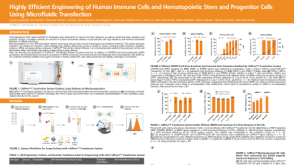 科学海报Highly Efficient Engineering of Human Immune Cells and Hematopoietic Stem and Progenitor Cells Using Microfluidic Transfection
 沪公网安备31010102008431号