Menon MP et al. (MAR 2006)
The Journal of clinical investigation 116 3 683--94
Signals for stress erythropoiesis are integrated via an erythropoietin receptor-phosphotyrosine-343-Stat5 axis.
Anemia due to chronic disease or chemotherapy often is ameliorated by erythropoietin (Epo). Present studies reveal that,unlike steady-state erythropoiesis,erythropoiesis during anemia depends sharply on an Epo receptor-phosphotyrosine-343-Stat5 signaling axis. In mice expressing a phosphotyrosine-null (PY-null) Epo receptor allele (EpoR-HM),severe and persistent anemia was induced by hemolysis or 5-fluorouracil. In short-term transplantation experiments,donor EpoR-HM bone marrow cells also failed to efficiently repopulate the erythroid compartment. In each context,stress erythropoiesis was rescued to WT levels upon the selective restoration of an EpoR PY343 Stat5-binding site (EpoR-H allele). As studied using a unique primary culture system,EpoR-HM erythroblasts exhibited marked stage-specific losses in Epo-dependent growth and survival. EpoR-H PY343 signals restored efficient erythroblast expansion,and the selective Epo induction of the Stat5 target genes proviral integration site-1 (Pim-1) and oncostatin-M. Bcl2-like 1 (Bcl-x),in contrast,was not significantly induced via WT-EpoR,EpoR-HM,or EpoR-H alleles. In Kit+ CD71+ erythroblasts,EpoR-PY343 signals furthermore enhanced SCF growth effects,and SCF modulation of Pim-1 kinase and oncostatin-M expression. In maturing Kit- CD71+ erythroblasts,oncostatin-M exerted antiapoptotic effects that likewise depended on EpoR PY343-mediated events. Stress erythropoiesis,therefore,requires stage-specific EpoR-PY343-Stat5 signals,some of which selectively bolster SCF and oncostatin-M action.
View Publication
产品类型:
产品号#:
19756
19756RF
产品名:
Ikeda Y et al. (MAR 2015)
Gene therapy 23 November 2015 256--262
A novel intranuclear RNA vector system for long-term stem cell modification.
Genetically modified stem and progenitor cells have emerged as a promising regenerative platform in the treatment of genetic and degenerative disorders,highlighted by their successful therapeutic use in inherent immunodeficiencies. However,biosafety concerns over insertional mutagenesis resulting from integrating recombinant viral vectors have overshadowed the widespread clinical applications of genetically modified stem cells. Here,we report an RNA-based episomal vector system,amenable for long-term transgene expression in stem cells. Specifically,we used a unique intranuclear RNA virus,Borna disease virus (BDV),as the gene transfer vehicle,capable of persistent infections in various cell types. BDV-based vectors allowed for long-term transgene expression in mesenchymal stem cells (MSCs) without affecting cellular morphology,cell surface CD105 expression,or the adipogenicity of MSCs. Similarly,replication-defective BDV vectors achieved long-term transduction of human induced pluripotent stem cells (iPSCs),while maintaining the ability to differentiate into three embryonic germ layers. Thus,the BDV-based vectors offer a genomic modification-free,episomal RNA delivery system for sustained stem cell transduction.Gene Therapy accepted article preview online,03 December 2015. doi:10.1038/gt.2015.108.
View Publication
产品类型:
产品号#:
05850
05857
05870
05875
85850
85857
85870
85875
产品名:
mTeSR™1
mTeSR™1
Rim JS et al. (JAN 2011)
Methods in molecular biology (Clifton,N.J.) 702 299--316
Screening for Epigenetic Target Genes that Enhance Reprogramming Using Lentiviral-Delivered shRNA
Small molecules will need to be identified and/or developed that target protein classes limiting reprogramming efficiency. A specific class of proteins includes epigenetic regulators that silence,or minimize expression,of pluripotency genes in differentiated cells. To better understand the role of specific epigenetic modulators in reprogramming,we have used shRNA delivered by lentivirus to assess the significance of individual epi-proteins in reprogramming pluripotent gene expression.
View Publication
产品类型:
产品号#:
05850
05857
05870
05875
85850
85857
85870
85875
产品名:
mTeSR™1
mTeSR™1
Kumar S et al. ( 2016)
Stem Cells International 2016 1--20
Utility of Lymphoblastoid Cell Lines for Induced Pluripotent Stem Cell Generation
A large number of EBV immortalized LCLs have been generated and maintained in genetic/epidemiological studies as a perpetual source of DNA and as a surrogate in vitro cell model. Recent successes in reprograming LCLs into iPSCs have paved the way for generating more relevant in vitro disease models using this existing bioresource. However,the overall reprogramming efficiency and success rate remain poor and very little is known about the mechanistic changes that take place at the transcriptome and cellular functional level during LCL-to-iPSC reprogramming. Here,we report a new optimized LCL-to-iPSC reprogramming protocol using episomal plasmids encoding pluripotency transcription factors and mouse p53DD (p53 carboxy-terminal dominant-negative fragment) and commercially available reprogramming media. We achieved a consistently high reprogramming efficiency and 100% success rate using this optimized protocol. Further,we investigated the transcriptional changes in mRNA and miRNA levels,using FC-abs ≥ 2.0 and FDR ≤ 0.05 cutoffs; 5,228 mRNAs and 77 miRNAs were differentially expressed during LCL-to-iPSC reprogramming. The functional enrichment analysis of the upregulated genes and activation of human pluripotency pathways in the reprogrammed iPSCs showed that the generated iPSCs possess transcriptional and functional profiles very similar to those of human ESCs.
View Publication
A viral strategy for targeting and manipulating interneurons across vertebrate species.
A fundamental impediment to understanding the brain is the availability of inexpensive and robust methods for targeting and manipulating specific neuronal populations. The need to overcome this barrier is pressing because there are considerable anatomical,physiological,cognitive and behavioral differences between mice and higher mammalian species in which it is difficult to specifically target and manipulate genetically defined functional cell types. In particular,it is unclear the degree to which insights from mouse models can shed light on the neural mechanisms that mediate cognitive functions in higher species,including humans. Here we describe a novel recombinant adeno-associated virus that restricts gene expression to GABAergic interneurons within the telencephalon. We demonstrate that the viral expression is specific and robust,allowing for morphological visualization,activity monitoring and functional manipulation of interneurons in both mice and non-genetically tractable species,thus opening the possibility to study GABAergic function in virtually any vertebrate species.
View Publication
产品类型:
产品号#:
05850
05857
05870
05875
05790
05792
05793
85850
85857
85870
85875
05794
05795
产品名:
BrainPhys™神经元培养基
BrainPhys™神经元培养基和SM1试剂盒
BrainPhys™ 神经元培养基N2-A和SM1试剂盒
mTeSR™1
mTeSR™1
BrainPhys™原代神经元试剂盒
BrainPhys™ hPSC 神经元试剂盒
Taylor RE et al. (FEB 2013)
Biomedical Microdevices 15 1 171--181
Sacrificial layer technique for axial force post assay of immature cardiomyocytes
Immature primary and stem cell-derived cardiomyocytes provide useful models for fundamental studies of heart development and cardiac disease,and offer potentialbackslashrbackslashnfor patient specific drug testing and differentiation protocols aimed at cardiac grafts. To assess their potential for augmenting heart function,and to gain insight into cardiac growth and disease,tissue engineers must quantify the contractile forces of these single cells. Currently,axial contractile forces of isolated adult heart cells can only be measuredbackslashrbackslashnby two-point methods such as carbon fiber techniques,which cannot be applied to neonatal and stem cell-derived heart cells because they are more difficult to handle and lack a persistent shape. Here we present a novel axial technique for measuring the contractile forces of isolated immature cardiomyocytes. We overcome cell manipulation and patterning challenges by using a thermoresponsive sacrificialbackslashrbackslashnsupport layer in conjunction with arrays of widely separated elastomeric microposts. Our approach has the potential to be high-throughput,is functionally analogous to current gold-standard axial force assays for adult heart cells,and prescribes elongated cell shapes without protein patterning. Finally,we calibrate these force posts withbackslashrbackslashnpiezoresistive cantilevers to dramatically reduce measurement error typical for soft polymer-based force assays. We report quantitative measurements of peak contractile forces up to 146 nN with post stiffness standard error (26 nN) far betterbackslashrbackslashnthan that based on geometry and stiffness estimates alone. The addition of sacrificial layers to future 2D and 3D cell culturebackslashrbackslashnplatforms will enable improved cell placement and the complex suspension of cells across 3D constructs.
View Publication
Qin H et al. (MAR 2016)
Cell reports 14 10 2301--2312
YAP Induces Human Naive Pluripotency.
The human naive pluripotent stem cell (PSC) state,corresponding to a pre-implantation stage of development,has been difficult to capture and sustain in vitro. We report that the Hippo pathway effector YAP is nuclearly localized in the inner cell mass of human blastocysts. Overexpression of YAP in human embryonic stem cells (ESCs) and induced PSCs (iPSCs) promotes the generation of naive PSCs. Lysophosphatidic acid (LPA) can partially substitute for YAP to generate transgene-free human naive PSCs. YAP- or LPA-induced naive PSCs have a rapid clonal growth rate,a normal karyotype,the ability to form teratomas,transcriptional similarities to human pre-implantation embryos,reduced heterochromatin levels,and other hallmarks of the naive state. YAP/LPA act in part by suppressing differentiation-inducing effects of GSK3 inhibition. CRISPR/Cas9-generated YAP-/- cells have an impaired ability to form colonies in naive but not primed conditions. These results uncover an unexpected role for YAP in the human naive state,with implications for early human embryology.
View Publication


 EasySep™小鼠TIL(CD45)正选试剂盒




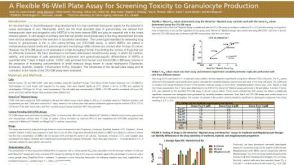 科学海报A Flexible 96-Well Plate Assay for Screening Toxicity to Granulocyte Production
 产品手册Registration Form - Proficiency Testing Programs (For Countries Serviced by a Distributor)


 沪公网安备31010102008431号