Benarafa C et al. (JUL 2011)
Journal of leukocyte biology 90 1 21--9
SerpinB1 protects the mature neutrophil reserve in the bone marrow.
SerpinB1 is among the most efficient inhibitors of neutrophil serine proteases--NE,CG,and PR-3--and we investigated here its role in neutrophil development and homeostasis. We found that serpinB1 is expressed in all human bone marrow leukocytes,including stem and progenitor cells. Expression levels were highest in the neutrophil lineage and peaked at the promyelocyte stage,coincident with the production and packaging of the target proteases. Neutrophil numbers were decreased substantially in the bone marrow of serpinB1(-/-) mice. This cellular deficit was associated with an increase in serum G-CSF levels. On induction of acute pulmonary injury,neutrophils were recruited to the lungs,causing the bone marrow reserve pool to be completely exhausted in serpinB1(-/-) mice. Numbers of myeloid progenitors were normal in serpinB1(-/-) bone marrow,coincident with the absence of target protease expression at these developmental stages. Maturation arrest of serpinB1(-/-) neutrophils was excluded by the normal CFU-G growth in vitro and the normal expression in mature neutrophils of early and late differentiation markers. Normal absolute numbers of proliferating neutrophils and pulse-chase kinetic studies in vivo showed that the bone marrow deficit in serpinB1(-/-) mice was largely restricted to mature,postmitotic neutrophils. Finally,upon overnight culture,apoptosis and necrosis were greater in purified bone marrow neutrophils from serpinB1(-/-) compared with WT mice. Collectively,these findings demonstrate that serpinB1 sustains a healthy neutrophil reserve that is required in acute immune responses.
View Publication
产品号#:
03434
03444
产品名:
MethoCult™ GF M3434
MethoCult™ GF M3434
Walter DH et al. (FEB 2011)
Circulation. Cardiovascular interventions 4 1 26--37
Intraarterial administration of bone marrow mononuclear cells in patients with critical limb ischemia: a randomized-start, placebo-controlled pilot trial (PROVASA).
BACKGROUND: Critical limb ischemia due to peripheral arterial occlusive disease is associated with a severely increased morbidity and mortality. There is no effective pharmacological therapy available. Injection of autologous bone marrow-derived mononuclear cells (BM-MNC) is a promising therapeutic option in patients with critical limb ischemia,but double-blind,randomized trials are lacking. METHODS AND RESULTS: Forty patients with critical limb ischemia were included in a multicenter,phase II,double-blind,randomized-start trial to receive either intraarterial administration of BM-MNC or placebo followed by active treatment with BM-MNC (open label) after 3 months. Intraarterial administration of BM-MNC did not significantly increase ankle-brachial index and,thus,the trial missed its primary end point. However,cell therapy was associated with significantly improved ulcer healing (ulcer area,3.2±4.7 cm(2) to 1.89±3.5 cm(2) [P=0.014] versus placebo,2.92±3.5 cm(2) to 2.89±4.1 cm(2) [P=0.5]) and reduced rest pain (5.2±1.8 to 2.2±1.3 [P=0.009] versus placebo,4.5±2.4 to 3.9±2.6 [P=0.3]) within 3 months. Limb salvage and amputation-free survival rates did not differ between the groups. Repeated BM-MNC administration and higher BM-MNC numbers and functionality were the only independent predictors of improved ulcer healing. Ulcer healing induced by repeated BM-MNC administration significantly correlated with limb salvage (r=0.8; Ptextless0.001). CONCLUSIONS: Intraarterial administration of BM-MNC is safe and feasible and accelerates wound healing in patients without extensive gangrene and impending amputation. These exploratory findings of this pilot trial need to be confirmed in a larger randomized trial in patients with critical limb ischemia and stable ulcers.
View Publication
产品号#:
04564
产品名:
MethoCult™ H4534 Classic 无 EPO 入门试剂盒
Yu S et al. (FEB 2011)
Blood 117 7 2166--78
GABP controls a critical transcription regulatory module that is essential for maintenance and differentiation of hematopoietic stem/progenitor cells.
Maintaining a steady pool of self-renewing hematopoietic stem cells (HSCs) is critical for sustained production of multiple blood lineages. Many transcription factors and molecules involved in chromatin and epigenetic modifications have been found to be critical for HSC self-renewal and differentiation; however,their interplay is less understood. The transcription factor GA binding protein (GABP),consisting of DNA-binding subunit GABPα and transactivating subunit GABPβ,is essential for lymphopoiesis as shown in our previous studies. Here we demonstrate cell-intrinsic,absolute dependence on GABPα for maintenance and differentiation of hematopoietic stem/progenitor cells. Through genome-wide mapping of GABPα binding and transcriptomic analysis of GABPα-deficient HSCs,we identified Zfx and Etv6 transcription factors and prosurvival Bcl-2 family members including Bcl-2,Bcl-X(L),and Mcl-1 as direct GABP target genes,underlying its pivotal role in HSC survival. GABP also directly regulates Foxo3 and Pten and hence sustains HSC quiescence. Furthermore,GABP activates transcription of DNA methyltransferases and histone acetylases including p300,contributing to regulation of HSC self-renewal and differentiation. These systematic analyses revealed a GABP-controlled gene regulatory module that programs multiple aspects of HSC biology. Our studies thus constitute a critical first step in decoding how transcription factors are orchestrated to regulate maintenance and multipotency of HSCs.
View Publication
产品号#:
03434
03444
产品名:
MethoCult™ GF M3434
MethoCult™ GF M3434
Y. Kuwano et al. (MAY 2016)
Journal of Immunology 196 9 3828--33
G$\alpha$i2 and G$\alpha$i3 Differentially Regulate Arrest from Flow and Chemotaxis in Mouse Neutrophils.
Leukocyte recruitment to inflammation sites progresses in a multistep cascade. Chemokines regulate multiple steps of the cascade,including arrest,transmigration,and chemotaxis. The most important chemokine receptor in mouse neutrophils is CXCR2,which couples through G$\alpha$i2- and G$\alpha$i3-containing heterotrimeric G proteins. Neutrophils arrest in response to CXCR2 stimulation. This is defective in G$\alpha$i2-deficient neutrophils. In this study,we show that G$\alpha$i3-deficient neutrophils showed reduced transmigration but normal arrest in mice. We also tested G$\alpha$i2- or G$\alpha$i3-deficient neutrophils in a CXCL1 gradient generated by a microfluidic device. G$\alpha$i3-,but not G$\alpha$i2-,deficient neutrophils showed significantly reduced migration and directionality. This was confirmed in a model of sterile inflammation in vivo. G$\alpha$i2-,but not G$\alpha$i3-,deficient neutrophils showed decreased Ca(2+) flux in response to CXCR2 stimulation. Conversely,G$\alpha$i3-,but not G$\alpha$i2-,deficient neutrophils exhibited reduced AKT phosphorylation upon CXCR2 stimulation. We conclude that G$\alpha$i2 controls arrest and G$\alpha$i3 controls transmigration and chemotaxis in response to chemokine stimulation of neutrophils.
View Publication
产品号#:
19762
19762RF
20155
产品名:
EasySep™小鼠中性粒细胞富集试剂盒
RoboSep™ 小鼠中性粒细胞富集试剂盒含滤芯吸头
RoboSep™分选管套装(9个塑料管)
Bü et al. (OCT 1999)
Blood 94 7 2343--56
The monoclonal antibody 97A6 defines a novel surface antigen expressed on human basophils and their multipotent and unipotent progenitors.
Basophils (Ba) and mast cells (MC) are important effector cells of inflammatory reactions. Both cell types derive from CD34(+) hematopoietic progenitors. However,little is known about the cell subsets that become committed to and give rise to Ba and/or MC. We have generated a monoclonal antibody (MoAb),97A6,that specifically detects human Ba,MC (lung,skin),and their CD34(+) progenitors. Other mature hematopoietic cells (neutrophils,eosinophils,monocytes,lymphocytes,platelets) did not react with MoAb 97A6,and sorting of 97A6(+) peripheral blood (PB) and bone marrow (BM) cells resulted in an almost pure population (textgreater98%) of Ba. Approximately 1% of CD34(+) BM and PB cells was found to be 97A6(+). Culture of sorted CD34(+)97A6(+) BM cells in semisolid medium containing phytohemagglutinin-stimulated leukocyte supernatant for 16 days (multilineage assay) resulted in the formation of pure Ba colonies (10 of 40),Ba-eosinophil colonies (7 of 40),Ba-macrophage colonies (3 of 40),and multilineage Ba-eosinophil-macrophage and/or neutrophil colonies (12 of 40). In contrast,no Ba could be cultured from CD34(+)97A6(-) cells. Liquid culture of CD34(+) PB cells in the presence of 100 ng/mL interleukin (IL)-3 (Ba progenitor assay) resulted in an increase of 97A6(+) cells,starting from 1% of day-0 cells to almost 70% (basophils) after day 7. Culture of sorted BM CD34(+)97A6(+) cells in the presence of 100 ng/mL stem cell factor (SCF) for 35 days (mast cell progenitor assay) resulted in the growth of MC (textgreater30% on day 35). Anti-IgE-induced IgE receptor cross-linking on Ba for 15 minutes resulted in a 4-fold to 5-fold upregulation of 97A6 antigen expression. These data show that the 97A6-reactive antigen plays a role in basophil activation and is expressed on multipotent CD34(+) progenitors,MC progenitors,Ba progenitors,as well as on mature Ba and tissue MC. The lineage-specificity of MoAb 97A6 suggests that this novel marker may be a useful tool to isolate and analyze Ba/MC and their progenitors.
View Publication
产品号#:
产品名:
挂图
Human Immune Cytokines
Infographic of key cytokines for expansion, differentiation and characterization of major immune cell types
Valayer A et al. (SEP 2016)
Journal of leukocyte biology
Neutrophils can disarm NK cell response through cleavage of NKp46.
Polymorphonuclear neutrophils (PMNs) can contribute to the regulation of the host immune response by crosstalk with innate and adaptive leukocytes,including NK cells. Mechanisms by which this immunoregulation process occurs remain incompletely understood. Here,we focused on the effect of human neutrophil-derived serine proteases on NKp46,a crucial activating receptor expressed on NK cells. We used flow cytometry,Western blotting,and mass spectrometry (MS) analysis to reveal that cathepsin G [CG; and not elastase or proteinase 3 (PR3)] induces a time- and concentration-dependent,down-regulatory effect on NKp46 expression through a restricted proteolytic mechanism. We also used a functional assay to demonstrate that NKp46 cleavage by CG severely impairs NKp46-mediated responses of NK cells,including IFN-γ production and cell degranulation. Importantly,sputa of cystic fibrosis (CF) patients,which have high concentrations of CG,also alter NKp46 on NK cells. Hence,we have identified a new immunoregulatory mechanism of neutrophils that proteolytically disarms NK cell responses.
View Publication
Shead EF et al. (AUG 2006)
American journal of respiratory and critical care medicine 174 3 306--11
Osteoclastogenesis during infective exacerbations in patients with cystic fibrosis.
RATIONALE: Adults with cystic fibrosis (CF) are at increased risk of developing osteoporosis. During infective exacerbations,increased production of proinflammatory cytokines and markers of bone resorption have been reported. OBJECTIVE: The aim of this study is to investigate the growth and proliferation of potential osteoclast precursor cells before,during,and after intravenous antibiotic treatment of infective exacerbations in patients with CF. METHODS: Hematopoietic precursor cell growth was examined using colony formation assays using Methocult culture medium. Circulating potential osteoclast precursors were identified using four-color flow cytometry by CD14,CD33,CD34,and CD45 expression. RESULTS: At the start of an infective exacerbation increases in hematopoietic precursor colony formation (15.42 colonies/10(5) cells plated,p = 0.025),proliferation (28.5%,p textless 0.001),and the numbers of circulating potential osteoclast precursors (6.5%,p textless 0.001) were seen in comparison with baseline levels. These increases declined after treatment with intravenous antibiotics to a level close to baseline. CONCLUSIONS: The results demonstrate an increase in the production of potential osteoclast precursors in the peripheral blood during CF infective exacerbations. This may result in increased bone resorption and contribute to bone loss in patients with CF.
View Publication
产品号#:
产品名:
Gu Z et al. (FEB 2006)
Antimicrobial agents and chemotherapy 50 2 625--31
In vitro antiretroviral activity and in vitro toxicity profile of SPD754, a new deoxycytidine nucleoside reverse transcriptase inhibitor for treatment of human immunodeficiency virus infection.
SPD754 (AVX754) is a deoxycytidine analogue nucleotide reverse transcriptase inhibitor (NRTI) in clinical development. These studies characterized the in vitro activity of SPD754 against NRTI-resistant human immunodeficiency virus type 1 (HIV-1) and non-clade B HIV-1 isolates,its activity in combination with other antiretrovirals,and its potential myelotoxicity and mitochondrial toxicity. SPD754 was tested against 50 clinical HIV-1 isolates (5 wild-type isolates and 45 NRTI-resistant isolates) in MT-4 cells using the Antivirogram assay. SPD754 susceptibility was reduced 1.2- to 2.2-fold against isolates resistant to zidovudine (M41L,T215Y/F,plus a median of three additional nucleoside analogue mutations [NAMs]) and/or lamivudine (M184V) and was reduced 1.3- to 2.8-fold against isolates resistant to abacavir (L74V,Y115F,and M184V plus one other NAM) or stavudine (V75T/M,M41L,T215F/Y,and four other NAMs). Insertions at amino acid position 69 and Q151M mutations (with or without M184V) reduced SPD754 susceptibility 5.2-fold and 14- to 16-fold,respectively (these changes gave values comparable to or less than the corresponding values for zidovudine,lamivudine,abacavir,and didanosine). SPD754 showed similar activity against isolates of group M HIV-1 clades,including A/G,B,C,D,A(E),D/F,F,and H. SPD754 showed additive effects in combination with other NRTIs,tenofovir,nevirapine,or saquinavir. SPD754 had no significant effects on cell viability or mitochondrial DNA in HepG2 or MT-4 cells during 28-day exposure at concentrations up to 200 microM. SPD754 showed a low potential for myelotoxicity against human bone marrow. In vitro,SPD754 retained activity against most NRTI-resistant HIV-1 clinical isolates and showed a low propensity to cause myelotoxicity and mitochondrial toxicity.
View Publication
产品号#:
04434
04444
产品名:
MethoCult™ H4434 Classic
MethoCult™ H4434 Classic
El-Ouriaghli F et al. (NOV 2003)
Blood 102 10 3786--92
Clonal dominance of chronic myelogenous leukemia is associated with diminished sensitivity to the antiproliferative effects of neutrophil elastase.
Clinical observations suggest that in chronic myelogenous leukemia (CML),the Philadelphia chromosome (Ph+) clone has a growth advantage over normal hematopoiesis. Patients with CML have high levels of neutrophil elastase,which has recently been shown to antagonize the action of granulocyte-colony-stimulating factor (G-CSF) and other growth factors. We therefore compared the effect of elastase on the growth of normal and CML progenitor cells. In 10-day suspension cultures of normal or CML CD34+ cells supplemented with G-CSF,stem cell factor (SCF),and granulocyte macrophage-colony-stimulating factor (GM-CSF),CML cells had diminished sensitivity to the growth inhibitory effect of elastase. When equal numbers of CML and normal CD34+ cells were cocultured for 10 days,there was no change in the relative proportions of normal and leukemic cells (measured by fluorescence in situ hybridization [FISH] or flow cytometry). However,when elastase was added,CML cells predominated at the end of the culture period (78% vs 22% with 1 microg/mL and 80% vs 20% with 5 microg/mL elastase). CML neutrophils substituted effectively for elastase in suppressing the proliferation of normal CD34+ cells,but this effect was abrogated by serine protease inhibitors. These results suggest that elastase overproduction by the leukemic clone can change the growth environment by digesting growth factors,thereby giving advantage to Ph+ hematopoiesis.
View Publication
产品号#:
09500
09600
09650
产品名:
BIT 9500血清替代物
StemSpan™ SFEM
StemSpan™ SFEM
Fan Y et al. (JAN 2018)
The Biochemical journal 475 1 23--44
Interrogating Parkinson's disease LRRK2 kinase pathway activity by assessing Rab10 phosphorylation in human neutrophils.
There is compelling evidence for the role of the leucine-rich repeat kinase 2 (LRRK2) and in particular its kinase function in Parkinson's disease. Orally bioavailable,brain penetrant and potent LRRK2 kinase inhibitors are in the later stages of clinical development. Here,we describe a facile and robust assay to quantify LRRK2 kinase pathway activity by measuring LRRK2-mediated phosphorylation of Rab10 in human peripheral blood neutrophils. We use the selective MJFF-pRab10 monoclonal antibody recognising the Rab10 Thr73 phospho-epitope that is phosphorylated by LRRK2. We highlight the feasibility and practicability of using our assay in the clinical setting by studying a few patients with G2019S LRRK2 associated and sporadic Parkinson's as well as healthy controls. We suggest that peripheral blood neutrophils are a valuable resource for LRRK2 research and should be considered for inclusion in Parkinson's bio-repository collections as they are abundant,homogenous and express relatively high levels of LRRK2 as well as Rab10. In contrast,the widely used peripheral blood mononuclear cells are heterogeneous and only a minority of cells (monocytes and contaminating neutrophils) express LRRK2. While our LRRK2 kinase pathway assay could assist in patient stratification based on LRRK2 kinase activity,we envision that it may find greater utility in pharmacodynamic and target engagement studies in future LRRK2 inhibitor trials.
View Publication


 EasySep™小鼠TIL(CD45)正选试剂盒




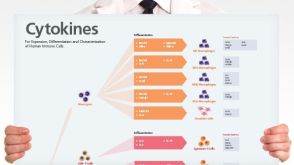 挂图Human Immune Cytokines Infographic of key cytokines for expansion, differentiation and characterization of major immune cell types

 沪公网安备31010102008431号