Lu S-J et al. (JUL 2013)
Regenerative medicine 8 4 413--424
3D microcarrier system for efficient differentiation of human pluripotent stem cells into hematopoietic cells without feeders and serum [corrected].
BACKGROUND Human embryonic stem cells (hESCs) have been derived and maintained on mouse embryonic fibroblast feeders to keep their undifferentiated status. To realize their clinical potential,a feeder-free and scalable system for large scale production of hESCs and their differentiated derivatives is required. MATERIALS & METHODS hESCs were cultured and passaged on serum/feeder-free 3D microcarriers for five passages. For embryoid body (EB) formation and hemangioblast differentiation,the medium for 3D microcarriers was directly switched to EB medium. RESULTS hESCs on 3D microcarriers maintained pluripotency and formed EBs,which were ten-times more efficient than hESCs cultured under 2D feeder-free conditions (0.11 ± 0.03 EB cells/hESC input 2D vs 1.19 ± 0.32 EB cells/hESC input 3D). After replating,EB cells from 3D culture readily developed into hemangioblasts with the potential to differentiate into hematopoietic and endothelial cells. Furthermore,this 3D system can also be adapted to human induced pluripotent stem cells,which generate functional hemangioblasts with high efficiency. CONCLUSION This 3D serum- and stromal-free microcarrier system is important for future clinical applications,with the potential of developing to a GMP-compatible scalable system.
View Publication
产品号#:
04436
05850
05857
05870
05875
85850
85857
85870
85875
产品名:
MethoCult™ SF H4436
mTeSR™1
mTeSR™1
M. A. DeWitt et al. (OCT 2016)
Science translational medicine 8 360 360ra134
Selection-free genome editing of the sickle mutation in human adult hematopoietic stem/progenitor cells.
Genetic diseases of blood cells are prime candidates for treatment through ex vivo gene editing of CD34+ hematopoietic stem/progenitor cells (HSPCs),and a variety of technologies have been proposed to treat these disorders. Sickle cell disease (SCD) is a recessive genetic disorder caused by a single-nucleotide polymorphism in the $\beta$-globin gene (HBB). Sickle hemoglobin damages erythrocytes,causing vasoocclusion,severe pain,progressive organ damage,and premature death. We optimize design and delivery parameters of a ribonucleoprotein (RNP) complex comprising Cas9 protein and unmodified single guide RNA,together with a single-stranded DNA oligonucleotide donor (ssODN),to enable efficient replacement of the SCD mutation in human HSPCs. Corrected HSPCs from SCD patients produced less sickle hemoglobin RNA and protein and correspondingly increased wild-type hemoglobin when differentiated into erythroblasts. When engrafted into immunocompromised mice,ex vivo treated human HSPCs maintain SCD gene edits throughout 16 weeks at a level likely to have clinical benefit. These results demonstrate that an accessible approach combining Cas9 RNP with an ssODN can mediate efficient HSPC genome editing,enables investigator-led exploration of gene editing reagents in primary hematopoietic stem cells,and suggests a path toward the development of new gene editing treatments for SCD and other hematopoietic diseases.
View Publication
产品号#:
02697
02692
09600
09650
09605
09655
产品名:
StemSpan™ CC110
StemSpan™红系扩增添加物 (100X)
StemSpan™ SFEM
StemSpan™ SFEM
StemSpan™ SFEM II
StemSpan™ SFEM II
Miyawaki K et al. (MAR 2017)
Blood
Identification of unipotent megakaryocyte progenitors in human hematopoiesis.
The developmental pathway for human megakaryocytes remains unclear and the definition of pure unipotent megakaryocyte progenitor is still controversial. Using single-cell transcriptome analysis,we have identified a cluster of cells within immature hematopoietic stem and progenitor cell populations that specifically express genes related to the megakaryocyte lineage. We used CD41 as a positive marker to identify these cells within the CD34(+)CD38(+)IL-3Rα(dim)CD45RA(-) common myeloid progenitor (CMP) population. These cells lacked erythroid and granulocyte/macrophage potential,but exhibited robust differentiation into the megakaryocyte lineage at a high frequency,both in vivo and in vitro The efficiency and expansion potential of these cells exceeded those of conventional bipotent megakaryocyte/erythrocyte progenitors. Accordingly,the CD41(+) CMP was defined as a unipotent megakaryocyte progenitor (MegP) that is likely to represent the major pathway for human megakaryopoiesis,independent of canonical megakaryocyte-erythroid lineage bifurcation. In the bone marrow of patients with essential thrombocythemia,the MegP population was significantly expanded in the context of a high burden of Janus kinase 2 mutations. Thus,the prospectively isolatable and functionally homogeneous human MegP will be useful for the elucidation of the mechanisms underlying normal and malignant human hematopoiesis.
View Publication
产品号#:
02696
09500
09605
09655
04034
04044
04963
04962
04971
04902
04901
产品名:
StemSpan™巨核细胞扩增添加物 (100X)
BIT 9500血清替代物
StemSpan™ SFEM II
StemSpan™ SFEM II
MethoCult™ H4034 Optimum
MethoCult™ H4034 Optimum
双室载玻片套件
MegaCult™-C CFU-Mk染色试剂盒
MegaCult™-C含细胞因子全套试剂盒
胶原蛋白溶液
MegaCult™-C含细胞因子培养基
Jones RJ et al. (MAY 1995)
Blood 85 10 2742--6
Assessment of aldehyde dehydrogenase in viable cells.
Cytosolic aldehyde dehydrogenase (ALDH),an enzyme responsible for oxidizing intracellular aldehydes,has an important role in ethanol,vitamin A,and cyclophosphamide metabolism. High expression of this enzyme in primitive stem cells from multiple tissues,including bone marrow and intestine,appears to be an important mechanism by which these cells are resistant to cyclophosphamide. However,although hematopoietic stem cells (HSC) express high levels of cytosolic ALDH,isolating viable HSC by their ALDH expression has not been possible because ALDH is an intracellular protein. We found that a fluorescent aldehyde,dansyl aminoacetaldehyde (DAAA),could be used in flow cytometry experiments to isolate viable mouse and human cells based on their ALDH content. The level of dansyl fluorescence exhibited by cells after incubation with DAAA paralleled cytosolic ALDH levels determined by Western blotting and the sensitivity of the cells to cyclophosphamide. Moreover,DAAA appeared to be a more sensitive means of assessing cytosolic ALDH levels than Western blotting. Bone marrow progenitors treated with DAAA proliferated normally. Furthermore,marrow cells expressing high levels of dansyl fluorescence after incubation with DAAA were enriched for hematopoietic progenitors. The ability to isolate viable cells that express high levels of cytosolic ALDH could be an important component of methodology for identifying and purifying HSC and for studying cyclophosphamide-resistant tumor cell populations.
View Publication
产品号#:
01700
01705
01701
01702
产品名:
ALDEFLUOR™ 试剂盒
ALDEFLUOR™ DEAB试剂, 1.5 mM, 1 mL
ALDEFLUOR™检测缓冲液
Keller GM (DEC 1995)
Current opinion in cell biology 7 6 862--9
In vitro differentiation of embryonic stem cells.
Under appropriate conditions in culture,embryonic stem cells will differentiate and form embryoid bodies that have been shown to contain cells of the hematopoietic,endothelial,muscle and neuronal lineages. Many aspects of the lineage-specific differentiation programs observed within the embryoid bodies reflect those found in the embryo,indicating that this model system provides access to early cell populations that develop in a normal fashion. Recent studies involving the differentiation of genetically altered embryonic stem cells highlight the potential of this in vitro differentiation system for defining the function of genes in early development.
View Publication
产品号#:
06902
06952
00321
00322
00323
00324
00325
产品名:
Limó et al. (NOV 1997)
Blood 90 9 3316--21
High-titer retroviral vectors containing the enhanced green fluorescent protein gene for efficient expression in hematopoietic cells.
Retroviral vectors constitute the most efficient system to deliver and integrate foreign genes into mammalian cells. We have developed a producer cell line that yields high titers of amphotropic retroviral vectors carrying the enhanced green fluorescent protein (EGFP) gene,a codon humanized,red-shifted variant of the green fluorescent protein (GFP) gene,which can be used as a selectable marker. We have used a hybrid vector that has been shown to efficiently drive gene expression in hematopoietic cells. Virtually all murine and human cell lines and primary human hematopoietic cells tested were transduced with varying efficiency after incubation with vector-containing supernatants. Human CD34(+) cells obtained from cord blood or aphereses products were transduced using a protocol that involves daily addition of vector-containing supernatants for 6 consecutive days. At day 6,up to 16% of the cells expressed EGFP,as assessed by flow cytometry. Sorted EGFP-expressing cells were able to produce fluorescent hematopoietic colonies. EGFP's main advantages are its fast flow cytometry determination and the possibility of cell sorting and simultaneous evaluation of the transduction efficiency along with other phenotypic markers.
View Publication
Brandl M et al. (AUG 1999)
Experimental hematology 27 8 1264--70
Bispecific antibody fragments with CD20 X CD28 specificity allow effective autologous and allogeneic T-cell activation against malignant cells in peripheral blood and bone marrow cultures from patients with B-cell lineage leukemia and lymphoma.
Bispecific antibodies directed against tumor-associated target antigens and to surface receptors mediating T-cell activation,such as the TCR/CD3 complex and the costimulatory receptor CD28,are capable of mediating T-cell activation resulting in tumor cell killing. In this study,we used the B-cell-associated antigens CD19 and CD20 as target structures on human leukemic cells. We found that a combination of bispecific antibody fragments (bsFab2) with target x CD3 and target x CD28 specificity induces vigorous autologous T-cell activation and killing of malignant cells in peripheral blood and bone marrow cultures from patients with chronic lymphocytic leukemia and follicular lymphoma. The bsFab2 targeting CD20 were considerably more effective than those binding to CD19. The colony-forming capacity of treated bone marrow was impaired due to large amounts of tumor necrosis factor alpha produced during bsFab2-induced T-cell activation. Neutralizing tumor necrosis factor alpha antibodies were found to reverse this negative effect without affecting T-cell activation and tumor cell killing. CD20 x CD28 bsFab2,when used alone rather than in combination,markedly improved the recognition of leukemic cells by allogeneic T cells. Therefore,these reagents may be capable of enhancing the immunogenicity of leukemic cells in general and,in particular,of increasing the antileukemic activity of allogeneic donor buffy coat cells in relapsed bone marrow transplanted patients.
View Publication
产品号#:
04431
产品名:
MethoCult™ H4431
Osada H et al. (APR 2001)
Transfusion 41 4 499--503
Detection of fetal HPCs in maternal circulation after delivery.
BACKGROUND: Circulation of mature fetal blood cells in the maternal blood for a certain postpartum period has been verified,but detailed study of the fetal HPCs has not been reported. The objective of this study was to evaluate the frequency and clearance of these cells in the peripheral blood of puerperal women. STUDY DESIGN AND METHODS: PBMNCs from 15 puerperal women who gave birth to male infants were cultured in semi-solid medium containing hematopoietic stimulating factors. Colonies formed in the medium were individually characterized,collected,and subjected to PCR amplification of the SRY gene on Y chromosome to confirm fetal origin. RESULTS: The mean numbers of fetal progenitor cell colonies isolated per mL of maternal blood were 1.63,2.48,0.56,0.12,and 0 on the day of delivery,at 4 days,1 month,6 months,and 1 year after delivery,respectively. There was no difference in the ratio of fetal versus maternal colonies between erythroid and granulocyte/macrophage lineages. CONCLUSION: The present study demonstrated that a significant number of fetal HPCs circulate in the maternal blood for a duration of at least 6 months after delivery.
View Publication
产品号#:
产品名:
Jasinski M et al. (OCT 2001)
Blood 98 7 2248--55
GATA1-Cre mediates Piga gene inactivation in the erythroid/megakaryocytic lineage and leads to circulating red cells with a partial deficiency in glycosyl phosphatidylinositol-linked proteins (paroxysmal nocturnal hemoglobinuria type II cells).
Patients with paroxysmal nocturnal hemoglobinuria (PNH) have blood cells deficient in glycosyl phosphatidylinositol (GPI)-linked proteins owing to a somatic mutation in the X-linked PIGA gene. To target Piga recombination to the erythroid/megakaryocytic lineage in mice,the Cre/loxP system was used,and Cre was expressed under the transcriptional regulatory sequences of GATA-1. Breeding of GATA1-cre (G) transgenic mice with mice carrying a floxed Piga (L) allele was associated with high embryonic lethality. However,double-transgenic (GL) mice that escaped early recombination looked healthy and were observed for 16 months. Flow cytometric analysis of peripheral blood cells showed that GL mice had up to 100% of red cells deficient in GPI-linked proteins. The loss of GPI-linked proteins on the cell surface occurred late in erythroid differentiation,causing a proportion of red cells to express low residual levels of GPI-linked proteins. Red cells with residual expression of GPI-linked proteins showed an intermediate sensitivity toward complement and thus resemble PNH type II cells in patients with PNH. Recombination of the floxed Piga allele was also detected in cultured megakaryocytes,mast cells,and eosinophils,but not in neutrophils,lymphocytes,or nonhematopoietic tissues. In summary,GATA1-Cre causes high-efficiency Piga gene inactivation in a GATA-1-specific pattern. For the first time,mice were generated that have almost 100% of red cells deficient in GPI-linked proteins. These animals will be valuable to further investigate the consequences of GPI-anchor deficiency on erythroid/megakaryocytic cells.
View Publication


 EasySep™小鼠TIL(CD45)正选试剂盒




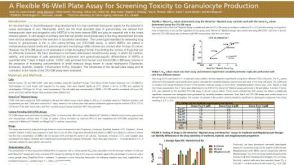 科学海报A Flexible 96-Well Plate Assay for Screening Toxicity to Granulocyte Production
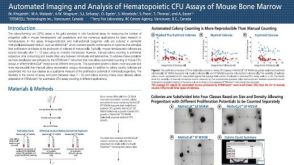 科学海报Automated Imaging and Analysis of Hematopoietic CFU Assays of Mouse Bone Marrow
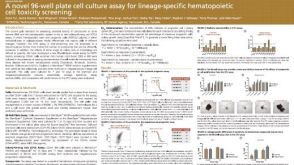 科学海报A Novel 96-well Plate Cell Culture Assay for Lineage-Specific Hematopoietic Cell Toxicity Screening
 沪公网安备31010102008431号