Olmsted-Davis EA et al. (DEC 2003)
Proceedings of the National Academy of Sciences of the United States of America 100 26 15877--82
Primitive adult hematopoietic stem cells can function as osteoblast precursors.
Osteoblasts are continually recruited from stem cell pools to maintain bone. Although their immediate precursor is a plastic-adherent mesenchymal stem cell able to generate tissues other than bone,increasing evidence suggests the existence of a more primitive cell that can differentiate to both hematopoietic and mesenchymal cells. We show here that the side population" (SP) of marrow stem cells�
View Publication
产品号#:
05501
05502
产品名:
Eghbali-Fatourechi GZ et al. (MAY 2005)
The New England journal of medicine 352 19 1959--66
Circulating osteoblast-lineage cells in humans.
BACKGROUND: Although current evidence suggests that only a minuscule number of osteoblast-lineage cells are present in peripheral blood,we hypothesized that such cells circulate but that their concentration has been vastly underestimated owing to the use of assays that required adherence to plastic. We further reasoned that the concentration of these cells is elevated during times of increased bone formation,such as during pubertal growth. METHODS: We used flow cytometry with antibodies to bone-specific proteins to identify circulating osteoblast-lineage cells in 11 adolescent males and 11 adult males (mean [+/-SD] age,14.5+/-0.7 vs. 37.7+/-7.6 years). Gene expression and in vitro and in vivo bone-forming assays were used to establish the osteoblastic lineage of sorted cells. RESULTS: Cells positive for osteocalcin and cells positive for bone-specific alkaline phosphatase were detected in the peripheral blood of adult subjects (1 to 2 percent of mononuclear cells). There were more than five times as many cells positive for osteocalcin in the circulation of adolescent boys (whose markers of bone formation were clearly increased as a result of pubertal growth) as compared with adult subjects (Ptextless0.001). The percentage of cells positive for osteocalcin correlated with markers of bone formation. Sorted osteocalcin-positive cells expressed osteoblastic genes,formed mineralized nodules in vitro,and formed bone in an in vivo transplantation assay. Increased values were also found in three adults with recent fractures. CONCLUSIONS: Osteoblast-lineage cells circulate in physiologically significant numbers,correlate with markers of bone formation,and are markedly higher during pubertal growth; therefore,they may represent a previously unrecognized circulatory component to the process of bone formation.
View Publication
We studied the immunoregulatory features of murine mesenchymal stem cells (MSCs) in vitro and in vivo. MSCs inhibited T-cell receptor (TCR)-dependent and -independent proliferation but did not induce apoptosis on T cells. Such inhibition was paired with a decreased interferon (IFN)-gamma and tumor necrosis factor (TNF)-alpha production and was partially reversed by interleukin-2 (IL-2). Thus,we used MSCs to treat myelin oligodendrocyte glycoprotein (MOG)35-55-induced experimental autoimmune encephalomyelitis (EAE) in C57BL/6J mice. We injected intravenously 1 x 10(6) MSCs before disease onset (preventive protocol) and at different time points after disease occurrence (therapeutic protocol). MSC administration before disease onset strikingly ameliorated EAE. The therapeutic scheme was effective when MSCs were administered at disease onset and at the peak of disease but not after disease stabilization. Central nervous system (CNS) pathology showed decreased inflammatory infiltrates and demyelination in mice that received transplants of MSCs. T-cell response to MOG and mitogens from MSC-treated mice was inhibited and restored by IL-2 administration. Upon MSC transfection with the enhanced green fluorescent protein (eGFP),eGFP(+) cells were detected in the lymphoid organs of treated mice. These data suggest that the immunoregulatory properties of MSCs effectively interfere with the autoimmune attack in the course of EAE inducing an in vivo state of T-cell unresponsiveness occurring within secondary lymphoid organs.
View Publication
Immunophenotype of human adipose-derived cells: temporal changes in stromal-associated and stem cell-associated markers.
Adipose tissue represents an abundant and accessible source of multipotent adult stem cells and is used by many investigators for tissue engineering applications; however,not all laboratories use cells at equivalent stages of isolation and passage. We have compared the immunophenotype of freshly isolated human adipose tissue-derived stromal vascular fraction (SVF) cells relative to serial-passaged adipose-derived stem cells (ASCs). The initial SVF cells contained colony-forming unit fibroblasts at a frequency of 1:32. Colony-forming unit adipocytes and osteoblasts were present in the SVF cells at comparable frequencies (1:28 and 1:16,respectively). The immunophenotype of the adipose-derived cells based on flow cytometry changed progressively with adherence and passage. Stromal cell-associated markers (CD13,CD29,CD44,CD63,CD73,CD90,CD166) were initially low on SVF cells and increased significantly with successive passages. The stem cell-associated marker CD34 was at peak levels in the SVF cells and/or early-passage ASCs and remained present,although at reduced levels,throughout the culture period. Aldehyde dehydrogenase and the multidrug-resistance transport protein (ABCG2),both of which have been used to identify and characterize hematopoietic stem cells,are expressed by SVF cells and ASCs at detectable levels. Endothelial cell-associated markers (CD31,CD144 or VE-cadherin,vascular endothelial growth factor receptor 2,von Willebrand factor) were expressed on SVF cells and did not change significantly with serial passage. Thus,the adherence to plastic and subsequent expansion of human adipose-derived cells in fetal bovine serum-supplemented medium selects for a relatively homogeneous cell population,enriching for cells expressing a stromal immunophenotype,compared with the heterogeneity of the crude SVF.
View Publication
产品号#:
01700
01705
01702
产品名:
ALDEFLUOR™ 试剂盒
ALDEFLUOR™ DEAB试剂, 1.5 mM, 1 mL
ALDEFLUOR™检测缓冲液
Lindvall C et al. (NOV 2006)
The Journal of biological chemistry 281 46 35081--7
The Wnt signaling receptor Lrp5 is required for mammary ductal stem cell activity and Wnt1-induced tumorigenesis.
Canonical Wnt signaling has emerged as a critical regulatory pathway for stem cells. The association between ectopic activation of Wnt signaling and many different types of human cancer suggests that Wnt ligands can initiate tumor formation through altered regulation of stem cell populations. Here we have shown that mice deficient for the Wnt co-receptor Lrp5 are resistant to Wnt1-induced mammary tumors,which have been shown to be derived from the mammary stem/progenitor cell population. These mice exhibit a profound delay in tumorigenesis that is associated with reduced Wnt1-induced accumulation of mammary progenitor cells. In addition to the tumor resistance phenotype,loss of Lrp5 delays normal mammary development. The ductal trees of 5-week-old Lrp5-/- females have fewer terminal end buds,which are structures critical for juvenile ductal extension presumed to be rich in stem/progenitor cells. Consequently,the mature ductal tree is hypomorphic and does not completely fill the fat pad. Furthermore,Lrp5-/- ductal cells from mature females exhibit little to no stem cell activity in limiting dilution transplants. Finally,we have shown that Lrp5-/- embryos exhibit substantially impaired canonical Wnt signaling in the primitive stem cell compartment of the mammary placodes. These findings suggest that Lrp5-mediated canonical signaling is required for mammary ductal stem cell activity and for tumor development in response to oncogenic Wnt effectors.
View Publication
产品号#:
05601
产品名:
EpiCult™-B 人培养基
Pereira LE et al. (MAY 2007)
Journal of virology 81 9 4445--56
Simian immunodeficiency virus (SIV) infection influences the level and function of regulatory T cells in SIV-infected rhesus macaques but not SIV-infected sooty mangabeys.
Differences in clinical outcome of simian immunodeficiency virus (SIV) infection in disease-resistant African sooty mangabeys (SM) and disease-susceptible Asian rhesus macaques (RM) prompted us to examine the role of regulatory T cells (Tregs) in these two animal models. Results from a cross-sectional study revealed maintenance of the frequency and absolute number of peripheral Tregs in chronically SIV-infected SM while a significant loss occurred in chronically SIV-infected RM compared to uninfected animals. A longitudinal study of experimentally SIV-infected animals revealed a transient increase in the frequency of Tregs from baseline values following acute infection in RM,but no change in the frequency of Tregs occurred in SM during this period. Further examination revealed a strong correlation between plasma viral load (VL) and the level of Tregs in SIV-infected RM but not SM. A correlation was also noted in SIV-infected RM that control VL spontaneously or in response to antiretroviral chemotherapy. In addition,immunofluorescent cell count assays showed that while Treg-depleted peripheral blood mononuclear cells from RM led to a significant enhancement of CD4+ and CD8+ T-cell responses to select pools of SIV peptides,there was no detectable T-cell response to the same pool of SIV peptides in Treg-depleted cells from SIV-infected SM. Our data collectively suggest that while Tregs do appear to play a role in the control of viremia and the magnitude of the SIV-specific immune response in RM,their role in disease resistance in SM remains unclear.
View Publication
产品号#:
18557
18557RF
15809
产品名:
Beltrami AP et al. (NOV 2007)
Blood 110 9 3438--46
Multipotent cells can be generated in vitro from several adult human organs (heart, liver, and bone marrow).
The aims of our study were to verify whether it was possible to generate in vitro,from different adult human tissues,a population of cells that behaved,in culture,as multipotent stem cells and if these latter shared common properties. To this purpose,we grew and cloned finite cell lines obtained from adult human liver,heart,and bone marrow and named them human multipotent adult stem cells (hMASCs). Cloned hMASCs,obtained from the 3 different tissues,expressed the pluripotent state-specific transcription factors Oct-4,NANOG,and REX1,displayed telomerase activity,and exhibited a wide range of differentiation potential,as shown both at a morphologic and functional level. hMASCs maintained a human diploid DNA content,and shared a common gene expression signature,compared with several somatic cell lines and irrespectively of the tissue of isolation. In particular,the pathways regulating stem cell self-renewal/maintenance,such as Wnt,Hedgehog,and Notch,were transcriptionally active. Our findings demonstrate that we have optimized an in vitro protocol to generate and expand cells from multiple organs that could be induced to acquire morphologic and functional features of mature cells even embryologically not related to the tissue of origin.
View Publication
产品号#:
05401
05402
05411
产品名:
MesenCult™ MSC 基础培养基(人)
MesenCult™ MSC 刺激补充剂(人)
MesenCult™ 增殖试剂盒(人)
Wagner W et al. (OCT 2007)
Stem cells (Dayton,Ohio) 25 10 2638--47
Molecular and secretory profiles of human mesenchymal stromal cells and their abilities to maintain primitive hematopoietic progenitors.
Mesenchymal stromal cells (MSC) provide a supportive cellular microenvironment and are able to maintain the self-renewal capacity of hematopoietic progenitor cells (HPC). Isolation procedures for MSC vary extensively,and this may influence their biologic properties. In this study,we have compared human MSC isolated from bone marrow (BM) using two culture conditions,from cord blood (CB),and from adipose tissue (AT). The ability to maintain long-term culture-initiating cell frequency and a primitive CD34(+)CD38(-) immunophenotype was significantly higher for MSC derived from BM and CB compared with those from AT. These results were in line with a significantly higher adhesion of HPC to MSC from BM and CB versus MSC from AT. We have compared the cytokine production of MSC by cytokine antibody arrays,enzyme-linked immunosorbent assay,and a cytometric bead array. There were reproducible differences in the chemokine secretion profiles of various MSC preparations,but there was no clear concordance with differences in their potential to maintain primitive function of HPC. Global gene expression profiles of MSC preparations were analyzed and showed that adhesion proteins including cadherin-11,N-cadherin,vascular cell adhesion molecule 1,neural cell adhesion molecule 1,and integrins were highly expressed in MSC preparations derived from BM and CB. Thus,MSC from BM and CB are superior to MSC from AT for maintenance of primitive HPC. The latter property is associated with specific molecular profiles indicating the significance of cell-cell junctions but not with secretory profiles. Disclosure of potential conflicts of interest is found at the end of this article.
View Publication
产品号#:
05401
05402
05411
产品名:
MesenCult™ MSC 基础培养基(人)
MesenCult™ MSC 刺激补充剂(人)
MesenCult™ 增殖试剂盒(人)
Spaggiari GM et al. (FEB 2008)
Blood 111 3 1327--33
Mesenchymal stem cells inhibit natural killer-cell proliferation, cytotoxicity, and cytokine production: role of indoleamine 2,3-dioxygenase and prostaglandin E2.
Recently,a number of clinical trials used either mesenchymal stem cells (MSCs) or natural killer (NK) cells in an attempt to improve the effectiveness of hematopoietic stem cell transplantation (HSCT). In view of the relevant role of both MSCs and NK cells in HSCT,we have recently explored the result of possible interactions between the 2 cell types. We found that activated NK cells could kill MSCs,whereas MSCs strongly inhibited interleukin-2 (IL-2)-induced NK-cell proliferation. In this study,we further analyzed the inhibitory effect exerted by MSCs on NK cells. We show that MSCs not only inhibit the cytokine-induced proliferation of freshly isolated NK cells but also prevent the induction of effector functions,such as cytotoxic activity and cytokine production. Moreover,we show that this inhibitory effect is related to a sharp down-regulation of the surface expression of the activating NK receptors NKp30,NKp44,and NKG2D. Finally,we demonstrate that indoleamine 2,3-dioxygenase and prostaglandin E2 represent key mediators of the MSC-induced inhibition of NK cells.
View Publication
产品号#:
05401
05402
05411
产品名:
MesenCult™ MSC 基础培养基(人)
MesenCult™ MSC 刺激补充剂(人)
MesenCult™ 增殖试剂盒(人)
挂图
SnapShot: Adipocyte Life Cycle
Overview of the adipocyte life cycle, including a list of molecules involved in adipose stem cell proliferation, adipocyte differentiation, turnover and obesigenic expansion
Yu J et al. (JAN 2011)
PloS one 6 3 e17557
Efficient feeder-free episomal reprogramming with small molecules.
Genetic reprogramming of human somatic cells to induced pluripotent stem cells (iPSCs) could offer replenishable cell sources for transplantation therapies. To fulfill their promises,human iPSCs will ideally be free of exogenous DNA (footprint-free),and be derived and cultured in chemically defined media free of feeder cells. Currently,methods are available to enable efficient derivation of footprint-free human iPSCs. However,each of these methods has its limitations. We have previously derived footprint-free human iPSCs by employing episomal vectors for transgene delivery,but the process was inefficient and required feeder cells. Here,we have greatly improved the episomal reprogramming efficiency using a cocktail containing MEK inhibitor PD0325901,GSK3β inhibitor CHIR99021,TGF-β/Activin/Nodal receptor inhibitor A-83-01,ROCK inhibitor HA-100 and human leukemia inhibitory factor. Moreover,we have successfully established a feeder-free reprogramming condition using chemically defined medium with bFGF and N2B27 supplements and chemically defined human ESC medium mTeSR1 for the derivation of footprint-free human iPSCs. These improvements enabled the routine derivation of footprint-free human iPSCs from skin fibroblasts,adipose tissue-derived cells and cord blood cells. This technology will likely be valuable for the production of clinical-grade human iPSCs.
View Publication
产品号#:
05420
05850
05857
05870
05875
72482
72484
85850
85857
85870
85875
产品名:
HA-100 (Dihydrochloride)
HA-100 (2HCl), 25 mg
mTeSR™1
mTeSR™1
Phuc PV et al. (JUN 2012)
Cell and tissue banking 13 2 341--51
Isolation of three important types of stem cells from the same samples of banked umbilical cord blood.
It is known that umbilical cord blood (UCB) is a rich source of stem cells with practical and ethical advantages. Three important types of stem cells which can be harvested from umbilical cord blood and used in disease treatment are hematopoietic stem cells (HSCs),mesenchymal stem cells (MSCs) and endothelial progenitor cells (EPCs). Since these stem cells have shown enormous potential in regenerative medicine,numerous umbilical cord blood banks have been established. In this study,we examined the ability of banked UCB collected to produce three types of stem cells from the same samples with characteristics of HSCs,MSCs and EPCs. We were able to obtain homogeneous plastic rapidly-adherent cells (with characteristics of MSCs),slowly-adherent (with characteristics of EPCs) and non-adherent cells (with characteristics of HSCs) from the mononuclear cell fractions of cryopreserved UCB. Using a protocol of 48 h supernatant transferring,we successfully isolated MSCs which expressed CD13,CD44 and CD90 while CD34,CD45 and CD133 negative,had typical fibroblast-like shape,and was able to differentiate into adipocytes; EPCs which were CD34,and CD90 positive,CD13,CD44,CD45 and CD133 negative,adherent with cobble-like shape; HSCs which formed colonies when cultured in MethoCult medium.
View Publication


 EasySep™小鼠TIL(CD45)正选试剂盒




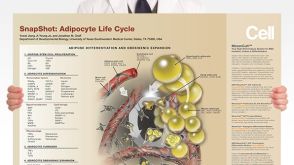 挂图SnapShot: Adipocyte Life Cycle Overview of the adipocyte life cycle, including a list of molecules involved in adipose stem cell proliferation, adipocyte differentiation, turnover and obesigenic expansion
 沪公网安备31010102008431号