Kozhich OA et al. (AUG 2013)
Stem Cell Reviews and Reports 9 4 531--536
Standardized Generation and Differentiation of Neural Precursor Cells from Human Pluripotent Stem Cells
Precise,robust and scalable directed differentiation of pluripotent stem cells is an important goal with respect to disease modeling or future therapies. Using the AggreWell™400 system we have standardized the differentiation of human embryonic and induced pluripotent stem cells to a neuronal fate using defined conditions. This allows reproducibility in replicate experiments and facilitates the direct comparison of cell lines. Since the starting point for EB formation is a single cell suspension,this protocol is suitable for standard and novel methods of pluripotent stem cell culture. Moreover,an intermediate population of neural precursor cells,which are routinely textgreater95% NCAM(pos) and Tra-1-60(neg) by FACS analysis,may be expanded and frozen prior to differentiation allowing a convenient starting point for downstream experiments.
View Publication
产品号#:
05850
05857
05870
05875
85850
85857
85870
85875
27845
27945
27840
27865
27940
27965
产品名:
mTeSR™1
mTeSR™1
Zheng X et al. (MAY 2012)
Stem Cells 30 5 910--922
Cnot1, Cnot2, and Cnot3 maintain mouse and human ESC identity and inhibit extraembryonic differentiation
Embryonic stem cell (ESC) identity and self-renewal is maintained by extrinsic signaling pathways and intrinsic gene regulatory networks. Here,we show that three members of the Ccr4-Not complex,Cnot1,Cnot2,and Cnot3,play critical roles in maintaining mouse and human ESC identity as a protein complex and inhibit differentiation into the extraembryonic lineages. Enriched in the inner cell mass of blastocysts,these Cnot genes are highly expressed in ESC and downregulated during differentiation. In mouse ESCs,Cnot1,Cnot2,and Cnot3 are important for maintenance in both normal conditions and the 2i/LIF medium that supports the ground state pluripotency. Genetic analysis indicated that they do not act through known self-renewal pathways or core transcription factors. Instead,they repress the expression of early trophectoderm (TE) transcription factors such as Cdx2. Importantly,these Cnot genes are also necessary for the maintenance of human ESCs,and silencing them mainly lead to TE and primitive endoderm differentiation. Together,our results indicate that Cnot1,Cnot2,and Cnot3 represent a novel component of the core self-renewal and pluripotency circuitry conserved in mouse and human ESCs.
View Publication
产品号#:
05850
05857
05870
05875
85850
85857
85870
85875
产品名:
mTeSR™1
mTeSR™1
Fong H et al. (MAR 2012)
Stem cell research 8 2 206--14
Transcriptional regulation of TRKC by SOX2 in human embryonic stem cells.
Human embryonic stem (hES) cells have the dual ability to self-renew and differentiate into specialized cell types. However,in order to realize the full potential of these cells it is important to understand how the genes responsible for their unique characteristics are regulated. In this study we examine the regulation of the tropomyosin-related kinase (TRK) genes which encode for receptors important in hES cell survival and self-renewal. Although the TRK genes have been studied in many neuronal cell types,the regulation of these genes in hES cells is unclear. Our study demonstrates a novel regulatory relationship between the TRKC gene and the transcription factor SOX2. Our results found that hES cells highly express full-length and truncated forms of the TRKC gene. However,examination of the related TRKB gene showed a lower overall expression of both full-length and truncated forms. Through RNA interference,we knocked down expression levels of SOX2 in hES cells and examined the expression of TRKC,as well as TRKB. Upon loss of SOX2 we found that TRKC mRNA levels were significantly downregulated but TRKB levels remained unchanged,demonstrating an important regulatory dependence on SOX2 by TRKC. We also found that TRKC protein levels were also decreased after SOX2 knock down. Further analysis found the regulatory region of TRKC to be highly conserved among many mammals with potential SOX binding motifs. We confirmed a specific binding motif as a site that SOX2 utilizes to directly interact with the TRKC regulatory region. In addition,we found that SOX2 drives expression of the TRKC gene by activating a luciferase reporter construct containing the TRKC regulatory region and the SOX binding motif.
View Publication
产品号#:
05850
05857
05870
05875
85850
85857
85870
85875
产品名:
mTeSR™1
mTeSR™1
Liu L et al. (JAN 2012)
Biochemical and biophysical research communications 417 2 738--43
ER stress response during the differentiation of H9 cells induced by retinoic acid.
Endoplasmic reticulum (ER) stress occurs during early embryonic development. The aim of this study is to determine whether ER stress occurs during human embryonic stem cell differentiation induced by retinoic acid (RA). H9 human embryonic stem cells were subjected to RA treatment for up to 29. days to induce differentiation. HEK293 cells were treated with RA as a control. The results demonstrate that several ER stress-responsive genes are differentially regulated in H9 and HEK293 cells in response to 5. days of RA treatment. GRP78/Bip was upregulated in H9 cells but downregulated in HEK293 cells. eIF2?? was downregulated in H9 cells but not in HEK293 cells. Phosphorylation of eIF2?? was downregulated in H9 cells but upregulated in HEK293 cells. XBP-1 was downregulated immediately after RA treatment in H9 cells,but its downregulation was much slower in HEK293 cells. Additionally,two ER-resident E3 ubiquitin ligases,gp78 and Hrd1,were both upregulated in H9 cells following 5. days of exposure to RA. Moreover,the protein Bcl2 was undetectable in H9 cells and H9-derived cells but was expressed in HEK293 cells,and it expression in the two types of cells was unaltered by RA treatment. In H9 cells treated with RA for 29. days,GRP78/Bip,XBP-1 and Bcl2 were all upregulated. These results suggest that ER stress is involved in H9 cell differentiation induced by RA. ?? 2011 Elsevier Inc.
View Publication


 EasySep™小鼠TIL(CD45)正选试剂盒




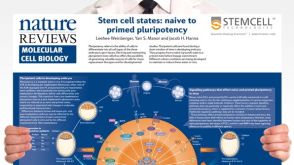 挂图Stem Cell States: Naive to Primed Pluripotency Properties of naive (ground) and primed pluripotent stem cells
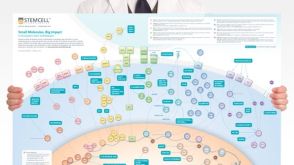 挂图Small Molecules, Big Impact in Pluripotent Stem Cell Research Overview of signaling pathways and small molecules in pluripotent stem cell research


 沪公网安备31010102008431号