C. Imbratta et al. (apr 2019)
Scientific reports 9 1 6135
Maf deficiency in T cells dysregulates Treg - TH17 balance leading to spontaneous colitis.
The maintenance of homeostasis in the gut is a major challenge for the immune system. Here we demonstrate that the transcription factor MAF plays a central role in T cells for the prevention of gastro-intestinal inflammation. Conditional knock out mice lacking Maf in all T cells developed spontaneous late-onset colitis,correlating with a decrease of FOXP3+RORgammat+ T cells proportion,dampened IL-10 production in the colon and an increase of inflammatory TH17 cells. Strikingly,FOXP3+ specific conditional knock out mice for MAF did not develop colitis and demonstrated normal levels of IL-10 in their colon,despite the incapacity of regulatory T cells lacking MAF to suppress colon inflammation in Rag1-/- mice transferred with na{\{i}}ve CD4+ T cells. We showed that one of the cellular sources of IL-10 in the colon of these mice are TH17 cells. Thus MAF is critically involved in the maintenance of the gut homeostasis by regulating the balance between Treg and TH17 cells either at the level of their differentiation or through the modulation of their functions."
View Publication
Kieback E et al. (MAY 2016)
Immunity 44 5 1114--26
Thymus-Derived Regulatory T Cells Are Positively Selected on Natural Self-Antigen through Cognate Interactions of High Functional Avidity.
Regulatory T (Treg) cells expressing Foxp3 transcripton factor are essential for immune homeostasis. They arise in the thymus as a separate lineage from conventional CD4(+)Foxp3(-) T (Tconv) cells. Here,we show that the thymic development of Treg cells depends on the expression of their endogenous cognate self-antigen. The formation of these cells was impaired in mice lacking this self-antigen,while Tconv cell development was not negatively affected. Thymus-derived Treg cells were selected by self-antigens in a specific manner,while autoreactive Tconv cells were produced through degenerate recognition of distinct antigens. These distinct modes of development were associated with the expression of T cell receptor of higher functional avidity for self-antigen by Treg cells than Tconv cells,a difference subsequently essential for the control of autoimmunity. Our study documents how self-antigens define the repertoire of thymus-derived Treg cells to subsequently endow this cell type with the capacity to undermine autoimmune attack.
View Publication
Pahwa R et al. (DEC 2010)
Journal of immunological methods 363 1 67--79
Isolation and expansion of human natural T regulatory cells for cellular therapy.
Natural T regulatory cells (nTregs) play a key role in inducing and maintaining immunological tolerance. Cell-based therapy using purified nTregs is under consideration for several conditions,but procedures employed to date have resulted in cell populations that are contaminated with cytokine secreting effector cells. We have established a method for isolation and ex vivo expansion of human nTregs from healthy blood donors for cellular therapy aimed at preventing allograft rejection in organ transplants. The Robosep instrument was used for initial nTreg isolation and rapamycin was included in the expansion phase of cell cultures. The resulting cell population exhibited a stable CD4(+)CD25(++bright)Foxp3(+) phenotype,had potent functional ability to suppress CD4(+)CD25(negative) T cells without evidence of conversion to effector T cells including TH17 cells,and manifested little to no production of pro-inflammatory cytokines upon in vitro stimulation. Boolean gating analysis of cytokine-expressing cells by flow cytometry for 32 possible profile end points revealed that 96% of expanded nTregs did not express any cytokine. From a single buffy coat,approximately 80 million pure nTregs were harvested after expansion under cGMP conditions; these cell numbers are adequate for infusion of approximately one million cells kg�?�¹ for cell therapy in clinical trials.
View Publication


 EasySep™小鼠TIL(CD45)正选试剂盒




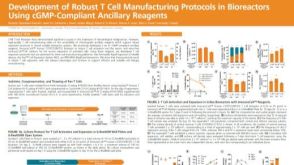 科学海报Development of Robust T Cell Manufacturing Protocols in Bioreactors Using cGMP-Compliant Ancillary Reagents

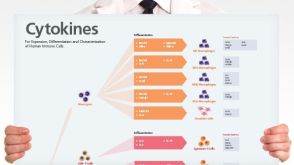 挂图Human Immune Cytokines Infographic of key cytokines for expansion, differentiation and characterization of major immune cell types
 实验方案Optimizing Delivery Efficiency with Fluorescent Dextran Using the CellPore™ Transfection System
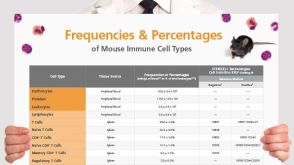 挂图Frequencies and Percentages of Mouse Immune Cell Types List of the frequencies of over 25 immune cell types in C57BL/6 mice
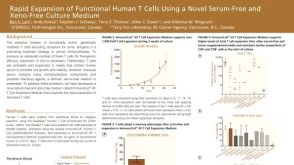 科学海报Rapid Expansion of Functional Human T Cells Using a Novel Serum-Free and Xeno-Free Culture Medium

 沪公网安备31010102008431号