Effector T Cells Abrogate Stroma-Mediated Chemoresistance in Ovarian Cancer.
Effector T cells and fibroblasts are major components in the tumor microenvironment. The means through which these cellular interactions affect chemoresistance is unclear. Here,we show that fibroblasts diminish nuclear accumulation of platinum in ovarian cancer cells,resulting in resistance to platinum-based chemotherapy. We demonstrate that glutathione and cysteine released by fibroblasts contribute to this resistance. CD8(+) T cells abolish the resistance by altering glutathione and cystine metabolism in fibroblasts. CD8(+) T-cell-derived interferon (IFN)γ controls fibroblast glutathione and cysteine through upregulation of gamma-glutamyltransferases and transcriptional repression of system xc(-) cystine and glutamate antiporter via the JAK/STAT1 pathway. The presence of stromal fibroblasts and CD8(+) T cells is negatively and positively associated with ovarian cancer patient survival,respectively. Thus,our work uncovers a mode of action for effector T cells: they abrogate stromal-mediated chemoresistance. Capitalizing upon the interplay between chemotherapy and immunotherapy holds high potential for cancer treatment.
View Publication
产品号#:
17953
17953RF
15022
15062
100-0710
产品名:
EasySep™人CD8+ T细胞分选试剂盒
RoboSep™ 人CD8+ T细胞分选试剂盒
RosetteSep™人CD4+ T细胞富集抗体混合物
RosetteSep™人CD4+ T细胞富集抗体混合物
EasySep™人CD8+ T细胞分选试剂盒
Weiss L et al. (NOV 2004)
Blood 104 10 3249--56
Human immunodeficiency virus-driven expansion of CD4+CD25+ regulatory T cells, which suppress HIV-specific CD4 T-cell responses in HIV-infected patients.
The present study demonstrates that CD4(+)CD25(+) T cells,expanded in peripheral blood of HIV-infected patients receiving highly active antiretroviral therapy (HAART),exhibit phenotypic,molecular,and functional characteristics of regulatory T cells. The majority of peripheral CD4(+)CD25(+) T cells from HIV-infected patients expressed a memory phenotype. They were found to constitutively express transcription factor forkhead box P3 (Foxp3) messengers. CD4(+)CD25(+) T cells weakly proliferated to immobilized anti-CD3 monoclonal antibody (mAb) and addition of soluble anti-CD28 mAb significantly increased proliferation. In contrast to CD4(+)CD25(-) T cells,CD4(+)CD25(+) T cells from HIV-infected patients did not proliferate in response to recall antigens and to p24 protein. The proliferative capacity of CD4 T cells to tuberculin,cytomegalovirus (CMV),and p24 significantly increased following depletion of CD4(+)CD25(+) T cells. Furthermore,addition of increasing numbers of CD4(+)CD25(+) T cells resulted in a dose-dependent inhibition of CD4(+)CD25(-) T-cell proliferation to tuberculin and p24. CD4(+)CD25(+) T cells responded specifically to p24 antigen stimulation by expressing transforming growth factor beta (TGF-beta) and interleukin 10 (IL-10),thus indicating the presence of p24-specific CD4(+) T cells among the CD4(+)CD25(+) T-cell subset. Suppressive activity was not dependent on the secretion of TGF-beta or IL-10. Taken together,our results suggest that persistence of HIV antigens might trigger the expansion of CD4(+)CD25(+) regulatory T cells,which might induce a tolerance to HIV in vivo.
View Publication
产品号#:
15022
15062
产品名:
RosetteSep™人CD4+ T细胞富集抗体混合物
RosetteSep™人CD4+ T细胞富集抗体混合物
Vieillard V et al. (AUG 2005)
Proceedings of the National Academy of Sciences 102 31 10981--86
NK cytotoxicity against CD4+ T cells during HIV-1 infection: A gp41 peptide induces the expression of an NKp44 ligand
HIV infection leads to a state of chronic immune activation and progressive deterioration in immune function,manifested most recognizably by the progressive depletion of CD4+ T cells. A substantial percentage of natural killer (NK) cells from patients with HIV infection are activated and express the natural cytotoxicity receptor (NCR) NKp44. Here we show that a cellular ligand for NKp44 (NKp44L) is expressed during HIV-1 infection and is correlated with both the progression of CD4+ T cell depletion and the increase of viral load. CD4+ T cells expressing this ligand are highly sensitive to the NK lysis activity mediated by NKp44+ NK cells. The expression of NKp44L is induced by the linear motif NH2-SWSNKS-COOH of the HIV-1 envelope gp41 protein. This highly conserved motif appears critical to the sharp increase in NK lysis of CD4+ T cells from HIV-infected patients. These studies strongly suggest that induction of NKp44L plays a key role in the lysis of CD4+ T cells by activated NK cells in HIV infection and consequently provide a framework for considering how HIV-1 may use NK cell immune surveillance to trigger CD4+ T cells. Understanding this mechanism may help to develop future therapeutic strategies and vaccines against HIV-1 infection.
View Publication
产品号#:
03800
03801
03802
03803
03804
03805
03806
05150
15021
15061
产品名:
ClonaCell™-HY杂交瘤试剂盒
ClonaCell™-HY培养基A
ClonaCell™-HY 培养基 B
ClonaCell™-HY 培养基 C
ClonaCell™-HY 培养基 D
ClonaCell™-HY 培养基 E
ClonaCell™-HY PEG
MyeloCult™ H5100
RosetteSep™人T细胞富集抗体混合物
RosetteSep™人T细胞富集抗体混合物
Huang S-H et al. (JAN 2018)
The Journal of clinical investigation
Latent HIV reservoirs exhibit inherent resistance to elimination by CD8+ T cells.
The presence of persistent,latent HIV reservoirs in CD4+ T cells obstructs current efforts to cure infection. The so-called kick-and-kill paradigm proposes to purge these reservoirs by combining latency-reversing agents with immune effectors such as cytotoxic T lymphocytes. Support for this approach is largely based on success in latency models,which do not fully reflect the makeup of latent reservoirs in individuals on long-term antiretroviral therapy (ART). Recent studies have shown that CD8+ T cells have the potential to recognize defective proviruses,which comprise the vast majority of all infected cells,and that the proviral landscape can be shaped over time due to in vivo clonal expansion of infected CD4+ T cells. Here,we have shown that treating CD4+ T cells from ART-treated individuals with combinations of potent latency-reversing agents and autologous CD8+ T cells consistently reduced cell-associated HIV DNA,but failed to deplete replication-competent virus. These CD8+ T cells recognized and potently eliminated CD4+ T cells that were newly infected with autologous reservoir virus,ruling out a role for both immune escape and CD8+ T cell dysfunction. Thus,our results suggest that cells harboring replication-competent HIV possess an inherent resistance to CD8+ T cells that may need to be addressed to cure infection.
View Publication
产品号#:
19052
19052RF
产品名:
EasySep™人CD4+ T细胞富集试剂盒
RoboSep™ 人CD4+ T细胞富集试剂盒含滤芯吸头
Prodeus A et al. (SEP 2017)
JCI insight 2 18
VISTA.COMP - an engineered checkpoint receptor agonist that potently suppresses T cell-mediated immune responses.
V-domain immunoglobulin suppressor of T cell activation (VISTA) is a recently discovered immune checkpoint ligand that functions to suppress T cell activity. The therapeutic potential of activating this immune checkpoint pathway to reduce inflammatory responses remains untapped,largely due to the inability to derive agonists targeting its unknown receptor. A dimeric construct of the IgV domain of VISTA (VISTA-Fc) was shown to suppress the activation of T cells in vitro. However,this effect required its immobilization on a solid surface,suggesting that VISTA-Fc may display limited efficacy as a VISTA-receptor agonist in vivo. Herein,we have designed a stable pentameric VISTA construct (VISTA.COMP) by genetically fusing its IgV domain to the pentamerization domain from the cartilage oligomeric matrix protein (COMP). In contrast to VISTA-Fc,VISTA.COMP does not require immobilization to inhibit the proliferation of CD4+ T cells undergoing polyclonal activation. Furthermore,we show that VISTA.COMP,but not VISTA-Fc,functions as an immunosuppressive agonist in vivo capable of prolonging the survival of skin allografts in a mouse transplant model as well as rescuing mice from acute concanavalin-A-induced hepatitis. Collectively,we believe our data demonstrate that VISTA.COMP is a checkpoint receptor agonist and the first agent to our knowledge targeting the putative VISTA-receptor to suppress T cell-mediated immune responses.
View Publication
Ohoka Y et al. (JAN 2011)
Journal of immunology (Baltimore,Md. : 1950) 186 2 733--44
Retinoic acid-induced CCR9 expression requires transient TCR stimulation and cooperativity between NFATc2 and the retinoic acid receptor/retinoid X receptor complex.
Retinoic acid (RA) imprints gut-homing specificity on T cells upon activation by inducing the expression of chemokine receptor CCR9 and integrin α4β7. CCR9 expression seemed to be more highly dependent on RA than was the α4β7 expression,but its molecular mechanism remained unclear. In this article,we show that NFAT isoforms NFATc1 and NFATc2 directly interact with RA receptor (RAR) and retinoid X receptor (RXR) but play differential roles in RA-induced CCR9 expression on murine naive CD4(+) T cells. TCR stimulation for 6-24 h was required for the acquisition of responsiveness to RA and induced activation of NFATc1 and NFATc2. However,RA failed to induce CCR9 expression as long as TCR stimulation continued. After terminating TCR stimulation or adding cyclosporin A to the culture,Ccr9 gene transcription was induced,accompanied by inactivation of NFATc1 and sustained activation of NFATc2. Reporter and DNA-affinity precipitation assays demonstrated that the binding of NFATc2 to two NFAT-binding sites and that of the RAR/RXR complex to an RA response element half-site in the 5'-flanking region of the mouse Ccr9 gene were critical for RA-induced promoter activity. NFATc2 directly bound to RARα and RXRα,and it enhanced the binding of RARα to the RA response element half-site. NFATc1 also bound to the NFAT-binding sites and directly to RARα and RXRα,but it inhibited the NFATc2-dependent promoter activity. These results suggest that the cooperativity between NFATc2 and the RAR/RXR complex is essential for CCR9 expression on T cells and that NFATc1 interferes with the action of NFATc2.
View Publication
产品号#:
19752
19752RF
产品名:
挂图
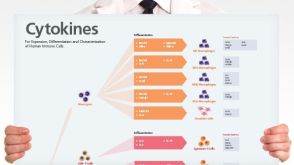
Human Immune Cytokines
Infographic of key cytokines for expansion, differentiation and characterization of major immune cell types
Nova-Lamperti E et al. (JAN 2016)
Scientific Reports 6 20044
IL-10-produced by human transitional B-cells down-regulates CD86 expression on B-cells leading to inhibition of CD4+T-cell responses.
A novel subset of human regulatory B-cells has recently been described. They arise from within the transitional B-cell subpopulation and are characterised by the production of IL-10. They appear to be of significant importance in regulating T-cell immunity in vivo. Despite this important function,the molecular mechanisms by which they control T-cell activation are incompletely defined. Here we show that transitional B-cells produced more IL-10 and expressed higher levels of IL-10 receptor after CD40 engagement compared to other B-cell subsets. Furthermore,under this stimulatory condition,CD86 expressed by transitional B-cells was down regulated and T-cell proliferation was reduced. We provide evidence to demonstrate that the down-regulation of CD86 expression by transitional B-cells was due to the autocrine effect of IL-10,which in turn leads to decreased T-cell proliferation and TNF-α production. This analysis was further extended to peripheral B-cells in kidney transplant recipients. We observed that B-cells from patients tolerant to the graft maintained higher IL-10 production after CD40 ligation,which correlates with lower CD86 expression compared to patients with chronic rejection. Hence,the results obtained in this study shed light on a new alternative mechanism by which transitional B-cells inhibit T-cell proliferation and cytokine production.
View Publication
产品号#:
15022
15062
15024
15064
产品名:
RosetteSep™人CD4+ T细胞富集抗体混合物
RosetteSep™人CD4+ T细胞富集抗体混合物
RosetteSep™人B细胞富集抗体混合物
RosetteSep™人B细胞富集抗体混合物
Chevalier MF et al. ( 2015)
The Journal of Infectious Diseases 211 5 769--779
Phenotype Alterations in Regulatory T-Cell Subsets in Primary HIV Infection and Identification of Tr1-like Cells as the Main Interleukin 10-Producing CD4+ T Cells
BACKGROUND: Conventional regulatory T cells (Tregs) can suppress human immunodeficiency virus type 1 (HIV-1)-specific immune responses but cannot control immune activation in primary HIV infection. Here,we characterized Treg subsets,using recently defined phenotypic delineation,and analyzed the relative contribution of cell subsets to the production of immunosuppressive cytokines in primary HIV infection. METHODS: In a longitudinal prospective study,ex vivo phenotyping of fresh peripheral blood mononuclear cells from patients with primary HIV infection was performed at baseline and month 6 of follow-up to characterize Treg subsets,immune activation,and cytokine production in isolated CD4(+) T cells. RESULTS: The frequency of CD4(+)CD25(+)CD127(low) Tregs and the distribution between the naive,memory,and activated/memory Treg subsets was similar in patients and healthy donors. However,Tregs from patients with primary HIV infection showed peculiar phenotypic profiles,such as elevated FoxP3,ICOS,and CTLA-4 expression,with CTLA-4 expression strikingly increased in all Treg subsets both at baseline and month 6 of follow-up. The great majority of interleukin 10 (IL-10)-producing CD4(+) T cells were FoxP3(neg) (ie,Tr1-like cells). In contrast to conventional Tregs,Tr1-like cells were inversely correlated with immune activation and not associated with lower effector T-cell responses. CONCLUSION: FoxP3(neg) Tr1-like cells-major contributors to IL-10 production-may have a beneficial role by controlling immune activation in early HIV infection.
View Publication
CD80 and PD-L2 define functionally distinct memory B cell subsets that are independent of antibody isotype
Memory B cells (MBCs) are long-lived sources of rapid,isotype-switched secondary antibody-forming cell (AFC) responses. Whether MBCs homogeneously retain the ability to self-renew and terminally differentiate or if these functions are compartmentalized into MBC subsets has remained unclear. It has been suggested that antibody isotype controls MBC differentiation upon restimulation. Here we demonstrate that subcategorizing MBCs on the basis of their expression of CD80 and PD-L2,independently of isotype,identified MBC subsets with distinct functions upon rechallenge. CD80(+)PD-L2(+) MBCs differentiated rapidly into AFCs but did not generate germinal centers (GCs); conversely,CD80(-)PD-L2(-) MBCs generated few early AFCs but robustly seeded GCs. The gene-expression patterns of the subsets supported both the identity and function of these distinct MBC types. Hence,the differentiation and regeneration of MBCs are compartmentalized.
View Publication
产品号#:
19752
19752RF
19754
19754RF
产品名:
Chen X et al. (DEC 2016)
Nature methods 13 12 1013--1020
ATAC-see reveals the accessible genome by transposase-mediated imaging and sequencing.
Spatial organization of the genome plays a central role in gene expression,DNA replication,and repair. But current epigenomic approaches largely map DNA regulatory elements outside of the native context of the nucleus. Here we report assay of transposase-accessible chromatin with visualization (ATAC-see),a transposase-mediated imaging technology that employs direct imaging of the accessible genome in situ,cell sorting,and deep sequencing to reveal the identity of the imaged elements. ATAC-see revealed the cell-type-specific spatial organization of the accessible genome and the coordinated process of neutrophil chromatin extrusion,termed NETosis. Integration of ATAC-see with flow cytometry enables automated quantitation and prospective cell isolation as a function of chromatin accessibility,and it reveals a cell-cycle dependence of chromatin accessibility that is especially dynamic in G1 phase. The integration of imaging and epigenomics provides a general and scalable approach for deciphering the spatiotemporal architecture of gene control.
View Publication


 EasySep™小鼠TIL(CD45)正选试剂盒




 挂图Human Immune Cytokines Infographic of key cytokines for expansion, differentiation and characterization of major immune cell types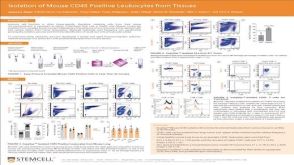

 沪公网安备31010102008431号