Staton PJ et al. (APR 2006)
Journal of immunology (Baltimore,Md. : 1950) 176 7 3978--86
IL-7 is a critical factor in modulating lesion development in Skn-directed autoimmunity.
In a murine model of autoimmunity targeted against the epidermal cell Ags,Skn,adoptive transfer of Skn-immune T cells to immunosuppressed recipients elicits skin lesions in areas of mild epidermal trauma. In this study,we examined peripheral regulation of Skn-induced autoreactivity disrupted by rendering the mice immunoincompetent. We found that regulation of Skn-directed autoimmunity was restored by cotransfer of normal syngeneic spleen cells at twice the concentration of Skn-immune cells and was evidenced by significantly reduced lesion severity by days 5-7 post-cotransfer compared with animals given injections of Skn-immune cells alone. Enrichment and depletion of normal CD4(+) or CD8(+) spleen cells and RT-PCR analysis of selected cytokines identified CD4(+) cells as the regulatory cells in the cotransfer inoculum; however,significant reduction in lesion severity was observed only when there was a concomitant increase in levels of IL-7. The role of IL-7 was further supported in that mice cotransferred with Skn-immune cells plus normal spleen cells,but also treated with anti-IL-7 Ab,no longer exhibited reduced lesion severity. To determine whether IL-7 expression without normal spleen cell cotransfer could modulate lesion development,an IL-7-encoding plasmid (pCMV-Tag1-IL-7) was topically delivered to sites flanking the stressed skin site in Skn-induced autoimmune mice. Daily application of 15 mug of pCMV-Tag1-IL-7 significantly suppressed lesion severity. Our results support a mechanism for CD4(+) T cells and IL-7 in contributing to the control of autoreactivity.
View Publication
Schlecht G et al. (MAR 2006)
International immunology 18 3 445--52
Purification of splenic dendritic cells induces maturation and capacity to stimulate Th1 response in vivo.
Dendritic cell (DC) maturation state is a key parameter for the issue of DC-T cell cognate interaction,which determines the outcome of T cell activation. Indeed,immature DCs induce tolerance while fully mature DCs generate immunity. Here we show that,in the absence of any deliberate activation signal,DCs freshly isolated from mouse spleen spontaneously produce IL-12 and tumor necrosis factor-alpha and up-regulate co-stimulation molecules,even when directly re-injected into their natural environment. Furthermore,after their isolation,these cells acquire the capacity to induce specific T(h)1 responses in vivo. These results demonstrate that the sole isolation of spleen DCs leads to the full maturation of these cells,which therefore cannot be considered as immature DCs. Moreover,we also show that the kinetics of DC activation do not influence the polarization of T(h) response in vivo challenging the idea that exhausted DCs induce preferentially T(h)2 response. Altogether,these observations should be taken into account in all experiments based on the transfer of ex vivo purified DCs.
View Publication
Induction of cytotoxic T lymphocyte and antibody responses to enhanced green fluorescent protein following transplantation of transduced CD34(+) hematopoietic cells.
Genetic modification of hematopoietic stem cells often results in the expression of foreign proteins in pluripotent progenitor cells and their progeny. However,the potential for products of foreign genes introduced into hematopoietic stem cells to induce host immune responses is not well understood. Gene marking and induction of immune responses to enhanced green fluorescent protein (eGFP) were examined in rhesus macaques that underwent nonmyeloablative irradiation followed by infusions of CD34(+) bone marrow cells transduced with a retroviral vector expressing eGFP. CD34(+) cells were obtained from untreated animals or from animals treated with recombinant human granulocyte colony-stimulating factor (G-CSF) alone or G-CSF and recombinant human stem cell factor. Levels of eGFP-expressing cells detected by flow cytometry peaked at 0.1% to 0.5% of all leukocytes 1 to 4 weeks after transplantation. Proviral DNA was detected in 0% to 17% of bone marrow--derived colony-forming units at periods of 5 to 18 weeks after transplantation. However,5 of 6 animals studied demonstrated a vigorous eGFP-specific cytotoxic T lymphocyte (CTL) response that was associated with a loss of genetically modified cells in peripheral blood,as demonstrated by both flow cytometry and polymerase chain reaction. The eGFP-specific CTL responses were MHC-restricted,mediated by CD8(+) lymphocytes,and directed against multiple epitopes. eGFP-specific CTLs were able to efficiently lyse autologous CD34(+) cells expressing eGFP. Antibody responses to eGFP were detected in 3 of 6 animals. These data document the potential for foreign proteins expressed in CD34(+) hematopoietic cells and their progeny to induce antibody and CTL responses in the setting of a clinically applicable transplantation protocol. (Blood. 2001;97:1951-1959)
View Publication
产品号#:
09600
09650
产品名:
StemSpan™ SFEM
StemSpan™ SFEM
Richie Ehrlich LI et al. (MAR 2011)
Blood 117 9 2618--24
In vitro assays misrepresent in vivo lineage potentials of murine lymphoid progenitors.
The identity of T-cell progenitors that seed the thymus has remained controversial,largely because many studies differ over whether these progenitors retain myeloid potential. Contradictory reports diverge in their use of various in vitro and in vivo assays. To consolidate these discordant findings,we compared the myeloid potential of 2 putative thymus seeding populations,common lymphoid progenitors (CLPs) and multipotent progenitors (MPPs),and the earliest intrathymic progenitor (DN1),using 2 in vitro assays and in vivo readouts. These assays gave contradictory results: CLP and DN1 displayed surprisingly robust myeloid potential on OP9-DL1 in vitro stromal cocultures but displayed little myeloid potential in vivo,as well as in methylcellulose cultures. MPP,on the other hand,displayed robust myeloid potential in all settings. We conclude that stromal cocultures reveal cryptic,but nonphysiologic,myeloid potentials of lymphoid progenitors,providing an explanation for contradictory findings in the field and underscoring the importance of using in vivo assays for the determination of physiologic lineage potentials.
View Publication
产品号#:
03231
产品名:
MethoCult™ M3231
Lebson L et al. (DEC 2010)
Journal of immunology (Baltimore,Md. : 1950) 185 12 7161--4
Cutting edge: The transcription factor Kruppel-like factor 4 regulates the differentiation of Th17 cells independently of RORγt.
Th17 cells play a significant role in inflammatory and autoimmune responses. Although a number of molecular pathways that contribute to the lineage differentiation of T cells have been discovered,the mechanisms by which lineage commitment occurs are not fully understood. Transcription factors play a key role in driving T cells toward specific lineages. We have identified a role for the transcription factor Kruppel-like factor (KLF) 4 in the development of IL-17-producing CD4(+) T cells. KLF4 was required for the production of IL-17,and further,chromatin immunoprecipitation analysis demonstrated binding of KLF4 to the IL-17 promoter,indicating a direct effect on the regulation of IL-17. Further,KLF4-deficient T cells upregulated expression of retinoic acid-related orphan receptor γt similar to wild-type during the polarization process toward Th17,suggesting that these two transcription factors are regulated independently.
View Publication
产品号#:
19752
19752RF
产品名:
Fedele G et al. (MAY 2011)
Journal of immunology (Baltimore,Md. : 1950) 186 9 5388--96
Attenuated Bordetella pertussis vaccine candidate BPZE1 promotes human dendritic cell CCL21-induced migration and drives a Th1/Th17 response.
New vaccines against pertussis are needed to evoke full protection and long-lasting immunological memory starting from the first administration in neonates--the major target of the life-threatening pertussis infection. A novel live attenuated Bordetella pertussis vaccine strain,BPZE1,has been developed by eliminating or detoxifying three important B. pertussis virulence factors: pertussis toxin,dermonecrotic toxin,and tracheal cytotoxin. We used a human preclinical ex vivo model based on monocyte-derived dendritic cells (MDDCs) to evaluate BPZE1 immunogenicity. We studied the effects of BPZE1 on MDDC functions,focusing on the impact of Bordetella-primed dendritic cells in the regulation of Th and suppressor T cells (Ts). BPZE1 is able to activate human MDDCs and to promote the production of a broad spectrum of proinflammatory and regulatory cytokines. Moreover,conversely to its parental wild-type counterpart BPSM,BPZE1-primed MDDCs very efficiently migrate in vitro in response to the lymphatic chemokine CCL21,due to the inactivation of pertussis toxin enzymatic activity. BPZE1-primed MDDCs drove a mixed Th1/Th17 polarization and also induced functional Ts. Experiments performed in a Transwell system showed that cell contact rather than the production of soluble factors was required for suppression activity. Overall,our findings support the potential of BPZE1 as a novel live attenuated pertussis vaccine,as BPZE1-challenged dendritic cells might migrate from the site of infection to the lymph nodes,prime Th cells,mount an adaptive immune response,and orchestrate Th1/Th17 and Ts responses.
View Publication


 EasySep™小鼠TIL(CD45)正选试剂盒





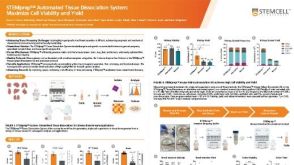 科学海报STEMprep™ Automated Tissue Dissociation System: Maximize Cell Viability and Yield
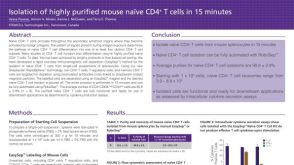 科学海报Immunomagnetic Cell Isolation of Highly Purified Mouse Naïve CD4+ T Cells in 15 Minutes
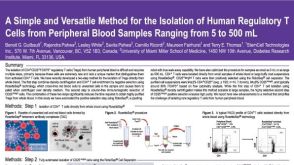
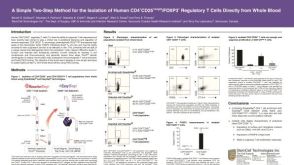 科学海报Isolation of Human CD4+CD25+Bright/Foxp3+ Regulatory T Cells Directly from Whole Blood
 沪公网安备31010102008431号