Heavey B et al. (AUG 2003)
The EMBO journal 22 15 3887--97
Myeloid lineage switch of Pax5 mutant but not wild-type B cell progenitors by C/EBPalpha and GATA factors.
The developmental potential of hematopoietic progenitors is restricted early on to either the erythromyeloid or lymphoid lineages. The broad developmental potential of Pax5(-/-) pro-B cells is in apparent conflict with such a strict separation,although these progenitors realize the myeloid and erythroid potential with lower efficiency compared to the lymphoid cell fates. Here we demonstrate that ectopic expression of the transcription factors C/EBPalpha,GATA1,GATA2 and GATA3 strongly promoted in vitro macrophage differentiation and myeloid colony formation of Pax5(-/-) pro-B cells. GATA2 and GATA3 expression also resulted in efficient engraftment and myeloid development of Pax5(-/-) pro-B cells in vivo. The myeloid transdifferentiation of Pax5(-/-) pro-B cells was accompanied by the rapid activation of myeloid genes and concomitant repression of B-lymphoid genes by C/EBPalpha and GATA factors. These data identify the Pax5(-/-) pro-B cells as lymphoid progenitors with a latent myeloid potential that can be efficiently activated by myeloid transcription factors. The same regulators were unable to induce a myeloid lineage switch in Pax5(+/+) pro-B cells,indicating that Pax5 dominates over myeloid transcription factors in B-lymphocytes.
View Publication
血液相关来源中人细胞类型的比例
List of the frequencies of over 35 cell types in normal human blood-related sources.
Glatigny S et al. (MAY 2016)
Journal of Immunology 196 9 3542--6
Cutting Edge: Integrin α4 Is Required for Regulatory B Cell Control of Experimental Autoimmune Encephalomyelitis.
The neutralization of integrin α4 (Itga4) is currently used as treatment in multiple sclerosis. Although most studies have focused on its function on lymphocyte migration to the CNS,we have uncovered the importance of Itga4 for the generation of regulatory B cells in peripheral immune organs and their control of pathogenic T cell response and CNS pathology. Our study underscores the importance of looking at the dual role of B cells in CNS autoimmunity and provides important perspectives regarding the efficacy and side effects associated with Itga4 neutralization and other B cell-targeting therapies.
View Publication
产品号#:
19854
19854RF
产品名:
EasySep™小鼠B细胞分选试剂盒
RoboSep™ 小鼠B细胞分选试剂盒
Joulia R et al. (JAN 2015)
Nature communications 6 6174
Mast cells form antibody-dependent degranulatory synapse for dedicated secretion and defence.
Mast cells are tissue-resident immune cells that play a key role in inflammation and allergy. Here we show that interaction of mast cells with antibody-targeted cells induces the polarized exocytosis of their granules resulting in a sustained exposure of effector enzymes,such as tryptase and chymase,at the cell-cell contact site. This previously unidentified mast cell effector mechanism,which we name the antibody-dependent degranulatory synapse (ADDS),is triggered by both IgE- and IgG-targeted cells. ADDSs take place within an area of cortical actin cytoskeleton clearance in the absence of microtubule organizing centre and Golgi apparatus repositioning towards the stimulating cell. Remarkably,IgG-mediated degranulatory synapses also occur upon contact with opsonized Toxoplasma gondii tachyzoites resulting in tryptase-dependent parasite death. Our results broaden current views of mast cell degranulation by revealing that human mast cells form degranulatory synapses with antibody-targeted cells and pathogens for dedicated secretion and defence.
View Publication
产品号#:
09600
09650
18056
18056RF
60012
60012FI
60012FI.1
100-1574
产品名:
StemSpan™ SFEM
StemSpan™ SFEM
抗人CD32抗体,克隆IV.3
抗人CD32抗体,clone IV.3,FITC
抗人CD32抗体,克隆IV.3,FITC
Yang C-TT et al. (AUG 2014)
British Journal of Haematology 166 3 435--448
Human induced pluripotent stem cell derived erythroblasts can undergo definitive erythropoiesis and co-express gamma and beta globins.
Human induced pluripotent stem cells (hiPSCs),like embryonic stem cells,are under intense investigation for novel approaches to model disease and for regenerative therapies. Here,we describe the derivation and characterization of hiPSCs from a variety of sources and show that,irrespective of origin or method of reprogramming,hiPSCs can be differentiated on OP9 stroma towards a multi-lineage haemo-endothelial progenitor that can contribute to CD144(+) endothelium,CD235a(+) erythrocytes (myeloid lineage) and CD19(+) B lymphocytes (lymphoid lineage). Within the erythroblast lineage,we were able to demonstrate by single cell analysis (flow cytometry),that hiPSC-derived erythroblasts express alpha globin as previously described,and that a sub-population of these erythroblasts also express haemoglobin F (HbF),indicative of fetal definitive erythropoiesis. More notably however,we were able to demonstrate that a small sub-fraction of HbF positive erythroblasts co-expressed HbA in a highly heterogeneous manner,but analogous to cord blood-derived erythroblasts when cultured using similar methods. Moreover,the HbA expressing erythroblast population could be greatly enhanced (44textperiodcentered0 ± 6textperiodcentered04%) when a defined serum-free approach was employed to isolate a CD31(+) CD45(+) erythro-myeloid progenitor. These findings demonstrate that hiPSCs may represent a useful alternative to standard sources of erythrocytes (RBCs) for future applications in transfusion medicine.
View Publication
Recipient T lymphocytes modulate the severity of antibody-mediated transfusion-related acute lung injury.
Transfusion-related acute lung injury (TRALI) is a serious complication of transfusion and has been ranked as one of the leading causes of transfusion-related fatalities. Nonetheless,many details of the immunopathogenesis of TRALI,particularly with respect to recipient factors are unknown. We used a murine model of antibody-mediated TRALI in an attempt to understand the role that recipient lymphocytes might play in TRALI reactions. Intravenous injection of an IgG2a antimurine major histocompatibility complex class I antibody (34-1-2s) into BALB/c mice induced moderate hypothermia and pulmonary granulocyte accumulation but no pulmonary edema nor mortality. In contrast,34-1-2s injections into mice with severe combined immunodeficiency caused severe hypothermia,severe pulmonary edema,and approximately 40% mortality indicating a critical role for T and B lymphocytes in suppressing TRALI reactions. Adoptive transfer of purified CD8(+) T lymphocytes or CD4(+) T cells but not CD19(+) B cells into the severe combined immunodeficiency mice alleviated the antibody-induced hypothermia,lung damage,and mortality,suggesting that T lymphocytes were responsible for the protective effect. Taken together,these results suggest that recipient T lymphocytes play a significant role in suppressing antibody-mediated TRALI reactions. They identify a potentially new recipient mechanism that controls the severity of TRALI reactions.
View Publication
产品号#:
18751
18751RF
18754
18754RF
产品名:
Sin S-H et al. (OCT 2010)
Journal of virology 84 20 10653--60
The viral latency-associated nuclear antigen augments the B-cell response to antigen in vivo.
Gammaherpesviruses,including Kaposi sarcoma-associated herpesvirus (KSHV),establish latency in B cells. We hypothesized that the KSHV latency-associated nuclear antigen (LANA/orf73) provides a selective advantage to infected B cells by driving proliferation in response to antigen. To test this,we used LANA B-cell transgenic mice. Eight days after immunization with antigen without adjuvant,LANA mice had significantly more activated germinal center (GC) B cells (CD19(+) PNA(+) CD71(+)) than controls. This was dependent upon B-cell receptor since LANA did not restore the GC defect of CD19 knockout mice. However,LANA was able to restore the marginal zone defect in CD19 knockout mice.
View Publication


 EasySep™小鼠TIL(CD45)正选试剂盒




 实验方案Optimizing Delivery Efficiency with Fluorescent Dextran Using the CellPore™ Transfection System
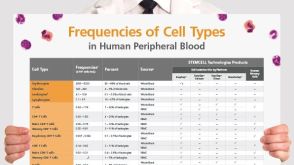 挂图血液相关来源中人细胞类型的比例 List of the frequencies of over 35 cell types in normal human blood-related sources.

 沪公网安备31010102008431号